
Table of contents
- The ‘Invisible A’ on the Report Card: How Poor IAQ Impedes Learning
- The Old Building Dilemma: Why Is School IAQ So Bad?
- From Reactive to Proactive: The Alertify Solution
- The Undeniable ROI: Why Clean Air Is a Financial Imperative
- Your 5-Step Action Plan to a Healthier School
- The Air We Breathe Is the Future We Build
We attentively track test scores, attendance rates, and graduation cohorts. We invest millions in new curricula, educational technology, and teacher training. But what if one of the most powerful factors influencing student success isn’t in a textbook or on a tablet?
What if it’s in the air they breathe?
Students in the U.S. spend, on average, over 1,000 hours in school buildings every single year. We place them in these environments with a singular mission: to learn. Yet, we rarely measure the invisible environment that directly impacts their ability to do so. The U.S. Environmental Protection Agency (EPA) has consistently reported that indoor levels of some pollutants can be two to five times higher than outdoor levels. For the nearly 56 million people who spend their days inside America’s elementary and secondary schools, this is a silent crisis.
This is not a minor facilities issue. It is a foundational academic and health crisis. Poor indoor air quality in schools is a direct line to lower test scores, higher absenteeism, and chronic health issues for students and staff alike. We are, in effect, asking children to learn in an environment that is actively working against their brains.
The problem has always been invisibility. A principal can see a broken window but they cannot see a carbon dioxide level of 3,000 parts per million (ppm). A teacher can feel a cold draft but they cannot feel that the humidity is at 70%, creating a breeding ground for mold.
Until now. The solution is to move from reactive guessing to proactive, data-driven management. This comprehensive guide will explore the profound impact of indoor air quality in schools, from the air we exhale to the chemicals we clean with, on student achievement and wellness. We will provide a clear roadmap for how implementing school air quality monitoring is the single most effective, high-ROI investment a district can make in its core mission.
The ‘Invisible A’ on the Report Card: How Poor IAQ Impedes Learning
Before we can manage our school environment, we must understand the distinct, measurable components of IAQ and how each one directly degrades the healthy learning environment we promise to provide.
The Drowsy Classroom: The Direct Link Between How CO2 in Classrooms Affects Learning
Let’s begin with the most common and powerful indicator: carbon dioxide (CO2).
CO2 is not a traditional “pollutant.” We exhale it with every breath. But in a high-density, enclosed space like a classroom, it is the single best proxy for poor ventilation. When 30 people are in a room designed in the 1970s (when buildings were sealed tight to save energy), CO2 levels from respiration build up, and build up fast.
Fresh outdoor air has a CO2 level of about 400-500 ppm. ASHRAE (the American Society of Heating, Refrigerating and Air-Conditioning Engineers) recommends maintaining indoor CO2 at or below 1,000 ppm to ensure adequate ventilation.
Here’s the reality: A 2017 review by Lawrence Berkeley National Laboratory (LBNL) found that in all studies of classrooms, the average and median peak CO2 concentrations exceeded 1,000 ppm, with many instances exceeding 2,000 ppm.
What does this mean for learning? The effect is direct and physiological.
- At 1,000 ppm: Student concentration levels begin to decline.
- At 2,000 ppm: Students experience significant drowsiness, headaches, and a measurable drop in cognitive function.
- The Harvard Study: A foundational 2016 study on cognitive function by the Harvard T.H. Chan School of Public Health found that, on average, participants’ cognitive scores were 61% higher on days with low-VOC, well-ventilated conditions (“Green”) and 101% higher on “Green+” days (which had even higher ventilation rates) compared to a conventional building environment. While this was an office study, the biological mechanism is identical.
When CO2 levels are high, it’s not just “stuffy air.” It’s an environment that is actively impairing strategic thinking, information processing, and problem-solving. That “post-lunch slump” isn’t just about the food but rather it’s about a classroom that has been marinating in exhaled CO2 for hours, creating a physiological barrier to learning. We are failing to meet basic classroom ventilation standards, and our students’ report cards are paying the price.
The ‘Too Hot, Too Cold’ Effect: Why Temperature and Humidity are Critical for Focus
We often dismiss temperature complaints as a “comfort” issue. In reality, it’s a cognitive one. The human body is a furnace, and it spends a massive amount of metabolic energy just to maintain its core temperature.
When a classroom is too cold, the body initiates vasoconstriction (the narrowing of blood vessels) in the extremities to conserve heat for the vital organs. This physical “hunkering down” is a biological distraction. Students’ fingers get cold, they can’t sit still, and their brains are diverting precious energy away from learning and towards the physical task of staying warm.
When a classroom is too hot, the opposite happens. The body triggers vasodilation, pumping blood to the skin to release heat, which can lead to lethargy, irritability, and a measurable drop in focus. Multiple studies on classroom temperature and student performance have found a clear performance curve, with test scores peaking in a “Goldilocks Zone” (typically 68-74°F or 20-23°C) and dropping off significantly on either side.
Humidity is even more critical, acting as a two-front war on student health. This is why school building humidity control is so essential.
- Too High (>60% RH): This is the single biggest factor in school building humidity control. Persistent high humidity creates a five-star resort for biological contaminants. It’s the perfect breeding ground for dust mites (a major allergen) and, most dangerously, mold in school buildings. Mold spores, which are always present, find a food source (drywall, ceiling tiles, carpet) and begin to colonize. This can lead to the growth of toxic molds like Stachybotrys chartarum (black mold) or common allergenic molds like Aspergillus. These release mycotoxins and spores that are primary triggers for asthma, chronic respiratory conditions, and allergic reactions, leading directly to higher absenteeism. A single remediation project for mold in school buildings can cost a school tens or even hundreds of thousands of dollars (with HVAC systems being the most expensive to clean), not to mention the health risks and potential liability.
- Too Low (<40% RH): This is the winter problem. We crank the heat, and the air becomes bone-dry. This dry air creates a “virus superhighway.” The physics are simple: when an infected person coughs, they expel droplets. In humid air (40-60%), those droplets are heavy and fall to the ground quickly. In dry air, the moisture evaporates instantly, leaving the tiny viral nuclei (aerosols) light enough to stay airborne for hours and travel across the entire room. Furthermore, dry air cracks our mucous membranes – our body’s first line of defense – making us more susceptible to those viruses.
Maintaining the 40-60% humidity “sweet spot” is a powerful, non-negotiable strategy for reducing virus transmission and preventing the growth of mold in school buildings.
The Hidden Dangers: Pollutants That Sabotage a Healthy Learning Environment
Beyond CO2 and comfort, the air is often filled with a cocktail of invisible chemical and particulate threats. These are some of the most common air pollutants in schools, and they directly undermine the healthy learning environment we’re trying to create.
The Particulate Threat: PM2.5 and Student Health
“PM2.5” refers to Particulate Matter that is 2.5 micrometers or less in diameter. To put that in perspective, a single human hair is about 70 micrometers thick. These particles are so fine that they are invisible, but their small size is exactly what makes them so dangerous.
When inhaled, larger particles (like PM10, or dust) get trapped in our nose and throat. But PM2.5 particles are so small they can bypass these defenses, travel deep into the lungs, and even pass directly into the bloodstream.
Sources of PM2.5 are everywhere in a school environment:
- Outdoor Sources: Vehicle exhaust from nearby highways, idling school buses, and parent pick-up lines. Brake and tire dust from these vehicles. Wildfire smoke, which can travel thousands of miles. Soot from local industry or even wood-burning stoves.
- Indoor Sources: Dust from construction and renovation, particles from cooking in the cafeteria, and even emissions from printers and copiers.
The link between PM2.5 and student health is undeniable. These particles are a primary trigger for asthma attacks – a leading cause of school absenteeism due to chronic illness. They are also linked to respiratory infections, irritation of the eyes and throat, and, in the long term, cardiovascular problems and even cognitive impairment. Children, with their developing respiratory systems, are uniquely vulnerable.
The Chemical Threat: VOCs in Classrooms
If PM2.5 is the “particulate” threat, Volatile Organic Compounds (VOCs) are the “chemical” threat. These are gases that are “off-gassed” from thousands of common products. That “new carpet smell” or “fresh paint smell” is a high concentration of VOCs.
The problem of VOCs in classrooms is that schools are filled with their sources:
- Cleaning Supplies: That “clean” smell is often a blend of VOCs like terpenes (from pine and citrus scents), formaldehyde, ammonia, and benzene, which are known irritants and carcinogens.
- School Supplies: Dry-erase markers, permanent markers, glue, paints, and solvents used in art and science classes.
- Building Materials: This is a huge one. New carpet, new desks (made with particleboard and resins), fresh paint, and vinyl flooring can off-gas VOCs for months or even years.
The health effects are immediate and cumulative. Short-term, they cause the exact symptoms that destroy student concentration levels: headaches, dizziness, nausea, and irritation of the eyes, nose, and throat. Long-term exposure to certain VOCs, like formaldehyde, is linked to serious health conditions, including cancer. We are, in essence, surrounding our most vulnerable population in an environment filled with invisible irritants and toxins.
The Old Building Dilemma: Why Is School IAQ So Bad?
This problem isn’t a failure of intent. It’s a failure of infrastructure, information, and incentives. School facilities managers are asked to perform miracles with shrinking budgets.
- Aging Infrastructure: A significant portion of U.S. school-building stock is over 50 years old, built long before modern classroom ventilation standards existed. Their HVAC systems are often antiquated, inefficient, and simply not designed to supply the volume of fresh air now known to be necessary.
- The “Energy Efficiency” Trap: In response to the energy crises of the 1970s, we began sealing our buildings tight. We caulked windows, added insulation, and reduced ventilation to save on heating and cooling costs. This was a win for budgets but a disaster for air quality, trapping CO2, VOCs, and pathogens inside.
- A Culture of Deferred Maintenance in Schools: This is perhaps the biggest challenge. When a school budget gets cut, what’s the first thing to go? The invisible, “out-of-sight, out-of-mind” HVAC maintenance schedule. Filters get clogged with dust (reducing airflow and efficiency), fresh air intake dampers get stuck in the “closed” position, sensors fail, and ductwork builds up with contaminants. These systems are often run until they fail.
- The “Capital Cliff”: Facilities managers are facing a “capital cliff” of aging infrastructure. They are forced to triage their limited funds. When choosing between a visibly leaking roof that is dumping water into a hallway and an “invisible” problem like poor ventilation, the roof wins every time. Upgrading school HVAC systems is a massive capital expenditure that is hard to justify without hard data.
- The Core Problem: You Can’t Fix What You Can’t See. This is the fundamental challenge. A facilities director reacts to a burst pipe or a broken boiler. They cannot react to a CO2 level of 2,500 ppm in the 3rd-grade wing because they have no way of knowing it’s happening. They are flying blind.
This is why upgrading school HVAC systems often feels impossible. A full “rip and replace” is a multi-million dollar capital expenditure. But what if the first, most powerful step wasn’t a replacement, but the addition of a “brain”?
From Reactive to Proactive: The Alertify Solution
The only way to break this cycle of reactive failure is with data. This is where implementing school air quality monitoring transitions from a “nice to have” to a mission-critical necessity.
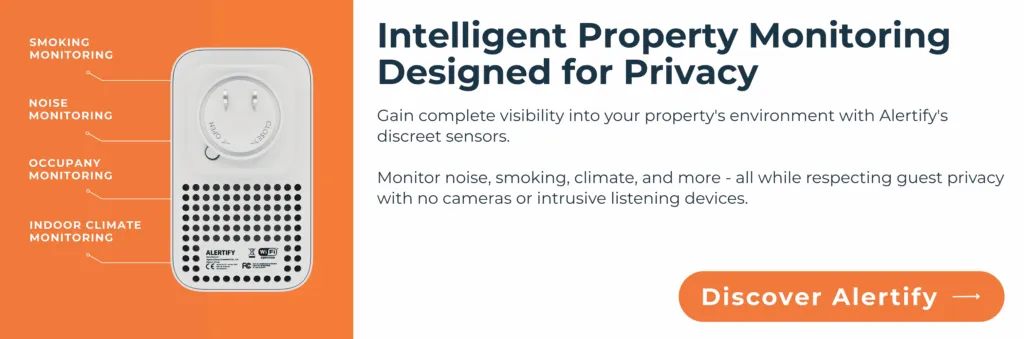
This is precisely what the Alertify platform was designed to do. It provides a simple, powerful, and scalable “check engine light” for every room in your school. It’s not just a sensor but rather it’s a complete environmental management system.
Meet the “Check Engine Light” for Your School: How Alertify’s AQ+ Works
The Alertify AQ+ monitor is an all-in-one, plug-and-play device that tracks the full spectrum of indoor environmental quality in real-time. Here is how it directly solves the problems we’ve identified:
- It Monitors CO2: The device tracks CO2 levels 24/7.
- The Benefit: Stop guessing how CO2 in classrooms affects learning. You can see a real-time graph of the 4th-grade math class on your computer or phone. You can set an alert, so the principal and facilities manager are instantly notified when CO2 in the cafeteria exceeds the limit, allowing them to boost ventilation only when needed. This is how you verify your classroom ventilation standards are being met.
- It Monitors Temperature and Humidity:
- The Benefit: Go beyond “comfort.” You can finally optimize for the “Goldilocks Zone” that impacts classroom temperature and student performance. More importantly, Alertify’s smart algorithm provides a Mold Risk Assessment. It doesn’t just tell you the humidity now, it alerts you if the humidity has been over 65% for 48 hours, flagging a high-risk condition before mold in school buildings can take hold and become a six-figure remediation disaster.
- It Monitors Particulates (PM2.5):
- The Benefit: You get an instant alert when smoke is infiltrating the building. This data allows you to make smart, protective decisions – like keeping windows closed and deploying HEPA filters – to protect student health.
- It Monitors VOCs:
- The Benefit: Know instantly if the VOCs in classrooms are spiking. You can correlate a high VOC alert with the nightly cleaning schedule and switch to safer, low-VOC products. You can ensure the art room is properly ventilated, protecting students from chemical exposure.
A Day in the Life: Smart IAQ in Action
Imagine this:
- 10:15 AM: The gym is packed for a school assembly. Alertify detects CO2 levels rising rapidly past 2,000 ppm. An automatic alert is sent to the facilities manager, who remotely triggers the HVAC system’s high-power mode to flood the space with fresh air. Student concentration levels for the assembly are preserved.
- 3:00 PM: The nurse checks her dashboard and sees a spike in PM2.5 in the 2nd-grade wing, correlating with a rise in students using their inhalers. This data helps facilities pinpoint a clogged filter in that wing’s air handler. A simple fix solves a chronic health problem.
- 8:00 PM (Friday): A slow leak starts in a pipe in the basement locker room. By Saturday night, the Alertify sensor detects that humidity has been at 75% for three straight days. The facilities director gets an alert at home, comes in to find the small leak, and fixes it. A $200 repair prevents a $200,000 mold remediation.
This is the power of moving from a reactive to a proactive model. This is the new standard for a healthy learning environment.
The Undeniable ROI: Why Clean Air Is a Financial Imperative
An investment in IAQ monitoring isn’t an “expense.” It is one of the highest-return investments a district can make, delivering powerful, measurable paybacks in three key areas.
1. The Academic ROI: Improving the Impact of Indoor Air Quality on Student Performance
The impact of indoor air quality on student performance is your primary mission. The evidence is overwhelming. The 2017 Lawrence Berkeley National Laboratory review on school ventilation found “compelling evidence… of an association of increased student performance with increased ventilation rates.”
When students are in a well-ventilated room:
- They think more clearly.
- They solve problems faster.
- They stay on-task longer.
By directly managing the environmental factors that cause drowsiness and distraction, you are giving students a measurable academic advantage. You are removing the invisible physiological barrier that holds them back.
2. The Attendance ROI: Boosting School IAQ and Student Attendance
For nearly every school district, the budget is not a fixed number. It is directly and inextricably linked to Average Daily Attendance (ADA). Every sick day is a loss of revenue. This is where school building humidity control and ventilation have a massive financial impact.
- Reducing Sick Days: As the Center for Disease Control and Prevention has noted, asthma is the leading cause of school absenteeism due to chronic illness, and IAQ is a primary trigger. By managing humidity to prevent mold and filtering PM2.5, you reduce asthma triggers. By keeping humidity in the 40-60% “sweet spot,” you reduce the transmission of the flu and common cold.
- Protecting Staff: This applies to teachers, too. Fewer sick days for staff means fewer dollars spent on substitutes, a major drain on operational budgets, and a disruption to the learning process.
- The Societal Cost: The financial hit isn’t just to the school. When a child is sick, a parent or guardian often must miss work, resulting in lost wages and reduced productivity that impacts the entire community.
- The LBNL Study: One Lawrence Berkeley National Laboratory study in California found that increasing classroom ventilation rates to the state standard could decrease illness absences by 3.4%, generating $33 million in attendance-linked funding for the state. This is not a theoretical benefit but rather it is a hard financial number.
3. The Operational ROI: The Financial Benefits of Good IAQ
This is where the investment pays for itself, often in the first year.
- Massive Energy Savings: This is the most immediate payback. Most upgrading of school HVAC systems is prohibitively expensive. But smart monitoring makes your existing system efficient. Instead of running ventilation at 100% in an empty building, “Demand-Controlled Ventilation” (powered by Alertify’s real-time CO2 data) allows your HVAC to run only when a room is occupied and only as much as is needed. You stop paying to heat or cool the outside air for an empty auditorium at 9 PM. The energy savings are enormous.
- Catastrophic Risk Aversion: As mentioned, the cost of a single, undiscovered mold remediation can be catastrophic. The cost of implementing school air quality monitoring is a tiny, fractional insurance policy against that budget-destroying disaster. It allows you to move from deferred maintenance in schools to predictive maintenance, fixing small leaks before they become toxic, expensive crises.
Your 5-Step Action Plan to a Healthier School
You are convinced. You’re ready to start. Here is your simple, 5-step roadmap.
- Ditch One-Time School IAQ Testing: The old model of a “snapshot” test is obsolete. Your new mindset must be about 24/7, continuous, real-time data. An expensive consultant’s report tells you what the air was like on one Tuesday afternoon in October. It doesn’t tell you what happens during a packed assembly or when wildfire smoke rolls in. You need a “video,” not a “photo.”
- Assemble Your Team: This isn’t a one-person job, and it shouldn’t be siloed in the facilities department. Your IAQ team should include key stakeholders:
- Facilities Manager: Your technical expert who will manage the HVAC response.
- School Nurse: Your health expert who has the data on asthma attacks and mysterious headaches.
- A Lead Teacher or Principal: Your on-the-ground expert who knows which rooms “feel stuffy.”
- A District Administrator: Your budget expert who needs to see the data to understand the ROI.
- Audit and Prioritize: You don’t need to do every room at once. Be strategic. Start by implementing school air quality monitoring in your known “red flag” zones:
- High-Density Areas: Cafeteria, gymnasium, auditorium, band room.
- Vulnerable Populations: The nurse’s office, special education rooms, and kindergarten classrooms.
- Known “Problem” Areas: The basement library that “always smells musty,” classrooms in the 1950s wing, the art room (with VOCs), or any room near the bus pickup line (PM2.5).
- Deploy a Platform****, Not Just a Sensor: This is the most important decision you’ll make. Don’t just buy a $50 CO2 sensor from an online marketplace. You’ll have 20 different devices with 20 different apps, and no way to see the big picture. You need a platform, like Alertify. This gives you:
- All-in-One Sensors: Tracks CO2, Humidity, Temperature, and PM2.5 in one device.
- A Central Dashboard: One simple, web-based login to see the status of all your buildings and rooms from your phone or computer.
- Actionable Alerts: Instant email or text alerts when a threshold is breached.
- Create Your Action Plan and Communicate: Use your new data to create a Healthy School Environment Checklist and data-driven action plans.
Your New Data-Driven Action Plan
- IF: The Alertify sensor in a classroom shows CO2 is consistently rising above 1,200 ppm by 11 AM…
- THEN (Low-Cost): Implement a “fresh air flush” by opening windows for 5 minutes between classes.
- THEN (Facilities): Check the HVAC damper for that room to ensure it’s not stuck closed.
- IF: The dashboard shows high PM2.5 from outside smoke…
- THEN: An all-school announcement is made to keep windows closed, and portable HEPA filters are run in classrooms.
- IF: The platform sends a “High Mold Risk” alert for the locker room…
- THEN: A maintenance ticket is automatically created for facilities to investigate for a leak, before mold can grow.
- IF: The dashboard shows a VOC spike in the 200-wing every night at 10 PM…
- THEN: Check the cleaning products being used by the nightly crew in that wing and switch to certified low-VOC alternatives.
Finally, share your commitment. Be transparent with parents and staff. Let them know you are one of a few leading-edge school districts that is proactively monitoring and managing indoor air quality in schools. This builds immense trust and shows you are dedicated to their children’s health and safety.
The Air We Breathe Is the Future We Build
For decades, we have operated our schools with a massive, invisible blind spot. We have demanded focus from students in rooms that chemically induce drowsiness. We have told children with asthma to “be careful” while sending them into environments filled with triggers.
Those days are over. The technology is here. It is simple, affordable, and powerful.
Implementing school air quality monitoring is not one more thing on your “to-do” list. It is the central, data-driven strategy that impacts everything else: academic achievement, student health, staff retention, and fiscal responsibility.
The indoor air quality in schools is not a passive background condition. It is an active and powerful agent in our children’s success. It is time to take control of it.
Don’t Guess About Your School’s Air
Students and teachers deserve a healthy, productive, and safe learning environment. The Alertify AQ+ monitoring platform gives you the 24/7 visibility and actionable insights you need to protect your most valuable assets.
Stop reacting to complaints and start preventing problems. See exactly how our simple, powerful platform can help you lower absenteeism, boost cognitive performance, and create the optimal healthy learning environment in your schools.