
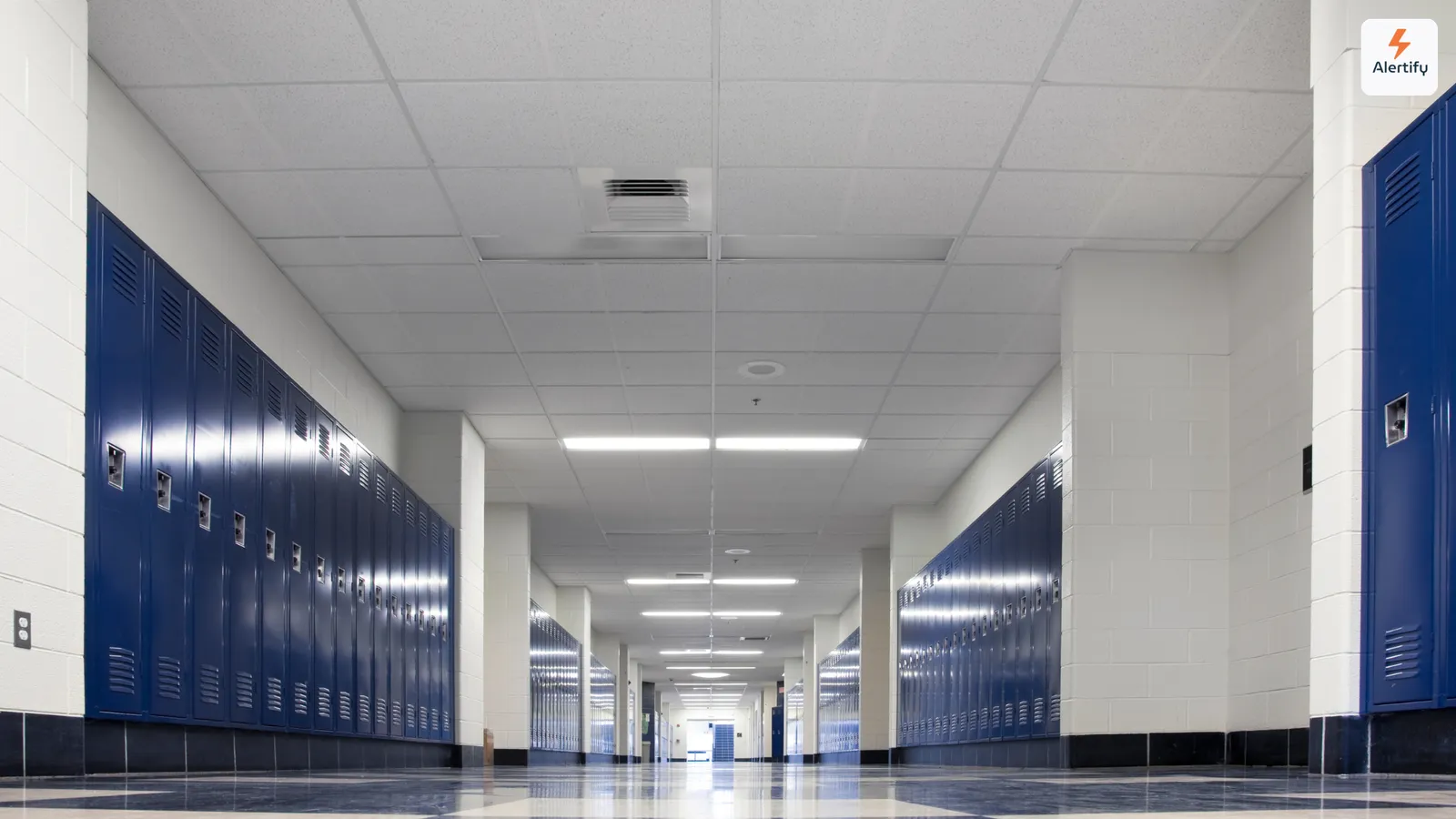
The market for noise monitoring technology has grown significantly, but most products were built for the hospitality sector, short-term rental hosts, hotel operators, and property managers who need to catch parties before the neighbours complain. That is a valid use case, but it is not the same as managing acoustic conditions across a campus with classrooms, residential halls, common areas, exam rooms, and staff workspaces, each with different thresholds, different occupancy patterns, and different regulatory obligations. Finding the right noise monitoring system for schools requires knowing which features matter for educational settings specifically, and which product capabilities that matter in other contexts simply are not relevant.
The Baseline Every Campus System Should Clear
Before evaluating any specific product, there are non-negotiable requirements that any noise monitoring system for use in educational facilities must meet.
Privacy compliance is the first filter: Schools operate with minors, staff, and residential students whose expectation of privacy is legally protected and institutionally important. A monitoring system that records audio, even briefly, even as a trigger mechanism, is not appropriate for classroom or dormitory use, and in many jurisdictions would require explicit consent from every person in the monitored space. The only acceptable baseline for a campus sound monitoring solution is a device that measures ambient decibel levels without capturing any audio content whatsoever. No recordings, no microphones, no speech detection. Just sound level data.
Alertify is 100% privacy-safe by design. It monitors decibel levels continuously and sends alerts when thresholds are exceeded, but it does not record audio, capture speech, or store any content of what is said in a monitored space. This makes it compliant with the privacy obligations schools carry for students, staff, and residents without requiring any additional consent infrastructure.
Configurable thresholds for different spaces and times: A classroom during instruction and a dormitory corridor at midnight require fundamentally different alert thresholds. Any credible system will allow administrators to set distinct parameters for each space and each time period, so the system generates actionable alerts, not a constant stream of false positives during normal activity or missed violations during genuinely problematic events.
Coverage area and ease of deployment: Campuses range from a few buildings to sprawling multi-site estates. A system that requires professional installation or extensive infrastructure is neither practical nor cost-effective at educational scale. Alertify covers approximately 800 square feet per device and takes around 15 minutes to set up, plug in, connect to WiFi, and configure on the dashboard. There is no specialist installation required and no disruption to the spaces being monitored.
The Features That Actually Make a Difference
Beyond the baseline requirements, certain capabilities separate a noise monitoring system that genuinely improves campus management from one that simply adds data without changing outcomes.
Automated alerting with identified location: An alert that tells a facilities manager “noise exceeded” is far less useful than one that tells them “classroom 4B has exceeded 65 dB for the past 8 minutes.” For multi-building campuses in particular, the ability to identify exactly which space is generating an alert, without requiring the staff member to physically check each location, is what makes the system operationally useful rather than merely informative.
Incident logging and exportable reports: Every noise event should be automatically timestamped and stored. That record is what makes conduct proceedings possible, compliance audits defensible, and pattern analysis meaningful. Alertify retains 180 days of incident history in the dashboard, with data exportable for use in any formal process that requires acoustic evidence.
Dashboard visibility across multiple spaces: When selecting the best noise monitoring device education administrators can deploy at scale, multi-building dashboard support is a critical differentiator. For deployments spanning several buildings, a consolidated dashboard view that shows the real-time status of every monitored space is essential. Without it, managing noise across a campus requires either constant manual checking or accepting that most spaces are unmonitored most of the time. Alertify’s dashboard provides this consolidated view for multi-building and multi-campus deployments, with the same threshold configuration and alert workflow applied consistently across all locations.
Why Alertify Is Built for This
Most noise monitoring products optimize for a single-property host who needs one or two devices. Alertify was designed to scale across multiple units, buildings, and sites, which is exactly what noise monitoring in schools and university campuses requires.
The privacy-safe design, configurable thresholds, multi-space dashboard, 180-day incident history, and plug-and-play setup combine to address the specific operational needs of educational facilities. Alertify’s education solution is built for the complexity of campus management: varied spaces, varied populations, varied compliance obligations, and the need for objective data across all of them.
For administrators evaluating options, the test is straightforward: does the system measure what you actually need to know, store it in a form you can use, alert the right person at the right time, and do all of this without compromising the privacy of the people in the monitored spaces? If the answer to any of those questions is no, the system is not built for your environment.
Book a free demo with Alertify to see how the system works across an educational campus and whether it fits your specific requirements.