We instinctively associate certain smells with a clean, productive school. The sharp scent of disinfectant, the fresh smell of a newly painted hallway, or the “new” smell of brand-new desks and carpets. We believe these are the signs of a well-maintained building.
But what if these familiar smells are actually signals of a hidden problem?
When we discuss indoor air quality in schools, we often focus on CO2 or temperature. But a far more insidious threat comes from a cocktail of invisible airborne pollutants. The two most concerning in a school environment are Volatile Organic Compounds (VOCs) and Particulate Matter (PM2.5).
These common air pollutants in schools are linked to everything from asthma attacks and headaches to long-term cognitive impairment. This post will uncover these hidden dangers, identify their sources, and show you how to make the invisible visible.
What is PM2.5? The “Particulate” Problem
“PM2.5” refers to Particulate Matter that is 2.5 micrometers or less in diameter. To put that in perspective, a single human hair is about 70 micrometers thick. These particles are so fine that they are invisible to the naked eye.
But their small size is exactly what makes them so dangerous.
When inhaled, larger particles (like PM10, or dust) get trapped in our nose and throat. But PM2.5 particles are so small they can bypass these defenses, travel deep into the lungs, and even pass directly into the bloodstream.
Where Does PM2.5 Come From?
The connection between PM2.5 and student health is critical because its sources are both outside and inside the school:
- External Sources:
- Vehicle Exhaust: This is a major one, especially for schools near busy roads or with a large fleet of school buses idling during pickup and drop-off.
- Wildfire Smoke: A growing seasonal problem for millions, wildfire smoke can infiltrate buildings and send PM2.5 levels skyrocketing for days or weeks.
- Industrial Pollution & Construction: Nearby factories or construction sites can be a major source.
- Internal Sources:
- Dust from construction or renovation.
- Cooking particles from school cafeterias.
- Particles from printers and copiers.
Once inside, these particles can linger in the air for hours, being continuously inhaled by students and staff. They are a primary trigger for asthma attacks and are linked to respiratory infections and even long-term cardiovascular and cognitive issues.
What are VOCs? The “Chemical” Problem
If PM2.5 is the “particulate” threat, Volatile Organic Compounds (VOCs) are the “chemical” threat. These are gases that are “off-gassed” from thousands of common products.
The problem of VOCs in classrooms is that schools are filled with them.
- Cleaning Supplies: That “clean” smell? It’s often a blend of VOCs like terpenes (from pine and citrus scents), formaldehyde, and benzene, which are known irritants.
- School Supplies: Dry-erase markers, permanent markers, glue, and paint are all major sources of VOCs.
- Building Materials & Furnishings: This is a huge one. New carpet, new desks (made with particleboard and resins), fresh paint, and vinyl flooring can off-gas VOCs for months or even years.
The “New Building Smell” Is a Warning
When you walk into a newly renovated wing, that powerful “new” smell is, in fact, a high concentration of VOCs in classrooms.
The health effects are immediate and cumulative. Short-term, they cause headaches, dizziness, nausea, and irritation of the eyes, nose, and throat. This is a major distraction from learning. Long-term exposure to certain VOCs, like formaldehyde, is linked to serious health conditions, including cancer.
Why Children Are Uniquely Vulnerable
This is the most critical point. A “safe” level of pollution for an adult is not the same for a child.
- They Breathe More Air: Relative to their body weight, children breathe in significantly more air (and thus, more pollutants) than adults.
- Their Bodies Are Developing: Their respiratory systems, immune systems, and brains are still in a critical stage of development, making them more susceptible to damage from these pollutants.
- They Are Closer to the Ground: Some heavy VOCs and particles concentrate lower to the ground, right where younger children live and play.
The link between PM2.5 and student health is not a minor issue but rather it’s a foundational child-safety issue. Ignoring these common air pollutants in schools is to ignore a direct threat to student wellness.
How to Manage a Threat You Can’t See
The challenge for school administrators is clear: how do you manage a threat that is invisible and often odorless? You can’t just “open a window,” especially if the outdoor air is polluted with wildfire smoke or bus exhaust.
You must replace guessing with data.
This is where a comprehensive monitoring solution like Alertify becomes indispensable.
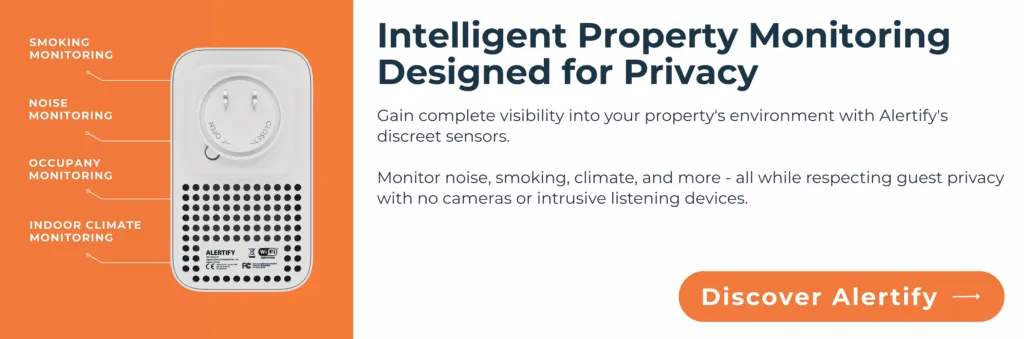
- See the Unseen: The Alertify AQ+ monitor has dedicated sensors that track PM2.5 levels in real-time. You can see exactly when outdoor smoke is infiltrating or when cafeteria cooking is impacting the nearby gym.
- Take Informed Action: With this data, your team can make smart decisions.
- PM2.5 spike from outside? Keep windows closed and deploy portable HEPA filters to “scrub” the indoor air.
- VOC spike in the art room? Turn on the exhaust fans and increase ventilation to that specific area.
- High PM levels at 3 PM? You have the data to enforce a “no-idling” policy for school buses.
- Track Trends: See how PM2.5 levels rise and fall during the day. This data helps you optimize your HVAC filtration schedule, telling you when your filters are clogged and need to be changed.
You cannot eliminate every source of common air pollutants in schools, but you can manage and mitigate them. By monitoring PM2.5 and other pollutants, Alertify gives you the power to protect your students from the hidden dangers in the air they breathe.
Ready to find out what’s really in your school’s air? Don’t let invisible pollutants compromise student health and learning. Alertify’s AQ+ sensors provide the comprehensive, real-time data you need to identify and manage PM2.5, VOCs, and more. Schedule a demo today and make the invisible visible.