Platform · Gunshot detection

Coming soon

Gunshot detection that pinpoints where the shot came from.

Acoustic gunshot detection for schools, malls, and public spaces. The moment gunfire is confirmed, Alertify narrows it to a building, hallway, or entrance, then gets that location to security teams and first responders in seconds.

  • Detects the acoustic signature of gunfire, not conversations
  • Localization narrows the source to a building, floor, or entrance
  • Alerts route to staff and responders the moment a shot is confirmed
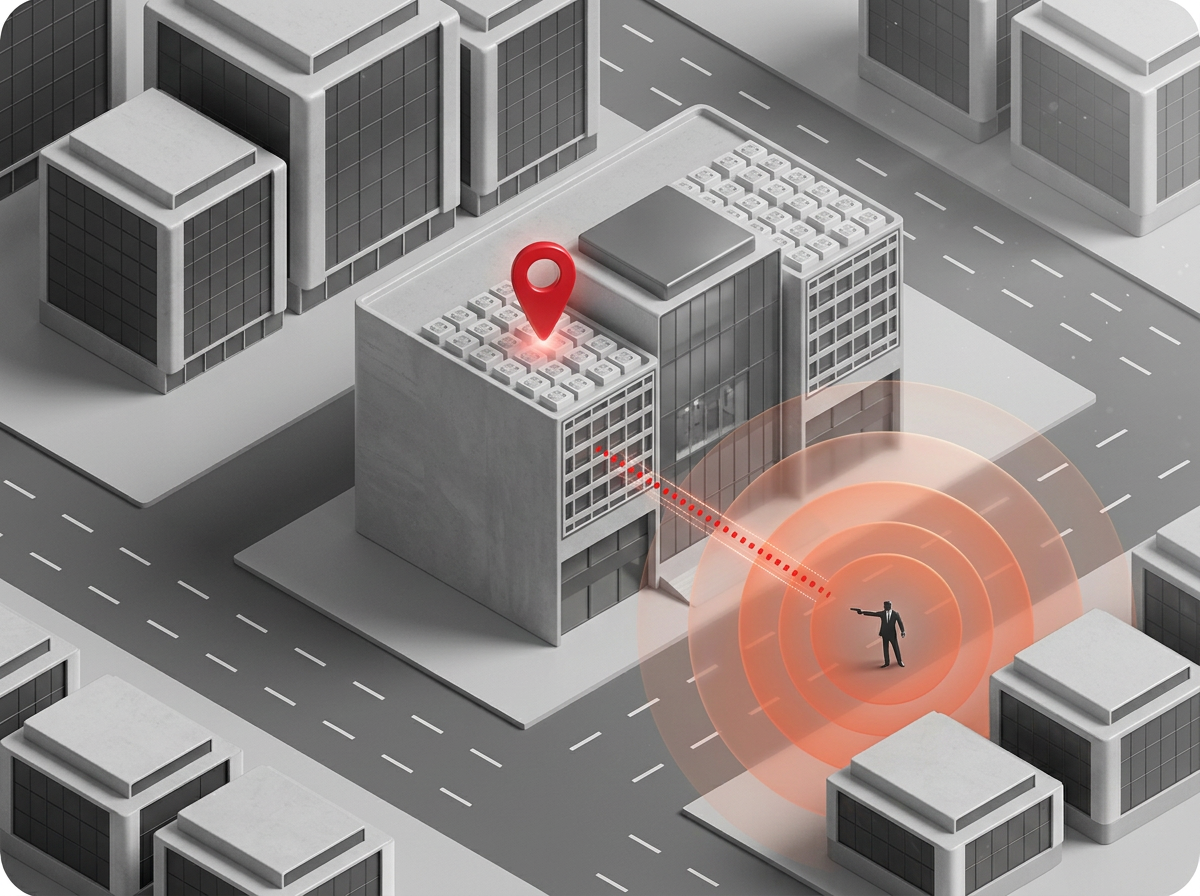
Gunshot localization — a floor plan showing the pinpointed source of a detected gunshot across a building

Why gunshot detection matters

In a crisis, the first job is knowing where.

When a shot is fired indoors, sound bounces off walls and floors, and people nearby often can’t tell where it came from. Acoustic gunshot detection answers that question automatically, so a response can begin in seconds instead of minutes.

A location, not just an alarm

Detection confirms that gunfire happened. Localization adds the part that saves time: the building, floor, hallway, or entrance the shot came from, sent with the alert.

Seconds back for response

No one has to witness the event, find a phone, and describe a location first. An automatic, located alert lets safety teams and first responders move sooner.

Built around privacy

The sensor listens for the sound signature of gunfire, not conversations. There is no camera, and ongoing audio is not stored or streamed. It recognises one kind of event and reports it.

88%

Of gunfire is never reported to police

48K+

US firearm deaths every year

2.5 min

Faster police response with acoustic alerts

<60s

From a confirmed shot to a located alert

Gunshot localization

Pinpoint where the gunshot came from.

Detecting a shot is one thing; knowing where it came from is what shortens a response. By comparing how each sensor hears the same gunshot, Alertify localizes the source and sends that location with every alert, so no one is searching a building blind.
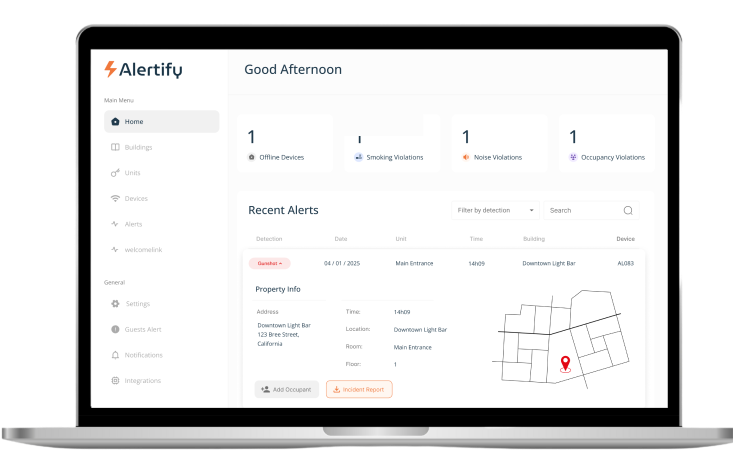
  • Narrows the source to a building, floor, hallway, or entrance.
  • Location travels with the alert, on the map and in every message.
  • Works indoors, where echoes make a shot hard to place by ear.
Alertify dashboard showing a recent gunshot alert with property info and a map pinpointing where the shot came from

Privacy by design

It detects gunfire, not conversations.

The gunshot sensor listens for one specific sound: the acoustic signature of a shot. It is not a microphone for the room. There is no camera, no video, and ongoing audio is not stored or streamed. The device recognises the event it is built to catch and reports it.
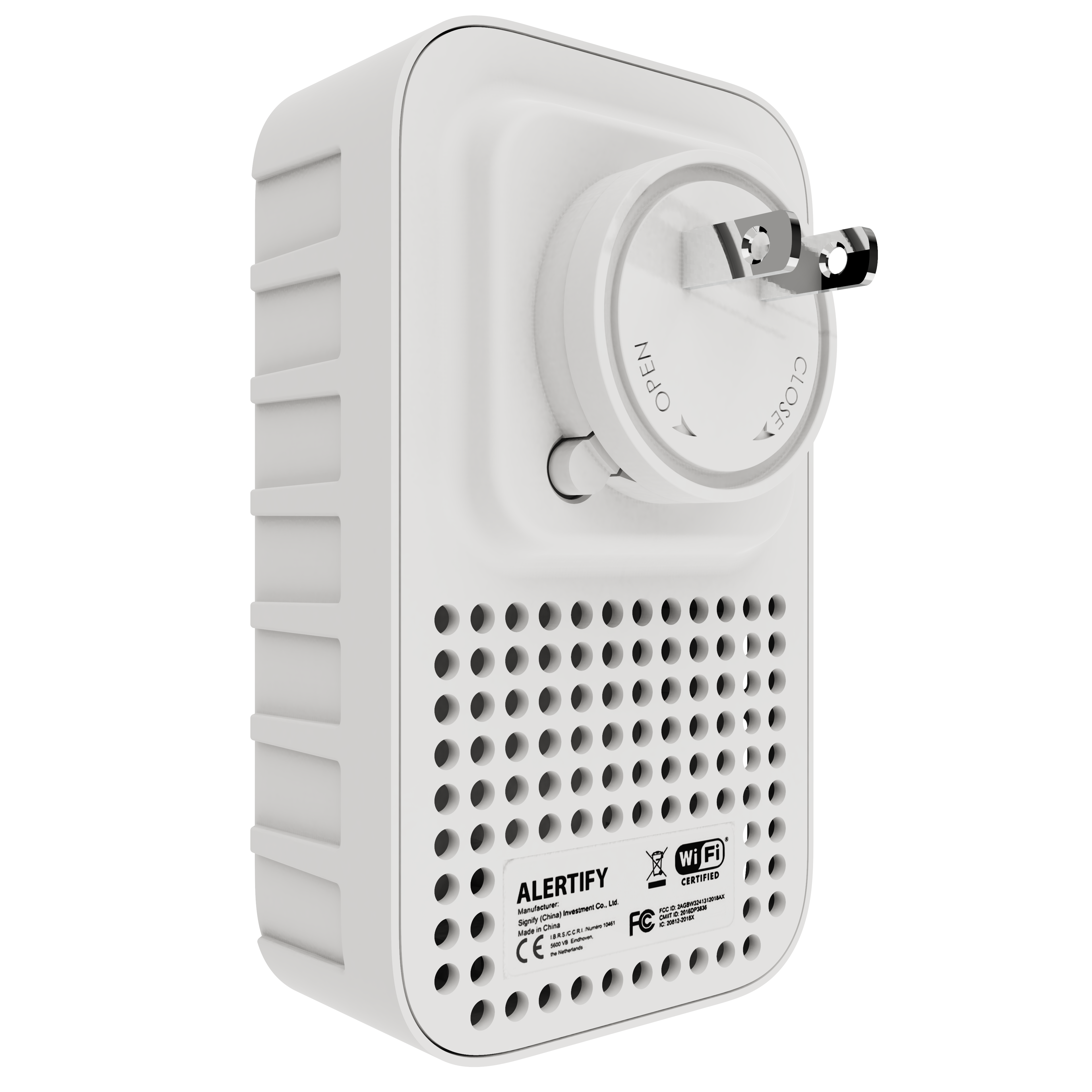
  • Detects the acoustic signature of gunfire, not speech or everyday sound.
  • No camera, no video, no images from the space.
  • No conversations recorded. The sensor is built around the event, not the room.
The Alertify device — an unobtrusive acoustic sensor that detects the signature of gunfire, not conversations

Where it’s used

Built for the places people gather

Schools and malls actively procure acoustic gunshot detection, because indoor spaces make gunfire hard to place by ear and seconds matter. The same approach fits campuses, transit hubs, and public spaces.

Educational Settings — schools and campuses

Educational Settings

Schools & campuses

Shopping Malls and Stores — concourses and retail

Shopping Malls & Stores

Concourses & retail

Healthcare Facilities — hospitals and clinics

Healthcare Facilities

Hospitals & clinics

Government Buildings — civic and public offices

Government Buildings

Civic & public offices

Airports and Public Spaces — transit and travel hubs

Airports & Public Spaces

Transit & travel hubs

Bars and Entertainment Venues — nightlife and live events

Bars & Entertainment Venues

Nightlife & live events

Documentary evidence

A clear record of every alert.

Each detected event is logged with its timestamp, confirmed signature, and pinpointed location: a clear, factual record for after-action review, safety planning, and reporting to the people who need it. No conversations, just the documentation of the event.

  • Timestamped events with the located source, exportable to PDF and CSV.
  • Ready for safety teams, public-safety offices, and board reviews.
  • Real-time dashboard: see what was detected, where, and when it routed.
See documentary evidence →
Documentary evidence — a timestamped record of a detected gunshot event with its pinpointed location, ready to export

Questions, answered

Gunshot detection FAQ

Gunshot detection works by listening for the distinct acoustic signature of gunfire. Alertify sensors continuously analyse the sound environment for the sharp, high-energy pattern a gunshot creates: the muzzle blast and shockwave. When that pattern is recognised, the sensor confirms it against other acoustic events to reduce false alarms, then sends an alert in seconds. It detects the sound of gunfire, not speech, so everyday conversation is never analysed as a threat.
Yes. When several sensors cover a space, each one hears the same gunshot a fraction of a second apart. Alertify compares those tiny timing differences to localize the source, narrowing it to a building, floor, hallway, or entrance. That location travels with the alert, so security teams and first responders know where to go without searching the whole site. This is what it means to pinpoint where gunshots came from.
No. Alertify gunshot sensors detect the acoustic signature of gunfire, not conversations. They listen for a specific sound pattern and do not store or stream ongoing audio, and there is no camera. The sensor is built to recognise one type of event and report it, not to listen in on the room.
Gunshot detection is used in schools, shopping malls, transit hubs, campuses, and other public spaces where a fast, accurate alert can shorten the time to response. Gunshot detection in malls is common because concourses and atriums are open, echo-prone spaces where it’s especially hard to tell where a sound came from, which is exactly where localization helps most. Schools and malls in particular actively procure acoustic gunshot detection.
An acoustic alert is generated within seconds of the sound being confirmed. Because detection is automatic, no one has to witness the event, find a phone, and describe a location first. The alert, with its pinpointed location, can route straight to on-site security, designated staff, and integrated emergency workflows at the same time.
Gunshot detection reduces false alarms by checking the sound against the specific acoustic signature of gunfire rather than reacting to any loud noise. A door slam, dropped tray, or balloon pop has a different shape than a gunshot. Confirming the pattern, and cross-checking across sensors where they overlap, helps separate real gunfire from everyday sounds before an alert goes out.
Yes. Alertify alerts can be delivered over SMS, email, and in-app notifications, and routed into the systems a site already uses (access control, mass-notification, and lockdown workflows) through the API. A gunshot alert can trigger those downstream actions automatically the moment it is confirmed.
Live · waiting for you

See it on your site.

A 20-minute walkthrough: your buildings, your safety workflows, the questions you actually have.

Alertify just now
Get started with Alertify
A reply, a demo, a deployment plan. You choose.
I'm interested in monitoring...

Resolved · we got it.

Thanks for reaching out. We'll be in touch within one working day.