Noise ordinances

Short-term rental noise rules, city by city.

Quiet hours, noise monitor requirements and fines for 28 cities and counties across the US and Canada. Each one is checked against the local code, with a link so you can read it yourself.

Last checked October 2026Browse the city list

Three kinds of rule

Every place on the map falls into one of three groups, so you can see at a glance what a city expects.

13

require a noise monitor

Required
1

rewards hosts who use one

Rewarded
14

set quiet hours and fines

Fines & quiet hours

City by city

Find your city.

Open a region or search for your city to get a plain-English summary of what applies, with the code behind every point.

The Golden Gate Bridge over San Francisco Bay, California

California

12 places
  • La QuintaCalifornia
    Monitor required

    Estate homes (5+ bedrooms) need a noise monitor that works at all times. Quiet hours 10pm–7am.

    Key facts and sources
    Noise monitor
    Required for estate homes, meaning single-family homes with five or more bedrooms, used as short-term vacation rentals. The monitor must be operable at all times, and the estate-home permit inspection checks for an active noise monitor.
    Records
    For any rental, the City can add a noise monitor as a permit condition. When it does, the device must keep time-stamped noise data that the City can see on reasonable request.
    Quiet hours
    From 10pm to 7am, no sound-producing equipment may be used outside the rental or be audible from outside it.
    Response time
    A local contact must be available 24/7 and respond to noise or disturbance complaints within 30 minutes.
    Fines
    Administrative citations of $1,000 for a first violation, $2,000 for a second and $3,000 for a third. Operating without a permit: $1,500, $3,000, then $5,000.
    Permit consequences
    Two violations within one year at the same home lead to an immediate permit suspension, with the right to a hearing.
    The law
    La Quinta Municipal Code Chapter 3.25 (Short-Term Vacation Rentals), including §3.25.030, §3.25.070 and §3.25.090.

  • Monitor required

    A noise monitor is required. It must be internet-connected and alert you in real time above 70 dB.

    Key facts and sources
    Noise monitor
    Required. Owners must install a noise monitoring system that alerts the owner or manager to noise above 70 decibels. The City's checklist says it must measure decibels, be connected to the internet and send real-time notifications. Devices that only count the phones or devices present don't qualify.1
    Noise limit
    The monitor's alert threshold is set at a minimum of 70 decibels.1
    Response time
    When told that guests have created unreasonable noise or a disturbance, the owner, agent or emergency contact must contact the responsible guest immediately and give a warning, or end the stay.1
    Permit consequences
    A noise monitor that doesn't meet the rules delays permit processing and may lead to the application being denied.1
    The law
    Desert Hot Springs Municipal Code Chapter 5.44 (Vacation Rentals). Amendments in effect since February 19, 2026 added mandatory City-certified training for owners and agents.1, 2
  • Monitor required

    Homes in residential areas need indoor noise and outdoor video monitoring. Quiet hours 10pm–8am.

    Key facts and sources
    Noise monitor
    In residential areas, owners must install indoor noise monitoring and outdoor video monitoring devices that alert the property manager immediately, 24 hours a day. Inspections for new permits in residential areas check that the devices are installed and working.1
    Quiet hours
    Noise-generating equipment and outdoor amplified music or speakers aren't allowed from 10pm to 8am. Outdoor spas and hot tubs can't be used in those hours either.1
    Response time
    In residential areas, the property manager must be able to respond in person to complaints within 60 minutes, 24 hours a day, seven days a week.1
    Fines
    Owners and guests can both receive administrative citations. The amounts are set by separate City Council resolution.1
    Permit consequences
    A permit is revoked after three or more upheld citations from three separate events or calls for service within any 24 months.1
    The law
    South Lake Tahoe City Code Chapter 3.50, as amended by Ordinance 2026-1203 (in effect since April 23, 2026). "Residential areas" are residentially zoned areas outside the Tourist Core and several commercial plan areas.1, 2
  • Riverside County (unincorporated)California
    Monitor required

    An exterior noise monitor is required on unincorporated county rentals. Quiet hours 10pm–7am.

    Key facts and sources
    Noise monitor
    The responsible operator must install and keep running a noise monitor on the exterior of the rental. It must have no camera, not record conversations and not store personal data. A working monitor is checked at inspection.1
    Quiet hours
    10pm to 7am.1
    Response time
    In an urgent circumstance, the responsible operator must be at the rental within 60 minutes of the enforcement officer's request.1
    Fines
    Administrative citations of $1,500 for a first violation, $3,000 for a second at the same rental within a year, and $5,000 for each additional violation within a year.1
    Permit consequences
    Three notices of violation over the life of a certificate bring a six-month suspension, and five bring immediate revocation.1
    The law
    Riverside County Ordinance No. 927, as amended by Ordinance No. 927.3 (effective September 24, 2026).1, 2
  • San Bernardino County (unincorporated)California
    Monitor rewarded

    A one-time $150 permit-fee credit for installing an approved outdoor noise monitor.

    Key facts and sources
    Noise monitor
    Optional. Unincorporated-county permit holders can get a one-time $150 credit toward the STR permit fee for buying and installing an approved outdoor noise monitoring system (at least one outdoor monitor). The program took effect July 28, 2022.1
    Quiet hours
    10pm to 7am.2
    Noise limit
    Noise may not exceed 45 decibels during quiet hours and 55 decibels at other times.2
    Response time
    The owner or agent must be reachable 24/7, make contact within 30 minutes and be physically present within one hour to resolve complaints.2
    Fines
    Under the County's 2024 Operational Standards Guide: a Notice of Violation for a first confirmed violation, then $1,000, $2,000, and $5,000 for a fourth and later.2
  • Palm SpringsCalifornia
    Fines & quiet hours

    Quiet time 10pm–10am, no outdoor amplified sound, and a 2-year suspension after a third violation.

    Key facts and sources
    Quiet hours
    The City's Good Neighbor Brochure sets quiet time from 10pm to 10am.3
    Noise limit
    Music and other amplified sound must stay inside a fully enclosed rental and must not be audible at the property line (Municipal Code 5.25.070(g)).2
    Response time
    The owner or local contact must respond by phone within 15 minutes of a complaint, and in person within 30 minutes if it isn't resolved.1
    Fines
    The minimum fine is $500 per violation. Citations can be issued without a warning or courtesy notice first.3, 4
    Permit consequences
    On a third violation in any 12-month period, the City suspends the registration certificate for two years.5
    The law
    Palm Springs Municipal Code Chapter 5.25 (Vacation Rentals), amended by Ordinance 2133, adopted July 8, 2026.1, 6
  • Palm DesertCalifornia
    Fines & quiet hours

    No outdoor sound devices 10pm–10am. Fines from $1,000, and a 2-year revocation on a third citation.

    Key facts and sources
    Quiet hours
    Radios, musical instruments, sound systems and other sound-emitting devices may not be used outside a rental between 10pm and 10am.2
    Response time
    An owner or operator who fails to respond to a complaint within 30 minutes commits an operational violation.1
    Fines
    Operational violations, including noise complaints: $1,000 for a first citation, $3,000 for a second for the same offense within 12 months of the first, and $5,000 for a third within 12 months of the first. Operating without a permit: $5,000 per citation, for every day the home is rented or advertised.1, 3
    Permit consequences
    A third citation within 12 months of the first also brings immediate revocation of the STR permit for two years.1, 3
    The law
    Palm Desert Municipal Code Chapter 5.10 (Short-Term Rentals).1
  • CoachellaCalifornia
    Fines & quiet hours

    Quiet hours 10pm–8am, a phone response within 15 minutes, and fines up to $1,000 for a first citation.

    Key facts and sources
    Quiet hours
    Guests must observe neighborhood quiet hours by avoiding parties and loud social events between 10pm and 8am, unless the permit administrator allows otherwise.1
    Noise limit
    Citywide residential limits are 55 dBA from 6am to 10pm and 45 dBA from 10pm to 6am (10-minute average). Sound equipment plainly audible 50 feet or more from its source is prima facie evidence of a violation.2
    Response time
    A local contact must respond by phone within 15 minutes, and be at the rental in person within 45 minutes for unresolved, additional or repeat complaints.1
    Records
    Keep a written log of every complaint, response and corrective action for at least three years, available to the City on request.1
    Fines
    Administrative fines of up to $1,000 for a first citation, up to $2,000 for a second for the same offense within 12 months, and up to $3,000 for a third or later. Each day is a separate violation.1
    Permit consequences
    Not responding promptly or not taking timely corrective action is a violation, and can lead to penalties or to suspension or revocation of the permit.1
    The law
    Coachella Municipal Code Chapter 5.80 (Short-Term Vacation Rentals), amended by Ordinances 1221 and 1222 (2025). Noise limits are in Chapter 7.04.1, 2
  • Big Bear LakeCalifornia
    Fines & quiet hours

    Quiet hours 10pm–7am, an in-person response within 30 minutes, and fines from $500.

    Key facts and sources
    Quiet hours
    10pm to 7am, under the City's Good Neighbor Policy.3
    Response time
    The owner or agent must respond in person at the property within 30 minutes of the City dispatching notice.2
    Noise monitor
    Not required. A $150 license-fee credit for owners using an approved sound monitoring system was approved through September 20, 2022, and the City's current vacation rental pages don't mention it.1, 4
    Fines
    Violations of the operational requirements: $500 for a first, $1,000 for a second within 12 months and $1,500 for a third within 12 months. Renting or advertising without a valid license: $1,500, $2,500, then $5,000.2
    The law
    Big Bear Lake Municipal Code Chapter 4.01 (Vacation Rentals), Ordinance 2023-518.4
  • Los AngelesCalifornia
    Fines & quiet hours

    Loud or unruly gatherings at any home bring fines from $100, rising to $8,000 for repeat violations.

    Key facts and sources
    The law
    LAMC §41.58.1 prohibits loud or unruly gatherings at any residence, not only short-term rentals. Loud noise at the home, or within 500 feet of it, counts as loud or unruly conduct.
    Fines
    Owners and responsible parties can be fined $100 for a first violation, then $500, $1,000, $2,000 and $4,000, and $8,000 for a sixth and each later violation. The escalation follows the person across different homes, and resets after 12 months with no violations. Removing the posted notice early carries a separate $500 fine.
    Posted notice
    After a gathering, an Enforcement Officer posts a notice on the front entrance for 30 days and a copy goes to the owner. An owner who wasn't there can then be cited for later gatherings.
  • Cathedral CityCalifornia
    Fines & quiet hours

    No outdoor music at any time, outdoor quiet hours 10pm–8am, and fines from $1,000.

    Key facts and sources
    Noise limit
    No outdoor music, radios, instruments or other sound devices at any time. Sound used indoors must not be heard beyond the property line.1
    Quiet hours
    Outdoor amenities, outdoor games and any outdoor activity that creates noise are prohibited from 10pm to 8am.1
    Response time
    The owner, agent or local contact must be available 24/7 to respond to complaints within 30 minutes.1
    Fines
    $1,000 for a first violation, $3,000 for a second and $5,000 plus permit suspension for a third. Citations can be issued immediately, with no warning.1, 2
    The law
    Cathedral City Municipal Code Chapter 5.96, with fines set by Resolution 2022-14. Since 2022, STVRs outside Home Shares are limited to the Resort Residential zone.1, 2
  • IndioCalifornia
    Fines & quiet hours

    Quiet hours start at 9pm Sunday–Thursday and 10pm Friday–Saturday, with no outdoor music during them.

    Key facts and sources
    Quiet hours
    Evening quiet hours start at 9pm Sunday to Thursday and 10pm on Fridays and Saturdays. No outside music or loud use of outdoor amenities during quiet hours.
    The law
    Indio's short-term rental ordinance (2021). The City runs a 24/7 STR hotline, (760) 541-4222, and an online complaint portal.
Desert homes below a mountain at sunset in Arizona

Southwest

5 places
  • HendersonNevada
    Monitor required

    Noise monitors required indoors and outdoors. Resolve complaints in 30 minutes; keep two months of data.

    Key facts and sources
    Noise monitor
    Every short-term vacation rental needs a noise management plan, with noise monitoring devices running continuously while the home is rented. Monitoring equipment must be both indoors and outdoors in common areas, plus extra equipment at the pool or spa for homes that aren't multi-unit buildings.1
    Records
    The owner must keep noise level data records for at least two months.1
    Quiet hours
    10pm to 10am on weekends and 10pm to 7am on weekdays. No outdoor amplified sound during quiet hours, and quiet hours and penalties must be posted on site.1
    Response time
    The local contact has 30 minutes from notification to resolve a complaint. If they reached the guest in that time but couldn't resolve it, they must visit the property and resolve it within a further 30 minutes.1
    Fines
    Noise and quiet-hours violations are Level I: $1,000 per day. Other violations, including the noise management plan, are Level II: $200, $400 and $500 per day for the first, second and third.2
    Permit consequences
    The City starts the process to end a registration after two or more distinct Level I violations, or three or more Level II violations, in any 12 consecutive months.2
    The law
    Henderson Development Code §19.9.4.F (Short-Term Vacation Rentals) and §19.35 (Enforcement).1, 2, 3
  • Clark County (unincorporated)Nevada
    Monitor required

    Outdoor noise monitors are required at the front and rear property lines and near pools. Quiet hours 10pm–7am.

    Key facts and sources
    Noise monitor
    Noise monitoring devices are required at each property line in the front and rear yard, and near any outdoor pool or spa. They must run while the property is rented and alert the licensee or local representative when sustained noise exceeds the County's standards.
    Records
    Keep noise level data for at least 60 days and hand it to the County or law enforcement within 48 hours on request.
    Quiet hours
    From 10pm to 7am, outdoor amenities such as pools, spas, barbecues and firepits may not be used.
    Response time
    The local representative must be able to respond to the unit within 30 minutes whenever it is rented.
    Fines
    For licensed units, the greater of the nightly rental value or $500 for a first violation and $1,000 for each later one, assessed for each day a violation continues.
  • ScottsdaleArizona
    Fines & quiet hours

    Monitors aren't required. Noise over 68 dB(A) from 10pm–9am is presumed excessive; party fines from $250.

    Key facts and sources
    Noise monitor
    Not required by city ordinance. The City says noise monitors are permitted and a best practice, and a judge or hearing officer may reduce nuisance-party fines if the owner installs noise mitigation software or security cameras.2, 3
    Noise limit
    Between 10pm and 9am, noise over 68 dB(A) or 70 dB(C) heard beyond the property line is presumed excessive at a nuisance party.2
    Response time
    The emergency contact must respond in person within one hour when police, fire or other public safety staff ask.1
    Fines
    Nuisance party, responsible person: at least $250 for a first, $500 for a second, $1,000 for a third and $2,000 for a fourth or later within a year. Owner penalties for verified violations within 12 months: up to $500 or one night's rent, up to $1,000 or two nights, then up to $3,500 or three nights, whichever is greater.1, 2
    Permit consequences
    License suspension proceedings start after three verified violations in 12 months.1
    The law
    Scottsdale Revised Code Chapter 18, Article VIII (Nuisance Parties and Unlawful Gatherings) and Article IX (Vacation Rentals and Short-Term Rentals).1, 2
  • Fines & quiet hours

    Plainly audible noise is banned 10pm–7am (6am in summer) at all homes. STR fines start at $500.

    Key facts and sources
    Quiet hours
    Town-wide for residential property: plainly audible noise is prohibited from 10pm to 7am, or 10pm to 6am from May to September.1
    Noise limit
    Measured at the property line, noise is presumed plainly audible above 56 dB from 7am to 10pm, and above 45 dB at night and all day on Sundays and specified holidays.1
    Response time
    Within one hour, in person, for complaints reported to police or where police are dispatched. Within 24 hours otherwise.2
    Fines
    Any violation of the short-term rental article is a civil offense with a minimum $500 fine. Extra owner penalties within 12 months: up to $500 or one night's rent, up to $1,000 or two nights, then up to $3,500 or three nights, whichever is greater.2
    Permit consequences
    A permit can be suspended for 3 to 12 months after three violations in 12 months, or after one serious violation.2
    The law
    Paradise Valley Town Code §8-10-2(E) (Nuisance Noise) and Article 10-14 (Short-Term Rentals).1, 2
  • LoganUtah
    Fines & quiet hours

    Quiet hours 10pm–8am must be posted and enforced, and owners must act within 60 minutes of a complaint.

    Key facts and sources
    Quiet hours
    Quiet hours from 10pm to 8am must be established, posted and enforced for each short-term rental.1
    Response time
    The owner and local contact must act within 60 minutes of being told about unreasonable noise or disturbances, to stop it or prevent it recurring.1
    Fines
    A violation of the short-term rental chapter is a class B misdemeanor and can also be enforced administratively. The chapter doesn't state dollar amounts.2
    Permit consequences
    License revocation can begin after three or more violations within any 12 months.2
Waterfront homes with palm trees and a boat on a Florida canal

Southeast

4 places
  • Monitor required

    A noise device must alert you and your guests, with 180 days of data kept. Quiet-hours rule 10pm–7am.

    Key facts and sources
    Noise monitor
    Required. Every vacation rental must have a noise level detection device that alerts the property owner or responsible party and the guests to noise coming from the rental.1
    Records
    Keep all data the device produces for 180 days and make it available to the City on request.1
    Quiet hours
    From 10pm to 7am, sound must not be plainly audible for one minute or longer 25 feet or more from the property line. From 7am to 10pm, the distance is 50 feet.1
    Response time
    The responsible party must be able to respond in person within one hour of being notified.1
    Fines
    A civil infraction of $250 for a first uncontested violation, or $325 if contested. Repeat violations are assessed under City Code Sec. 11-21. Operating without a valid certificate, or with an expired one: $1,000 per day.1, 2, 3
    Permit consequences
    The vacation rental certificate is suspended for 180 days after a third violation and 365 days after a fourth.1, 2
    The law
    City Code Chapter 15, Article X (Vacation Rentals), Secs. 15-273, 15-278 and 15-282, amended by Ordinance C-26-39 (approved September 15, 2026).1, 2, 3, 4
  • HollywoodFlorida
    Monitor required

    Noise devices are required inside and in outdoor gathering areas, with 180 days of data kept.

    Key facts and sources
    Noise monitor
    Required. Every vacation rental needs noise level detection devices that alert the owner or representative and the guests. As well as the main gathering area inside, an exterior device must be placed in the main outdoor gathering areas, such as patios and pools.1
    Records
    Keep all data the devices produce for 180 days and make it available to the City on request.1, 3
    Noise limit
    Residential limits at or beyond the property line: 65 dBA or 65 dBC from 7am to 10pm, and 55 dBA or 55 dBC from 10pm to 7am.2
    Response time
    The vacation rental representative must be able to be at the property within 60 minutes of being notified.1
    Fines
    Noise ordinance violations may be fined $100 for a first, $500 for a second within six months, and $1,000 per occurrence for a third or later within six months.2
    Permit consequences
    The City may suspend a license on a second finding of the same violation, and will suspend it on a third finding of any violation, within 12 months. A suspension lasts up to one year.1
    The law
    Hollywood Code of Ordinances Chapter 119 (Vacation Rental License Program) and the City's Noise Ordinance.1, 2
  • New OrleansLouisiana
    Monitor required

    Commercial STR permits need a noise monitoring device in their noise abatement plan. Quiet rule 10pm–8am.

    Key facts and sources
    Noise monitor
    Commercial short-term rental permits need a noise abatement plan that includes, at a minimum, a noise monitoring device. The code defines one as a device that monitors noise levels, detects levels above an acceptable level for more than five continuous minutes, sends real-time alerts to the owner and operator, and complies with privacy laws. Non-commercial rentals need a plan but not a device.1, 2
    Quiet hours
    From 10pm to 8am, noise louder than a conversational level, or music plainly audible from the property line, counts as excessive loud sound.1
    Response time
    Owners and operators must be able to resolve complaints within one hour of being contacted by neighbors, guests or the City.1
    Fines
    A fine of not less than $1,000 for each offense. Each day a violation exists is a separate offense.1
    Permit consequences
    Violating the noise abatement plan is a prohibited act and can be grounds for suspension or revocation. After a revocation, you can't reapply for five years.1
    The law
    City Code Chapter 26, Article XI (Standards for Short-Term Rentals), Secs. 26-614, 26-617, 26-618 and 26-629.1
  • NorfolkVirginia
    Monitor required

    Vacation rentals need indoor decibel meters in main gathering rooms and a contact on site in 20 minutes.

    Key facts and sources
    Noise monitor
    Vacation rentals must keep interior decibel meters in the home's main gathering rooms that notify the operator when they detect excessive noise. Homestays, where the owner lives on site, don't need them.
    Response time
    Signs inside and outside the property must name an emergency contact who can respond on site within 20 minutes.
    Records
    Recordings from the required exterior security cameras must be kept for 30 days after a stay and shared with City staff on request. No retention period is set for decibel-meter data.
    The law
    The Norfolk Zoning Ordinance's short-term rental standards, summarized on the City's Short Term Rentals page.

Florida: what state law lets cities regulate

Historic brick shopfronts in downtown St. Charles, Missouri

Midwest

2 places
  • St. CharlesMissouri
    Monitor required

    Every STR needs a working noise monitor that alerts guest and owner. No outdoor sound 10pm–10am.

    Key facts and sources
    Noise monitor
    Each short-term rental must have an operable noise monitoring device that notifies the tenant and the property owner of any noise deemed unreasonable. Inspectors check it at the annual safety inspection.1, 2, 3
    Quiet hours
    No amplified or reproduced sound used outside, or audible from the property line, between 10pm and 10am.1
    Response time
    A local contact must be available 24/7 to respond to complaints within 45 minutes.1
    Permit consequences
    Failing the yearly safety inspection, or not responding to complaints in a timely and appropriate way, are grounds for permit revocation.1
    The law
    City Code Sec. 400.421, enacted by Ordinance 22-104 (2022) and amended April 15, 2025.1, 2
  • SmithvilleMissouri
    Monitor required

    STRs need a noise management plan with monitors running whenever the home is rented. Fines from $50.

    Key facts and sources
    Noise monitor
    Every short-term rental must keep a noise management plan that includes continuous operation of noise monitoring devices while the property is rented. A copy goes in with the permit application.1, 2
    Quiet hours
    Quiet hours, and the penalties for breaking the City noise ordinance, must be posted prominently inside the rental.1
    Fines
    $50 for a first offense, $200 for a second, and $500 for a third and each one after.1
    Permit consequences
    Revocation proceedings can start if the operator is found guilty of two or more offenses within three months. The Planning Commission may suspend or revoke a permit.1
    The law
    Smithville Code Chapter 625 (Short-Term Rentals), Sec. 625.140, adopted by Ordinance 3211-23 on November 6, 2023.1
Rows of brick homes in a Canadian suburb, with snow on the ground

Canada

5 places
  • Monitor required

    Licensed short-term rentals need indoor and outdoor noise monitors (NoiseAware or equivalent).

    Key facts and sources
    Noise monitor
    Licensees must make sure at least one indoor NoiseAware monitor, or equivalent noise detection system, and one outdoor NoiseAware monitor, or equivalent, are fully operational and monitored at all times.1
    Response time
    The responsible person must be reachable by phone and email 24/7, and attend the property within half an hour of being contacted by the Town or an officer.1
    Quiet hours
    Outdoor hot tubs and pools may only be used between 7am and 11pm.1
    Fines
    Breaches are handled under the Administrative Monetary Penalty By-law, which lists operating without a functioning noise notification system where one is required.2
    Permit consequences
    The licensing by-law uses demerit points. A licence may be suspended for up to six months when points exceed 7, and revoked when they exceed 15. Points stay on record for two years.1
    The law
    By-law 2021-70 to Regulate and License Businesses (short-term accommodation schedules), with Noise By-law 2002-09.1, 3, 4
  • TorontoOntario
    Fines & quiet hours

    Amplified sound over the limit carries an $800 set fine, with stricter limits from 11pm to 7am.

    Key facts and sources
    Quiet hours
    Amplified sound has stricter limits from 11pm to 7am.
    Noise limit
    Amplified sound, as a 10-minute average: outdoors 55 dB(A) or 70 dB(C) from 7am to 11pm and 50 dB(A) or 65 dB(C) from 11pm to 7am. Indoors 50 dB(A) or 65 dB(C) by day and 42 dB(A) or 57 dB(C) at night.
    Fines
    A set fine of $800 for amplified sound over the permitted level, outdoors or indoors. Unreasonable and persistent noise: $500. On conviction by summons, up to $100,000.
    The law
    Toronto Municipal Code Chapter 591, Noise. Complaints go to 311.
  • OttawaOntario
    Fines & quiet hours

    Fines range from $400 to $10,000. Sound devices may not disturb people in homes from 11pm to 7am.

    Key facts and sources
    Quiet hours
    Sound reproduction devices may not disturb people in residences between 11pm and 7am, and also before 9am on Saturdays and before noon on Sundays and holidays.
    Noise limit
    From 7am to 11pm: over 45 dB(A) in another dwelling in the same building, or over 55 dB(A) outdoors at or inside the complainant's property line.
    Fines
    The City states fines range from $400 to $10,000 per offence. On conviction, the minimum is $500 and the maximum $10,000 for each day the offence continues.
    The law
    Noise By-law No. 2017-255.
  • CalgaryAlberta
    Fines & quiet hours

    Noise that disturbs a person carries a $250 specified penalty. Night-time is 10pm–7am (9am weekends).

    Key facts and sources
    Quiet hours
    Night-time runs from 10pm to 7am on weekdays and 10pm to 9am on weekends.
    Noise limit
    Continuous sound in residential developments: 65 dBA by day and 50 dBA at night, at any point of reception.
    Fines
    Noise which disturbs a person: $250 specified penalty ($125 minimum). Operating outdoor speakers when prohibited: $500. A second conviction for the same provision within 24 months has a minimum of twice the specified penalty. The maximum on summary conviction is $10,000.
    The law
    Community Standards Bylaw 32M2023, Part 8. Owners and occupiers must not allow noise from their premises that would disturb or annoy a reasonable person.
  • EdmontonAlberta
    Fines & quiet hours

    Noise that disturbs the peace of another person carries a $250 fine, doubling for later offences.

    Key facts and sources
    Noise limit
    No fixed decibel limit: noise that disturbs the peace of another person is prohibited at any time, and owners and occupiers must not let their property be used that way.
    Fines
    $250 for a general noise offence, doubled to $500 for a subsequent offence. The court maximum is $10,000.
    The law
    Community Standards Bylaw 14600, Part III (Noise Control).
Two guests relaxing with coffee on the sofa of a bright, calm vacation rental

How Alertify helps

Stay aligned with local rules, without being on call.

Alerts for you and your guest.

When sound stays above your threshold, Alertify sends your guest a polite message. Most alerts settle right there.

Unlimited days of record.

Every reading is kept, ready if the city asks to see it.

Thresholds that follow quiet hours.

Set a lower night-time limit to match your local quiet hours.

Decibels only.

No audio, no video. Your guests can relax.

Get your monitor

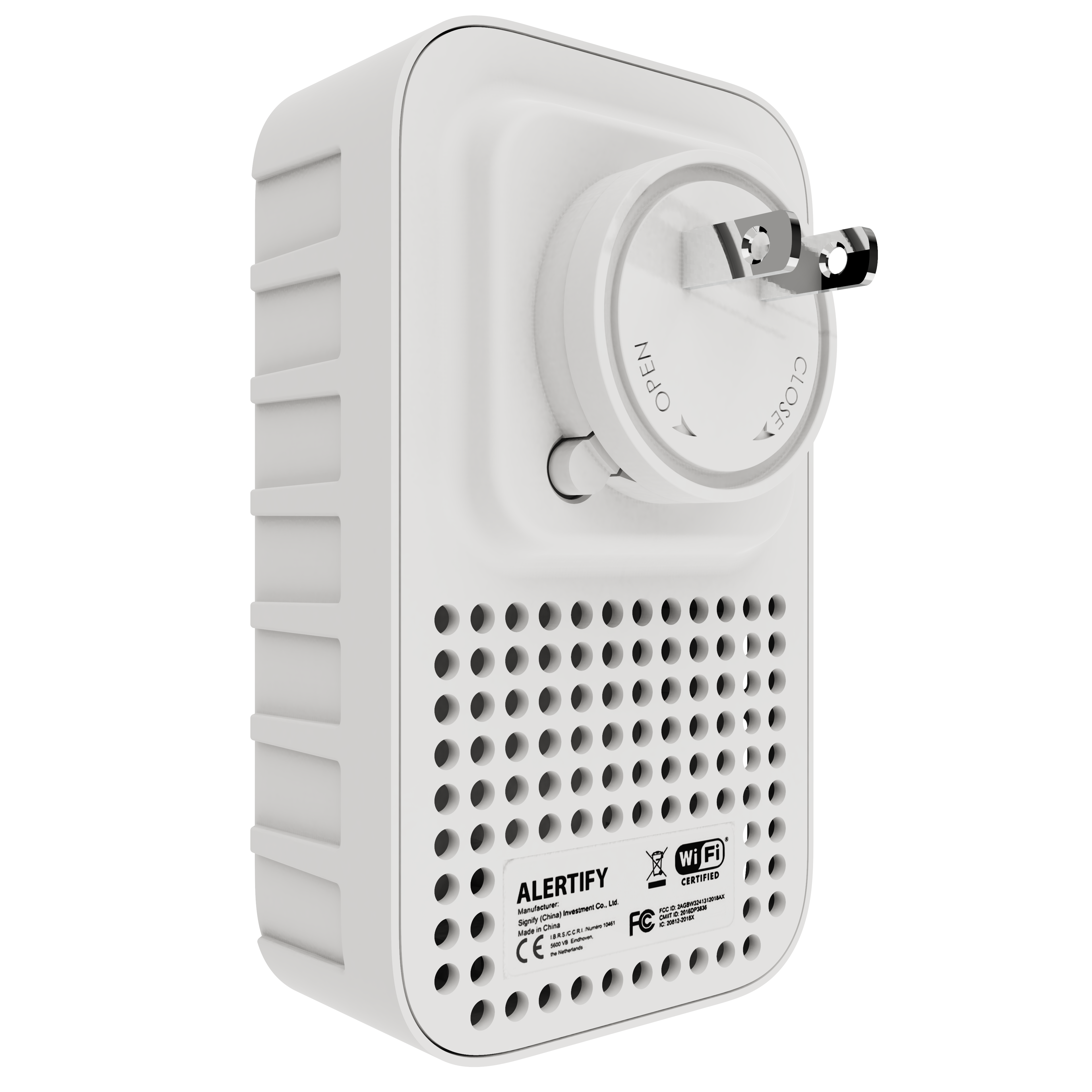
Your indoor noise decibel monitor.

One device, one yearly subscription. No setup fees and free shipping.

🇺🇸 Made in USA The Alertify privacy-safe noise decibel monitor, made in the USA
∞ unlimited records,
always on hand
Indoor, decibels only

Alertify · Device & Data Subscription

$145/ year

The core plan, covering noise, smoking, and climate monitoring on every door.

  • Customisable noise threshold
  • After-incident reports stored with unlimited history
  • One dashboard for every device
  • Instant notifications to hosts and guests
Buy now

FAQ

Noise rules for short-term rentals, answered.

Do I need a noise monitor for my short-term rental?

It depends on where your rental is. Of the 28 cities and counties on this page, 13 require a noise monitor in some form and 1 rewards hosts who install one. The other 14 don't require a monitor, but they set quiet hours, noise limits or fines that still apply to your rental. Find your city in the list for the details.

What are typical quiet hours for short-term rentals?

Most places on this page set quiet hours that start at 10pm and end between 7am and 10am. Toronto and Ottawa start at 11pm, and Indio starts at 9pm from Sunday to Thursday. Many rules focus on outdoor sound, such as music by the pool, so check your city's summary for the exact hours.

Does a noise monitor record audio?

Alertify doesn't. It measures sound levels in decibels only, with no audio and no video, so your guests keep their privacy. You see how loud it was and when, never what was said.

Is Alertify an indoor or outdoor monitor?

Alertify is an indoor monitor. It measures noise inside the rental, where most gatherings start. Some places, such as Clark County, Riverside County and Henderson, also ask for monitors outdoors or at the property line, so check your city's summary to see what applies to you.

What records does Alertify keep?

Every decibel reading, with unlimited days of record. Reports export to PDF or CSV, so you can share them if your city asks to see them.

How up to date are these summaries?

We checked every place against its official code in October 2026, and each summary links to its source. Rules change, so always check the current code or ask your city before you rely on a detail. These summaries aren't legal advice.

Live walkthrough online

Stay aligned, effortlessly.

A 20-minute walkthrough: your properties, your city's rules, the questions you actually have.

Alertify just now
Get started with Alertify
A reply, a demo, a device. You choose.
I'm interested in monitoring...

We've received your enquiry.

Thanks for reaching out. We'll be in touch within one working day.