
Noise gets the headlines, but it’s not the only behaviour South African hosts have to manage. Smoking, trash, pollution complaints, occupancy violations and property damage cause more cumulative loss across the SA STR sector than any other category. With the new Draft Code of Good Practice requiring hosts to inform guests of community norms and take reasonable steps to ensure compliance, smoking detection in a vacation rental in South Africa is now a baseline operational requirement, alongside the systems that catch every other form of guest misbehaviour. Generic security cameras don’t solve any of this. POPIA-compliant environmental monitoring does.
The Real Cost of Smoking in SA Short-Term Rentals
A single smoking incident in a South African vacation rental can be financially devastating. Professional deep cleaning to remove tobacco or cannabis residue, replacement of soft furnishings such as curtains, bedding and rugs that absorb smoke, repainting where staining is visible, and the lost revenue from blocking the property from bookings during remediation all stack up quickly.
Add to that the body corporate fines for breaching no-smoking rules in sectional title schemes, the platform penalties for hygiene complaints from the next guest, and the negative reviews that suppress your listing for months. Without proof that smoking occurred (and when), Airbnb damage claims under AirCover are frequently denied for insufficient documentation, leaving hosts to absorb the full cost.
The challenge is that smoking is invisible to traditional monitoring. Cameras can’t detect it through walls. Cleaners only find it after the guest has checked out. By then, the next booking is already arriving, and meaningful Airbnb property damage prevention has become impossible.
Trash, Pollution and the Neighbour Problem
Trash and waste violations are increasingly cited in SA municipal complaints. The new Code specifically lists “refuse” as one of the community norms hosts must inform guests about. In sectional title estates, trustees are quick to act when guests leave bins overflowing, fail to follow recycling rules, or leave waste outside designated collection days. Holiday destination hosts in Hermanus, Knysna and Plettenberg Bay face additional pressure during peak season, when waste services are stretched and neighbour patience is at its lowest.
Excessive occupancy compounds the problem. A property booked for four guests but actually housing twelve generates triple the waste, triple the wear and triple the noise. The Code explicitly requires hosts to ensure guests comply with maximum occupancy limits, and effective compliance with the new short term rental regulations South Africa has introduced demands hosts know when occupancy exceeds the booking, in real time, not after the fact.
Property Damage: The Silent Profit Killer
Property damage rarely happens in obvious ways. Stains on furniture, broken fittings hidden under cushions, water damage from misused appliances, mold from poor ventilation. These accumulate over months and only surface during deep cleans. By then, attribution to a specific guest is nearly impossible, and chargeback disputes become unwinnable without time-stamped documentation.
The mold issue deserves specific mention. South African coastal properties in Cape Town, Durban and the Garden Route are particularly vulnerable. A guest who leaves a bathroom fan off for a week of showers, or runs aircon at extreme settings, can create conditions for mold growth that costs significant amounts to remediate. Hosts who can’t monitor indoor climate conditions catch this only when it’s visible, meaning expensive.
Why an Indoor Smoking Monitor Built for South Africa Matters
Not every smoking detector works for vacation rental compliance. Many off-the-shelf devices are slow to react, or rely on cameras and microphones that breach POPIA. A purpose-built indoor smoking monitor for South African vacation rentals needs three things: real-time particulate detection, full privacy compliance, and integration with automated guest messaging that intervenes before damage is done.
How Alertify Handles Smoking Detection in a Vacation Rental in South Africa
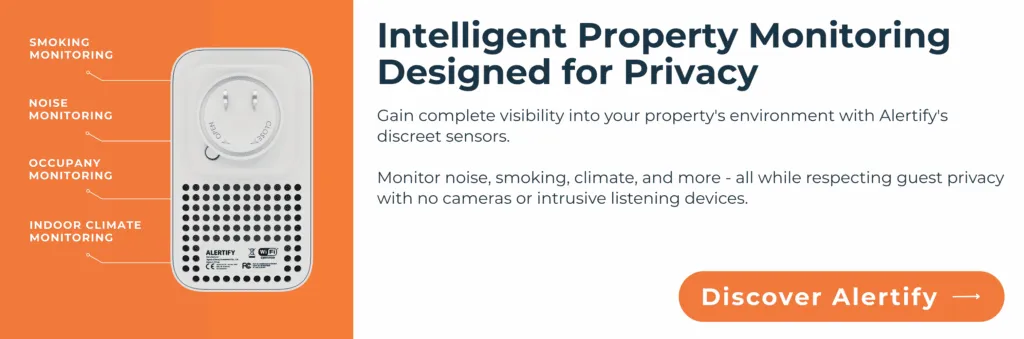
Alertify is built as a multi-sensor device, not a single-purpose monitor. The smoking detection function identifies the particulate signature of cigarettes, vapes and cannabis the moment combustion happens. No cameras, no microphones, just air quality analysis. Hosts get an instant alert and Guest Alert can send an automated message reminding the guest of no-smoking rules.
For occupancy issues, Alertify’s occupancy monitoring detects unauthorised additional guests through environmental signals. This is the single most important data point for hosts trying to prevent parties at an Airbnb in South Africa, but it’s equally important for trash and damage prevention, since most damage events correlate with overcrowded properties.
Alertify’s indoor climate monitoring tracks temperature and humidity in real time, flagging mold-risk conditions before they cause visible damage. The indoor air quality function adds another layer of property protection. The tamper alert function, now available in beta, monitors for guests trying to disable the device – a strong signal that something else is about to happen.
The Numbers That Make the Case
Alertify users typically see a 70% reduction in unwanted guest behaviour and 75% fewer chargeback incidents. For SA hosts, those numbers translate directly to revenue. Fewer smoking remediation costs, fewer damage disputes, fewer chargebacks lost, fewer body corporate complaints, and fewer cleaning fees absorbed instead of recovered.
When a guest does cause damage, Alertify’s 180+ days of stored documentary evidence gives you what you need for chargeback success. Time-stamped smoking detections, occupancy spikes correlating with damage timeframes, and guest message history showing the host took reasonable preventive action. That kind of evidence wins disputes that would otherwise become bad debt.
Combining Detection With Comprehensive Monitoring
Smoking and damage rarely happen in isolation. They typically happen alongside noise violations and unauthorised gatherings. Alertify’s integrated approach means one device handles everything: noise, smoking, occupancy, climate and tamper detection. Combined with reliable noise monitoring for short-term rentals in South Africa, this single-device approach makes compliance with body corporate Airbnb rules in South Africa easier to demonstrate. One installation, one dashboard, one comprehensive evidence trail.
Protect Your Property and Your Profits
Smoking, trash and damage are silent profit killers in South African short-term rentals. They erode margins month after month, and most hosts only realise the cumulative cost when they look at the deep-clean invoices, replacement furniture costs and lost bookings at year-end. The solution isn’t more cameras. It’s smart, privacy-safe environmental monitoring that catches issues in real time and provides the evidence to recover when guests cause damage.
Alertify is built for exactly this challenge. It installs in 15 minutes, runs on a backup battery, never records audio or video, and gives SA hosts the multi-sensor protection that the new Code of Good Practice expects.
Book a free demo to see how Alertify protects your South African vacation rental from smoking, damage and the costs you’ve been absorbing for years.