
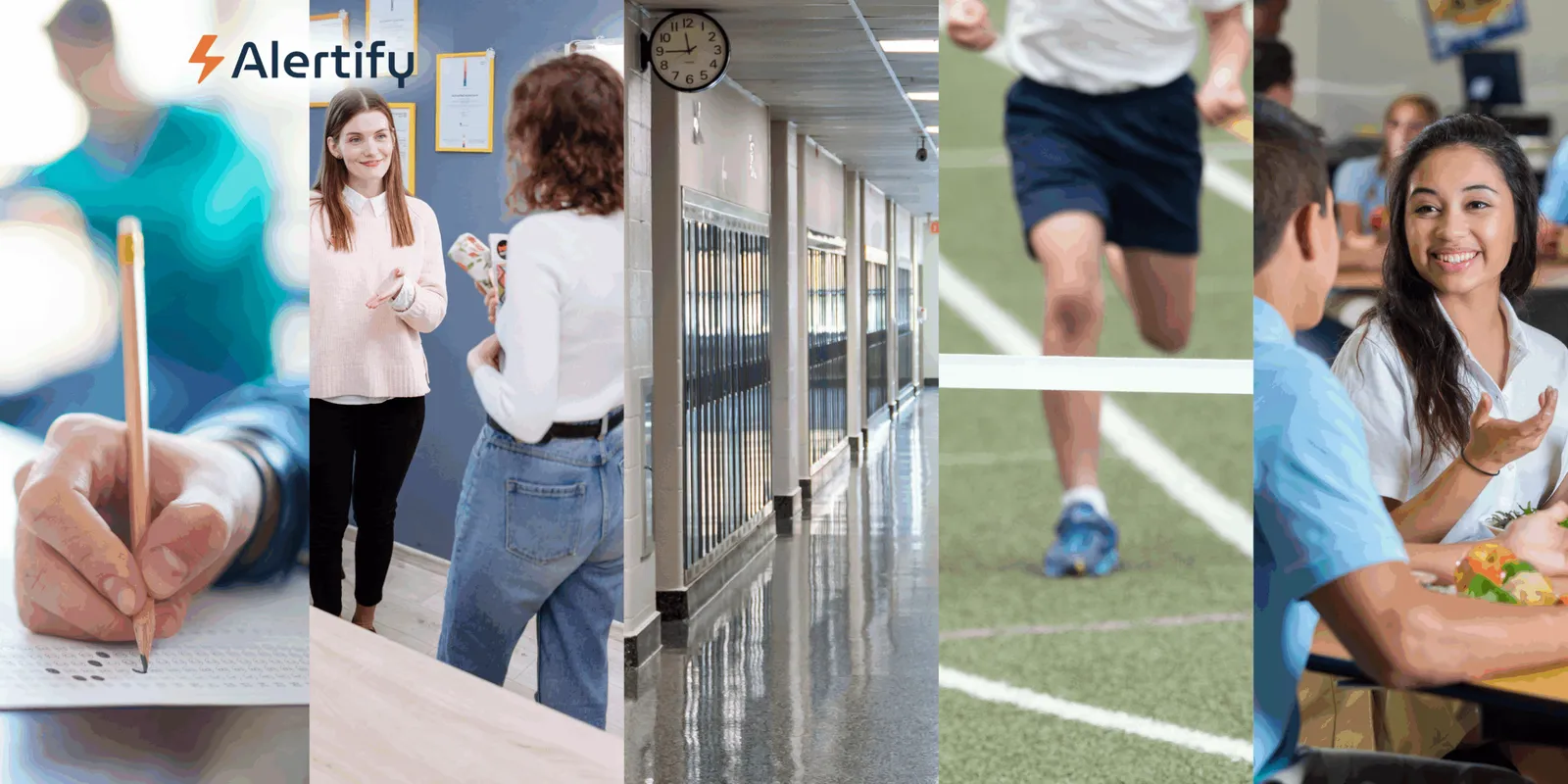
Background on Noise Alerts in Schools
Noise is one of the most persistent and underestimated disruptors in educational environments. Whether it’s an overcrowded hallway, a restless classroom, or unsupervised after-hours activities, unmanaged noise creates stress, reduces productivity, and—most critically—compromises safety. Fortunately, new technology offers a modern solution.
Real-time noise alerts in schools empower staff to step in before distractions spiral into disruptions. Let’s explore five real-world scenarios where these systems prove invaluable, supporting everything from student safety to substitute teacher success.
1. During Exams: Quiet Enforcement Without Conflict
Use Case: Standardized Testing & Final Exams
Silence isn’t just a formality during exams—it’s a requirement. Even minor distractions, like chairs scraping or whispered conversations in a hallway, can derail concentration and negatively impact test performance.
**How Real-Time Alerts Help:**Smart noise monitors detect when decibel levels exceed preset thresholds. Instead of relying on roving proctors or sporadic hallway patrols, administrators receive instant alerts if a space becomes too loud. This lets staff act quickly—without interrupting the test room itself.
Why It Works:
No confrontation required
Maintains fairness for all test-takers
Prevents the need to repeat testing due to invalidated conditions
It’s a proactive approach to school disruption prevention that protects academic integrity.
2. Supporting Substitute Teachers in Challenging Classrooms
Use Case: Temporary Classroom Management Support
Substitute teachers often walk into unfamiliar classrooms with little context and high expectations. They may not know the usual behavior patterns or how to keep students on track. And let’s be honest—students sometimes test limits when their regular teacher is absent.
**How Real-Time Noise Alerts Support Subs:**When a classroom becomes unusually loud, administrators are automatically notified, allowing them to check in discreetly. The sub doesn’t need to call for help or struggle alone. This intervention is subtle, timely, and respectful.
The Result:
Substitutes feel supported, not scrutinized
Students learn accountability, even in a temporary setting
Less likelihood of chaos turning into a reportable incident
In terms of student safety alerts, this can also highlight situations where rowdy behavior risks crossing into physical altercations or bullying.
3. Monitoring Hallways During Class Time
Use Case: Hall Pass Abuse or Loitering
Hallways are designed for transitions, not hangouts. Yet, unsupervised students often linger outside classrooms, causing noise that distracts nearby lessons and sometimes escalating into mischief.
Real-Time Monitoring Prevents This By:
Alerting staff when specific hallway sections exceed normal decibel levels
Identifying patterns—like students consistently leaving the same class at the same time
Allowing for soft interventions, such as staff presence, before discipline is needed
This data-driven visibility helps enforce school rules without guesswork or bias. And because alerts are triggered only when thresholds are met, staff avoid micromanaging student movement.
4. After-Hours Supervision and Facility Security
Use Case: Noise in Gyms, Libraries, or Dorms After School
Schools don’t shut down when the bell rings. They become community hubs: filled with sports practice, drama rehearsals, late-night study sessions, or dorm life in boarding schools and universities. But supervision is often limited—and that’s when problems can arise.
How Real-Time Noise Alerts Help Maintain Order:
Facilities managers get pinged when noise spikes in unsupervised areas
Staff can review logs to identify repeated issues (e.g., a dorm room regularly above 80 dB after 11 PM)
Alerts reduce the need for physical patrols and enhance safety coverage with fewer people
When framed around school disruption prevention, this is less about control and more about keeping shared spaces calm and safe.
5. Conflict De-escalation in Shared Spaces
Use Case: Lunchrooms, Study Lounges, and Group Work Areas
Noise isn’t just disruptive—it’s often a symptom of escalating tension. In communal areas, raised voices can quickly lead to conflict, especially in high-stress environments like exam seasons or crowded lunch periods.
What Noise Monitoring Does Here:
Identifies loud zones before someone has to report a fight
Allows staff to step in early with calming strategies
Creates a digital log of potential incidents for future reference
This is where student safety alerts become truly preventive, not just reactive. No one wants to wait for a fight to break out—monitoring helps stop it before it starts.
Beyond Alerts: What This Tech Really Offers Schools
Real-time noise alerts in schools aren’t just about decibels. They represent a shift toward smarter school environments—where data drives decisions and staff can focus on students, not fire drills.
Key Benefits:
Early intervention: Address issues before they escalate
Privacy protected: No cameras or microphones, just sound levels
Better staffing: Reduce burnout by minimizing repeated manual monitoring
Clear logs: Support disciplinary actions with objective data
Even in the best schools, chaos is sometimes unavoidable. But that doesn’t mean it should go unchecked.
A Human Approach to Tech
One of the reasons real-time noise monitoring in schools works is because it doesn’t try to replace educators or security staff. It supports them. By acting as a silent observer, these tools ensure every corner of your campus gets the attention it deserves—even when no one’s watching directly.
Many of the above use cases highlight one key idea: prevention is better than punishment. Real-time alerts give staff the power to act in the moment—not just review problems after the fact.
Final Thought: Peace of Mind, Backed by Data
From classrooms and hallways to dorms and gyms, noise is one of the clearest signals that something is off—or about to be. When you have the right tools in place to interpret that signal, you unlock a quieter, safer, and more focused school environment.
Whether you’re a principal, safety officer, or district tech lead, now is the time to consider how real-time noise alerts can become a core part of your school disruption prevention toolkit.
Prevent noise in any school scenario
Want more Alertify? Follow us on: