
Every technology investment in a healthcare facility must answer the same fundamental question: is the return worth the cost? When it comes to acoustic environment management, this question is increasingly easy to answer — because the financial consequences of unmanaged hospital noise are substantial, well-documented, and felt across multiple cost centers simultaneously. Understanding the full hospital noise monitoring ROI picture means looking beyond a single line item and examining the compounding value that a structured monitoring programme delivers across reimbursement, compliance, litigation risk, and workforce retention.
Hospital Noise Monitoring ROI: The Four Financial Dimensions
1. HCAHPS Scores and Medicare Reimbursement
The most direct financial connection between noise management and hospital revenue runs through HCAHPS. According to CMS, HCAHPS scores have been linked to Medicare reimbursements through the Hospital Value-Based Purchasing programme since 2012. Healthcare Finance News reports that hospital value-based purchasing links up to 30% of CMS payments to HCAHPS survey results.
The quietness of the hospital environment has been the lowest-rated HCAHPS category nationally since 2007, making it simultaneously the area with the greatest performance gap and the greatest potential for improvement-driven reimbursement recovery. For a mid-sized hospital receiving $50 million in annual Medicare payments, even a modest improvement in quietness scores — moving from below to above the 50th percentile threshold — can represent hundreds of thousands of dollars in recovered reimbursement. Analysis confirms, up to 2% of Medicare reimbursements are at stake based on HCAHPS performance, with noise being a core measured metric.
2. Complaint Reduction and Dispute Resolution
Facilities using Alertify report a 75% reduction in dispute and complaint incidents. In healthcare, the cost of a single formal patient complaint is significant — staff time for investigation, management review, documentation, potential legal consultation, and reputational exposure. Across a year’s worth of noise-related complaints in a busy hospital, the aggregate administrative cost is substantial.
The mechanism behind this reduction operates on two levels. First, real-time noise monitoring and automated alerting prevent the majority of noise events from reaching the severity or duration that generates formal complaints. Second, when complaints do occur, Alertify’s documentary evidence feature provides objective, timestamped incident data that resolves disputes quickly — replacing “he said, she said” exchanges with verified records that all parties can rely on.
3. Staff Retention and Workforce Cost Savings
The 2025 NSI National Health Care Retention and RN Staffing Report, as cited by the Wisconsin Center for Nursing, found that the average cost of replacing a single staff registered nurse reached $61,110 in 2024, with the average hospital losing between $3.87 million and $5.79 million annually to nurse turnover. Burnout — driven in part by the chronic acoustic stress of working in high-noise clinical environments — is consistently cited as a primary reason nurses leave.
Investing in acoustic environment infrastructure is therefore not just a patient care decision. It is a workforce economics decision. A facility that demonstrably invests in reducing the environmental stressors that contribute to burnout signals clearly to its clinical workforce that it takes their wellbeing seriously. In a market where nursing talent is scarce and competition for retention is acute, that signal carries measurable value.
4. Compliance Cost Avoidance and Liability Protection
The hospital noise monitoring data generated by Alertify’s system creates a continuously growing compliance asset. Every noise incident is automatically timestamped, logged, and stored for a minimum of 180 days — providing an auditable record of active, systematic acoustic environment management. For Joint Commission surveys, this data dramatically reduces the preparation burden and strengthens the facility’s position during review. For legal proceedings involving alleged noise-related patient harm or negligence, it provides a defensible factual record that can resolve disputes earlier and at significantly lower cost.
The absence of monitoring data, by contrast, can itself be interpreted as evidence of negligence — a risk that becomes more significant as regulatory and legal expectations around noise management in healthcare continue to tighten.
Putting the Numbers Together
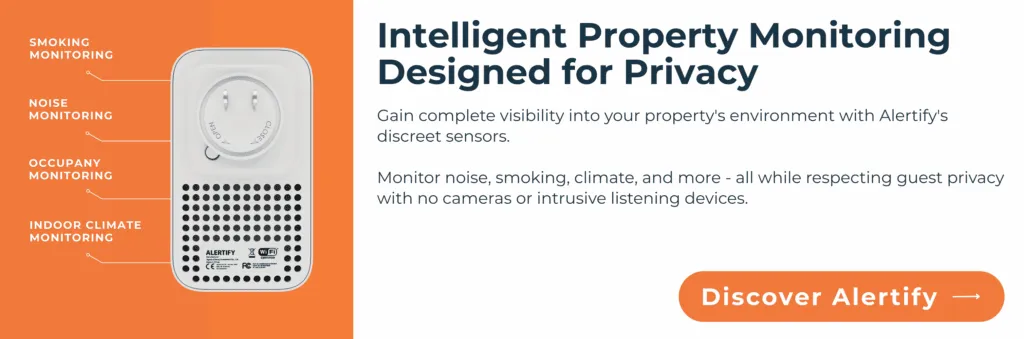
When HCAHPS reimbursement recovery, complaint reduction savings, workforce retention value, and compliance cost avoidance are considered together, the return on investment from a structured noise monitoring programme is compelling. Alertify’s plug-and-play device installs in 15 minutes, requires no specialist infrastructure, and begins generating financial and compliance value from day one. The investment is modest. The compounding returns — in recovered revenue, avoided costs, and protected relationships with both patients and staff — are not.
The Cost of Doing Nothing Is Already on Your Balance Sheet
The ROI of hospital noise monitoring is not a theoretical projection. It is a measurable outcome demonstrated across reimbursement data, complaint records, workforce economics, and compliance cost reduction. The question is not whether your facility can afford to invest in acoustic environment management. It is whether it can afford not to.
Book a free demo with Alertify and receive a personalized ROI analysis for your facility based on your size, patient volume, and current HCAHPS performance.