
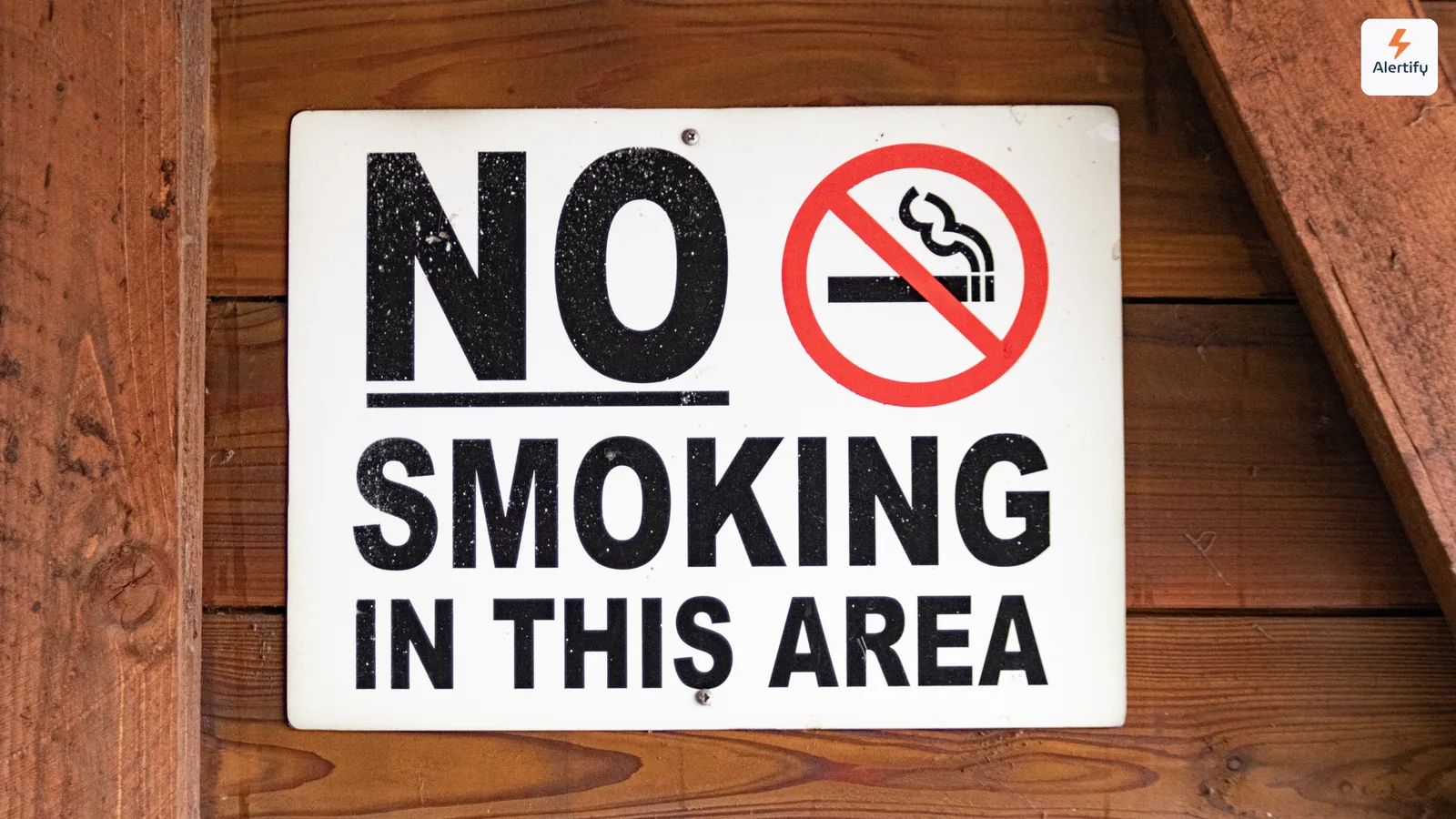
Most hosts believe they have a smoke-free property. Rather fewer have a smoke-free policy that would survive five minutes of pushback from a guest who wants to argue.
The difference shows up at exactly the wrong moment. A guest smokes on the balcony of an apartment building where the whole site is smoke-free by ordinance. Another vapes indoors and insists, with total sincerity, that vaping was never mentioned. A third arrives from a state where cannabis is legal and assumes that settles it. In each case the host has a rule. In each case the rule was not specific enough to do any work.
A clear airbnb no smoking policy is not a formality you paste in once and forget. It is the foundation everything else rests on, including your ability to charge for damage later.
Say Exactly What Is Covered
Airbnb includes smoking, vaping and e-cigarettes among its standard house rules, and those rules appear in the listing description, in the booking terms at the point of payment, in automated guest emails and in the arrival guide sent before the trip. Visibility is rarely the problem. Precision is.
A policy that does real work answers three questions without ambiguity. Does the restriction cover the entire property or only the interior, including balconies, garages and vehicles parked on the driveway? Does it explicitly name vaping, e-cigarettes and cannabis, or does the guest get to argue that smoking meant cigarettes? And what is the stated consequence, expressed as a specific charge rather than a vague warning?
Write it in the strictest form you are willing to enforce, then use identical wording across every channel you list on. There are worked examples in this guide to no-smoking policies that guests actually respect. A guest who booked through the platform with the loosest phrasing will quote that phrasing back at you, and inconsistent house rules for guests are the easiest thing in the world for a case manager to read in the guest's favour.
Know the Local Rules, Not Just the Platform Rules
Platform policy is the floor. Local regulation sits above it and varies far more than most hosts expect. The legal side of vacation rental smoking laws deserves a read of its own, but the short version follows.
Some jurisdictions require posted signage before a smoking-related charge can be enforced. Some regulate smoking in outdoor areas of multi-unit buildings, which means your designated balcony may not be designated at all. Building bylaws and homeowners association rules add another layer in condominiums, and those frequently bind you regardless of what your listing says. Where a property sits inside a managed building, request the current site rules in writing rather than relying on what the previous owner told you, because these change more often than most freeholders bother to communicate.
Cannabis is where hosts get caught most often. As of 2026, 24 states plus Washington DC permit adult recreational use, which means a large share of guests travel between legal and prohibited markets without adjusting their assumptions. Legal in the state does not mean permitted in the property, and permitted in the property does not mean permitted indoors.
Researching short-term rental smoking laws for each market you operate in is a one-off task per location and worth doing properly. Note the signage requirement, the outdoor restrictions, and any disclosure obligations attached to monitoring devices, then bake all three into your standard setup rather than handling them case by case.
Disclose Your Monitoring, and Say It Early
If you use environmental monitoring, platform policy requires you to disclose it. That is the compliance reason. The commercial reason is better.
Disclosure removes the only defence a guest reliably reaches for, which is that they did not know. A guest who booked a listing stating that the property uses air quality monitoring has accepted those terms before arrival. It also does most of your prevention work for you, because the incidents that never happen cost nothing to clean. If you want to understand what that monitoring actually captures — and why it is nothing like a camera — see how privacy-safe smoke detection technology works.
Timing matters as much as wording. Rules read at booking are forgotten by check-in. A short message the day before arrival, sent alongside the door code, restating that the property is smoke-free and naming the designated outdoor area, lands at the moment the decision actually gets made. Discreet interior signage reinforces it again.
Pair that sequence with an Alertify smoke monitoring device and you have expectations set in four places before anything can go wrong, plus a record if it does. That combination of clear rules and dated evidence is the practical core of smoke monitoring for vacation rental hosts, and it is what separates hosts who enforce successfully from hosts who simply hope.
Get Your Policy and Your Monitoring Aligned
A well-written rule with no evidence behind it is difficult to enforce. Good evidence attached to a vague rule is difficult to act on. You need both, written once and applied consistently across every property and every channel.
If you would like help aligning your disclosure wording with a monitoring setup that meets platform requirements, book a demo with Alertify and we will walk through the configuration for your markets.
Frequently Asked Questions
What should an Airbnb no-smoking policy include?
Three things, stated without ambiguity: the exact coverage (whole property or interior only, including balconies, garages and parked vehicles), the product categories by name (cigarettes, cigars, vaping, e-cigarettes and cannabis), and the specific charge that follows a violation. A policy that names all three leaves a guest nothing to argue with, and identical wording should appear on every channel you list on.
Do hosts have to disclose smoke monitoring devices?
Yes. Platform policy requires interior monitoring devices to be disclosed in the listing. Disclosure also works in your favour: it removes the "I didn't know" defence, and because guests who know a property measures its own air rarely smoke in it, a disclosed monitor prevents most incidents rather than merely recording them.
Does state cannabis legalization override my property's smoking rules?
No. Recreational cannabis being legal in a state does not create any right to smoke it in a private rental property. Your house rules govern what happens inside your property — but only if they name cannabis explicitly, because a guest travelling from a legal market will read a bare "no smoking" rule as narrowly as possible.