
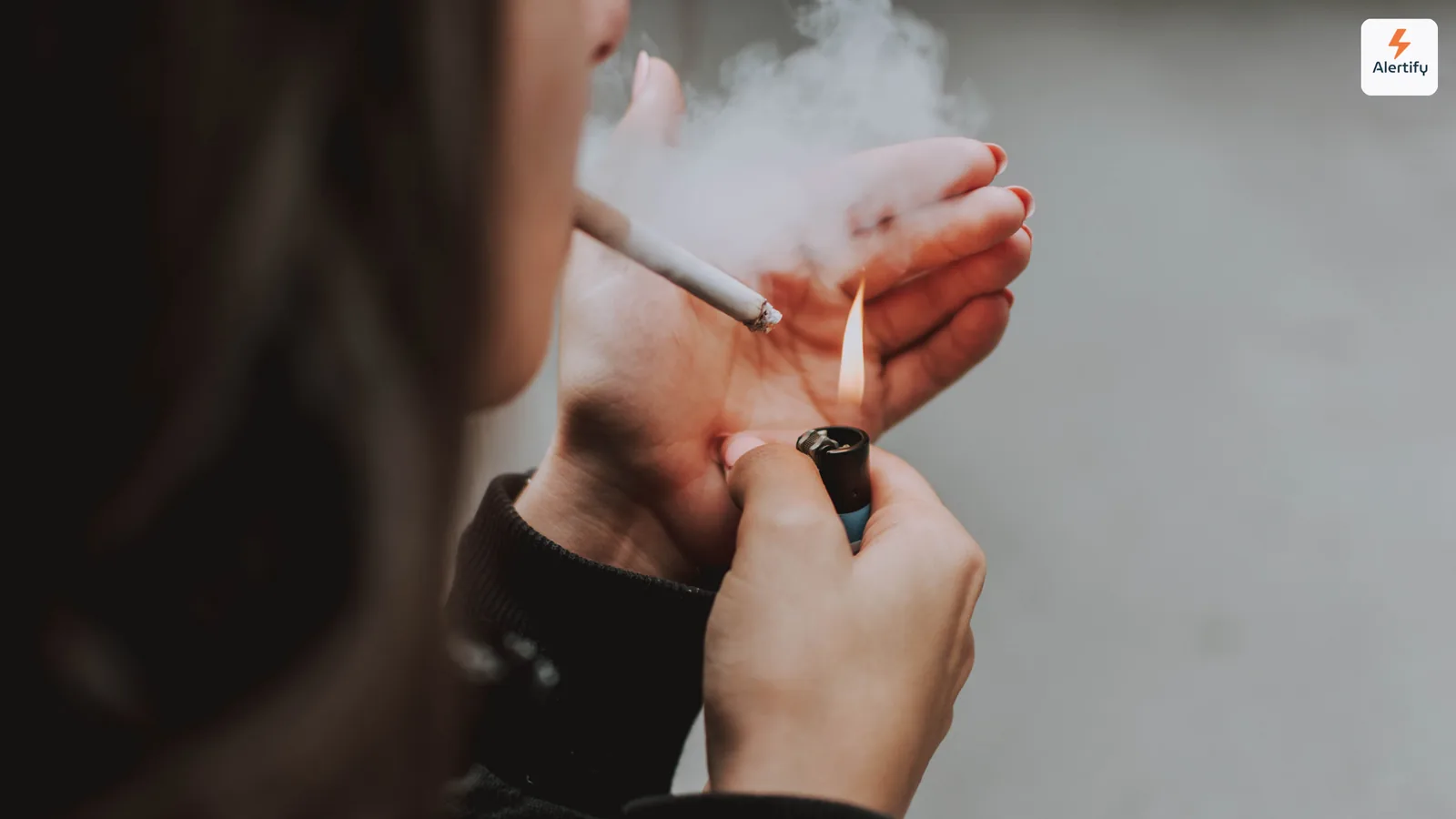
Every host who has lost a claim remembers the same feeling. You know exactly what happened. The smell is unmistakable, the cleaner confirmed it, the timeline is obvious to anyone who thinks about it for ten seconds. And the case still goes against you, because knowing something and being able to show it are entirely different problems.
Disputes are not decided on who is right. They are decided on what can be established, by whom, and when. A guest who denies smoking is rarely contradicted by anything in a typical host's file, and that is a documentation failure rather than one of fairness.
Assembling proof of an airbnb smoking violation is a process that starts before the incident, not after it.
Why Photographs Are Not Enough On Their Own
Photographs are the first thing hosts reach for and the weakest evidence they submit.
The reason is simple. A photograph proves a condition. It does not prove a date. An image of a stained ceiling, a burn on a windowsill or a yellowed curtain establishes that damage exists, but gives a reviewer no way to attribute it to your most recent guest rather than the three before them. Ask the obvious question a case manager asks and the file falls apart: how do we know this was not already there?
That question is unanswerable at checkout, which is when most hosts start gathering evidence. It is entirely answerable during the stay, which is when almost nobody does.
Cleaners make the problem worse without meaning to. A thorough turnover removes precisely the physical traces a claim would rely on, and by the time a host notices something and starts photographing, the ash has been vacuumed and the surfaces wiped. Asking cleaners to photograph anything unusual before they begin work is a small habit that rescues a surprising number of claims.
The deadline compounds the problem. Airbnb requires reimbursement requests to be filed through the Resolution Center within 14 days of the responsible guest's checkout, and the same policy confirms that Host damage protection under AirCover covers extra cleaning including smoke odour removal. The coverage is real. Reaching it depends on showing the damage occurred during that specific reservation.
What a Dated Record Actually Contains
A monitored property produces the one thing photographs cannot supply, which is a time.
Alertify produces this automatically. Documentary evidence from an environmental monitor captures the date, the time, the unit, and the sensor reading at the moment the event occurred. Attach the automated guest message with its own timestamp — the same message at the centre of handling a violation without a confrontation — and you have a second data point that matters just as much: the guest was notified and given the chance to correct the behaviour.
Read as a sequence, a timestamped incident report tells a complete story without requiring you to argue for it. The reading rose at 11:38pm on the second night of a four-night stay. The guest was messaged at 11:39pm. Levels remained elevated for a further forty minutes. A second event followed on night three. Data is retained for 180 days or more, which comfortably outlasts the platform dispute window and most insurer timelines.
That is what turns a contested charge into a straightforward one. Not volume of evidence, but a fixed point in time that nobody can move.
Build the File in the Right Order
Sequencing matters more than most hosts realise, because a reviewer working through a queue accepts the conclusion a well-ordered file points to and questions a disordered one.
Lead with the sensor record, since it is the only document that establishes when. Follow with the automated message and its timestamp. Then add the house rule exactly as it appeared in your listing at the time of booking, the cleaner's photographs from the turnover, and a single itemised quotation or invoice from a named company on letterhead. Six documents in that order outperform twenty in no order. The documentation workflow for insurance and Airbnb claims is worth setting up as a template you reuse on every incident.
The same file supports a security deposit smoking claim where your booking arrangement allows one, and it does equivalent work with insurers, who typically require a demonstrable incident date and evidence that the loss was caused by a guest rather than accumulated wear. If the guest pushes back hard, the same sequence is what wins an Airbnb smoking damage claim and chargeback dispute. In practice, a well-built file often prevents the dispute entirely, because a guest presented with a dated record and a copy of the message they ignored usually pays rather than escalating.
Documentation is the quiet half of smoke monitoring for vacation rental hosts. Prevention protects the property. Records protect the recovery.
Start Recording Before You Need To
The hosts who recover consistently are not the ones who argue best. They are the ones whose evidence already existed at the moment the incident happened, because the system was running the whole time.
If you would like to see what an incident record looks like and how it is exported for a platform claim or an insurer, book a demo with Alertify and we will provide a walkthrough.
Frequently Asked Questions
What evidence do I need for an Airbnb smoking claim?
Six documents, in this order: the timestamped sensor record, the automated guest message with its timestamp, the house rule as it appeared at booking, the cleaner's photographs from the turnover, and one itemised invoice or quotation on company letterhead. The sensor record leads because it is the only document that establishes when the damage happened — which is the question every case manager asks first.
How long do hosts have to file a smoking damage claim with Airbnb?
Fourteen days from the responsible guest's checkout, through the Resolution Center. Host damage protection under AirCover explicitly covers extra cleaning including smoke odour removal, so the coverage is rarely the obstacle — filing late, or filing without evidence that dates the incident to that specific stay, is what sinks most claims.
Are photos enough to prove a guest smoked in my rental?
No. A photograph proves a condition exists, not when it appeared, so a guest who denies smoking is rarely contradicted by checkout photos alone. Pair photographs with a timestamped monitoring record made during the stay and they become supporting detail in a file that attributes the damage to one reservation — which is the difference between a contested charge and a paid one.