
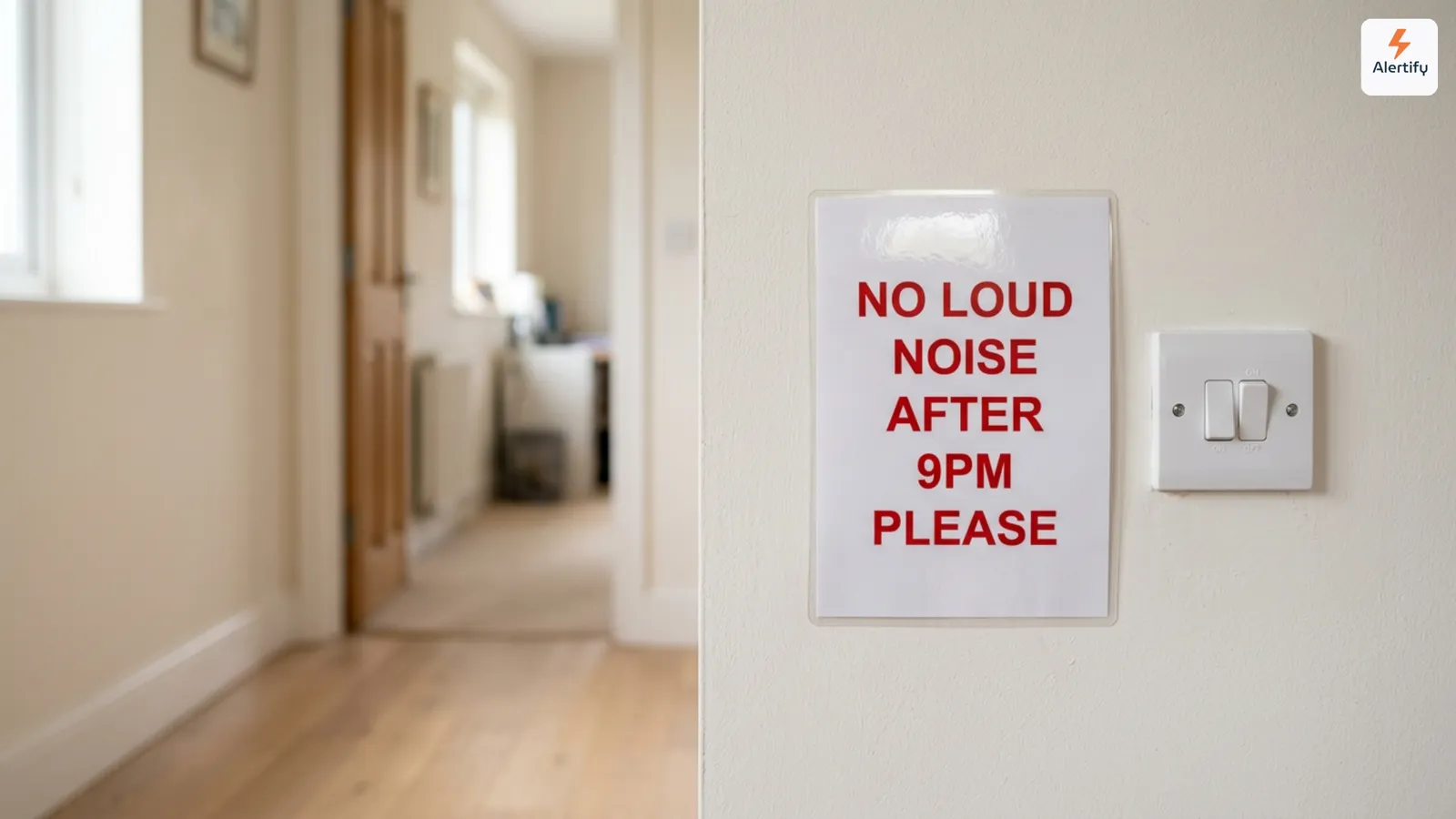
A notice built on "your neighbors say" invites an argument. A notice built on dates, times, and readings usually ends one. The difference is not the tone of the letter. It is whether anything sits behind it.
A noise violation notice to a tenant is a short, factual document that names what happened, which clause it breached, and what happens next. Written well, it resolves the matter. Written badly, it becomes the thing a tenant disputes instead of the behavior. Getting it right is the endpoint of noise control for single-family rentals, and it is the step most owners reach too early or far too late.
What a Noise Violation Notice to Tenant Must Contain
Work through a fixed lease violation notice format every time, so that the document looks procedural rather than personal.
Start with the specifics. Each incident gets its own line with the date, the start and end time, and the duration. Vague references to "recent disturbances" give the tenant nothing to respond to and give you nothing to rely on later.
Cite the clause. Quote the lease provision the incidents breach, word for word, and reference the municipal code or HOA rule if one applies. The tenant should be able to see the rule and the breach side by side without interpreting anything.
State the correction you want. Not "please be considerate," but a specific instruction: no amplified sound in the yard after 10 p.m., or guests limited during quiet hours. Give a date by which you expect it.
Name the consequence of further breaches, in the same terms the lease uses. Nothing invented at the point of writing.
Close with a route back to you. A phone number and an invitation to discuss the notice reframes the document as a step in a process rather than an ultimatum, and it prompts tenants to explain circumstances you may not know about.
Keep the tone neutral throughout. Frustration in writing has a way of resurfacing later in a context you would rather it did not.
The Evidence That Makes It Stick
Documenting tenant noise incidents properly is what turns a notice from an opinion into a record.
Alertify measures decibel levels against your configured thresholds and timestamps every event, with no cameras, no microphones, and no audio recording. What you can attach to a notice is how loud, when, and for how long, and nothing about what was said or who was present. That distinction matters: it is exactly the evidence needed to support the notice, and none of the evidence a tenant could reasonably object to.
Downloadable documentary evidence reports do the same work for an HOA hearing, an insurance claim, or a deposit dispute. Event history stored for 180 days and beyond means the incidents from six months ago are still available when a pattern needs establishing.
The record also protects tenants, which is worth saying plainly in the notice. Where levels show nothing unusual, you have grounds to tell a complaining neighbor exactly that, with dates. Tenants who understand that the data can exonerate them tend to treat it as fair rather than adversarial.
Include the informal history too. The text message you sent after the first incident, and the tenant's reply, belong in the file alongside the readings. A notice that arrives after two documented conversations lands very differently from one that arrives without warning.
Escalation, Records, and Knowing When to Stop
Follow the same sequence every time. Informal contact after a first incident. A second informal contact if it recurs. A written notice once a pattern is established. A formal cure notice, in the form your state requires, if the written notice produces no change. Lease action only after that.
Most cases end at step one. Alertify's own data shows 90 percent of noise violations resolve automatically within 10 minutes once the occupant is notified, and an early conversation costs nothing beyond the message itself.
Consistency across tenancies matters more than severity in any single case. Applying different thresholds to different households is difficult to defend if anybody asks why, and a measurable standard applied identically to everyone is the cleanest protection available.
Know the legal boundary. Notice periods, cure windows, and permissible grounds vary by state, and a notice that ignores the local requirement is worth less than no notice at all. Check your state's requirements or ask an attorney before the first formal step, not after it.
And keep the file whether or not the matter escalates. Complaints that are resolved quietly are still evidence of a pattern if a similar situation arises with a future tenant at the same property.
Documentation Is the Whole Case
The notice itself is the easy part. What makes it work is the record behind it: timestamped readings, a history of contacts, and a process applied the same way to every tenant.
See what an incident report looks like before you need one. Book a demo and we will walk you through event logs, reporting, and how owners use them.
Frequently Asked Questions
What should a noise violation notice to a tenant include?
Each incident's date, start and end time and duration; the lease clause breached, quoted word for word, plus any municipal code or HOA rule; the specific correction you want and a deadline; the consequence of further breaches in the lease's own terms; and a way to contact you.
When should a landlord send a written noise notice?
Only once a pattern is established. Start with informal contact after a first incident and again if it recurs. Most cases end there. Move to a written notice when behavior continues, then a formal cure notice in the form your state requires, and lease action last.
What evidence supports a noise violation notice?
Timestamped decibel readings showing how loud, when and for how long, plus downloadable incident reports and your log of earlier informal contacts. Privacy-safe monitoring with no cameras, microphones or audio recording supplies exactly that evidence and nothing a tenant could reasonably object to.