
Mold rarely appears overnight. It builds slowly, out of sight, wherever moisture lingers long enough to give it a foothold. In most buildings, that is an inconvenience. In a hospital or clinic, where some patients have weakened immune systems, it can become a serious concern. Mold prevention in healthcare facilities depends on one principle above all others: control moisture early. For facilities managers and infection preventionists, that means knowing where humidity is building before visible growth appears, not after. This guide explains why mold matters more in healthcare, where moisture tends to hide, and how continuous monitoring gives teams a head start.
Why Mold Matters More in Healthcare
Immunocompromised Patients and Infection Prevention
Healthcare facilities serve people who are especially vulnerable to environmental pathogens. The CDC’s Guidelines for Environmental Infection Control in Health-Care Facilities note that inadvertent exposure to opportunistic pathogens such as Aspergillus can lead to adverse outcomes, particularly among immunocompromised patients. The CDC also describes Aspergillus species as healthcare-acquired pathogens associated with dusty or moist environmental conditions. Hospital mold risk is therefore not only a building issue but an infection prevention priority, part of the wider link between air quality, patient recovery and infection rates.
Remediation, Closures, and Disruption
When mold is found, the response is rarely simple. Rooms may need to be taken out of service, patients relocated, contractors brought in, and infection prevention closely involved throughout. The CDC recommends that facilities document policies to identify and respond to water damage, drying wet materials within 72 hours or removing them if drying is unlikely in that time. Every step of remediation costs time, money, and capacity, which is why prevention is far more efficient than response.
Where Moisture Builds Up
Bathrooms, Storage, and Low-Traffic Rooms
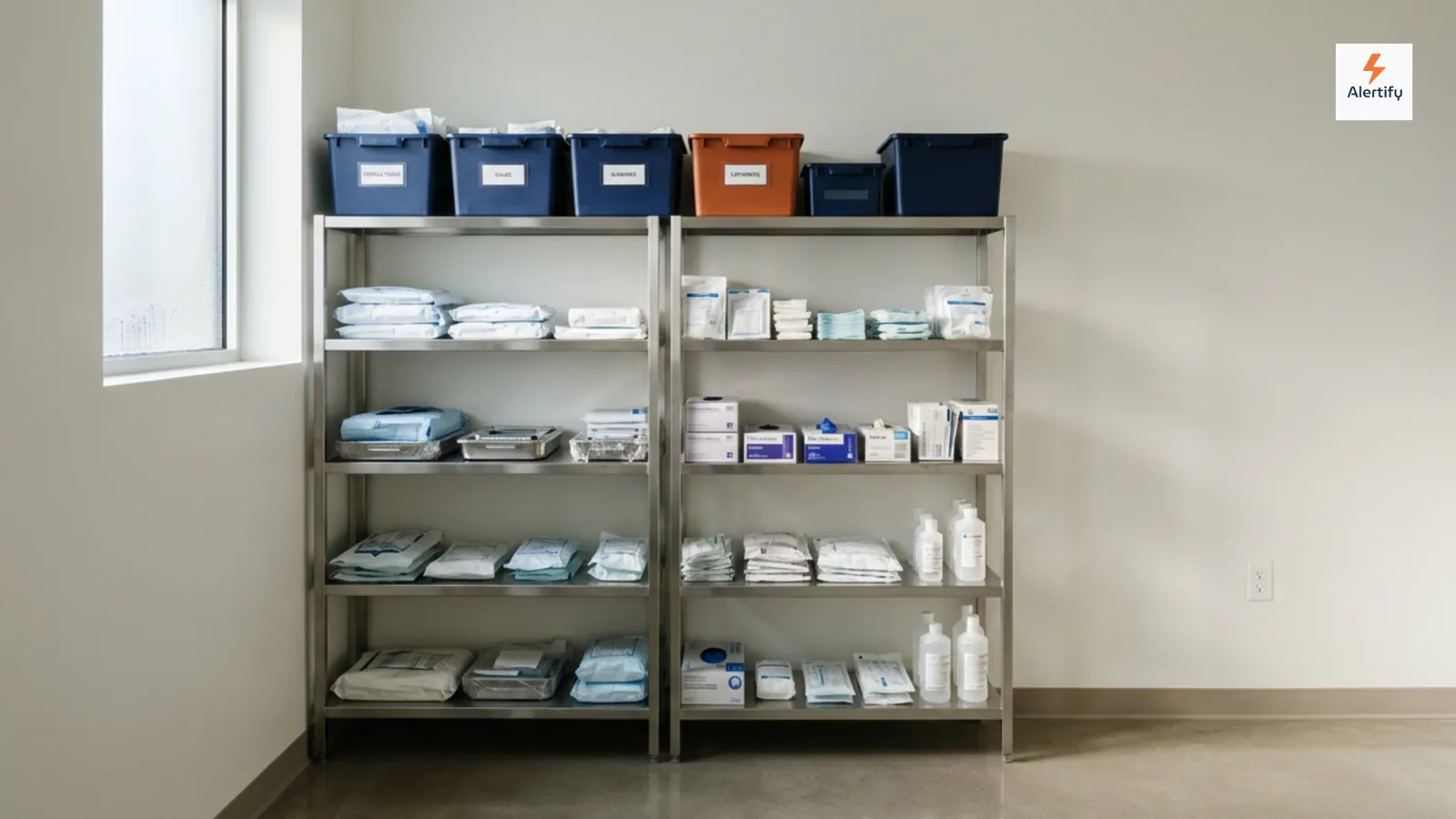
Moisture problems tend to develop in spaces that are either constantly humid or rarely visited. Patient and staff bathrooms see repeated steam and splashing. Storage rooms, clean utility rooms, and spaces near plumbing can collect moisture quietly, with no one present to notice a musty smell or condensation on a wall. These are exactly the places where a problem can develop for weeks before anyone sees it.
HVAC Condensation and Humidity Spikes
Air handling systems can contribute to moisture as well. Condensate lines can back up, cooling coils can drip, and systems struggling in humid weather may let indoor humidity rise for extended periods. The EPA recommends keeping indoor relative humidity below 60%, ideally between 30% and 50%, and notes that controlling indoor moisture is the key to controlling mold growth. In a large building, humidity can stay above that level in specific rooms even when overall system readings look normal. Our guide to hospital temperature and humidity monitoring covers the recommended ranges for clinical spaces.
Smaller Sites Face the Same Risk
Moisture control in clinics can be even harder than in hospitals. Outpatient facilities often occupy leased or shared buildings with older HVAC systems and no on-site engineering team. A slow leak or a poorly ventilated storage room can go unnoticed for longer, which makes remote visibility especially valuable.
Mold Prevention in Healthcare Facilities with Continuous Monitoring
Humidity Trends and Mold Risk Alerts
The earliest sign of mold risk is usually sustained humidity, not visible growth. Alertify tracks humidity continuously through indoor climate monitoring, and its air quality monitoring surfaces mold risk directly in the dashboard. When a room stays too humid for too long, the right team receives an alert by SMS, email, or webhook, routed by space or floor.
Giving Facilities Teams a Head Start
Early alerts change the timeline. Instead of discovering a problem after musty odors or stained ceiling tiles appear, teams can investigate a condensate line, check for a leak, or adjust ventilation while the issue is still small. Mold risk monitoring is also a natural part of broader indoor air quality monitoring for hospitals, since the same device tracks PM2.5, CO₂, temperature, and humidity in each space.
Building a Moisture Response Plan
Monitoring works best when it feeds a clear plan. Agree in advance which humidity levels trigger an investigation in each type of space, who responds, and how quickly. Define the first checks, such as condensate lines, nearby plumbing, exhaust fans, and recent cleaning or construction activity. Involve infection prevention whenever moisture affects patient areas or clean storage, and document what was found and fixed. Over time, these records reveal recurring trouble spots and help justify repairs or upgrades that stop the same problems from returning.
Privacy and Practicality
Alertify’s devices plug in, set up in minutes, and include a backup battery for continuous coverage. They measure air and sound levels only, with no cameras or microphones, so they can be placed in bathrooms and other private spaces without capturing anything personal. Alertify’s hospital and medical solution is built to surface ventilation and mold risk issues before they affect outcomes.
Stop Mold Before It Starts
Mold is far easier to prevent than to remove. By watching humidity continuously and acting on early warnings, healthcare facilities can protect vulnerable patients, avoid disruptive remediation, and keep rooms in service.
If you would like to see how Alertify helps your team catch moisture problems early, book a 20-minute demo and we will walk you through it.
Frequently Asked Questions
How do hospitals prevent mold?
By controlling moisture early. Keep relative humidity below 60%, ideally between 30% and 50%, dry wet materials within 72 hours or remove them, and watch the spaces where moisture builds quietly: bathrooms, storage rooms, clean utility rooms and areas near plumbing or HVAC condensate lines.
Why is mold more dangerous in healthcare facilities?
Hospitals serve patients who are especially vulnerable to environmental pathogens. The CDC notes that exposure to opportunistic fungi such as Aspergillus can lead to adverse outcomes, particularly among immunocompromised patients, which makes mold an infection prevention priority rather than only a building issue.
Can humidity monitoring warn of mold before it grows?
It gives the earliest warning. Sustained high humidity usually comes before visible growth, so continuous monitoring with mold risk alerts lets teams check a condensate line, find a leak or adjust ventilation while the problem is still small, rather than after musty odors or stained ceiling tiles appear.