
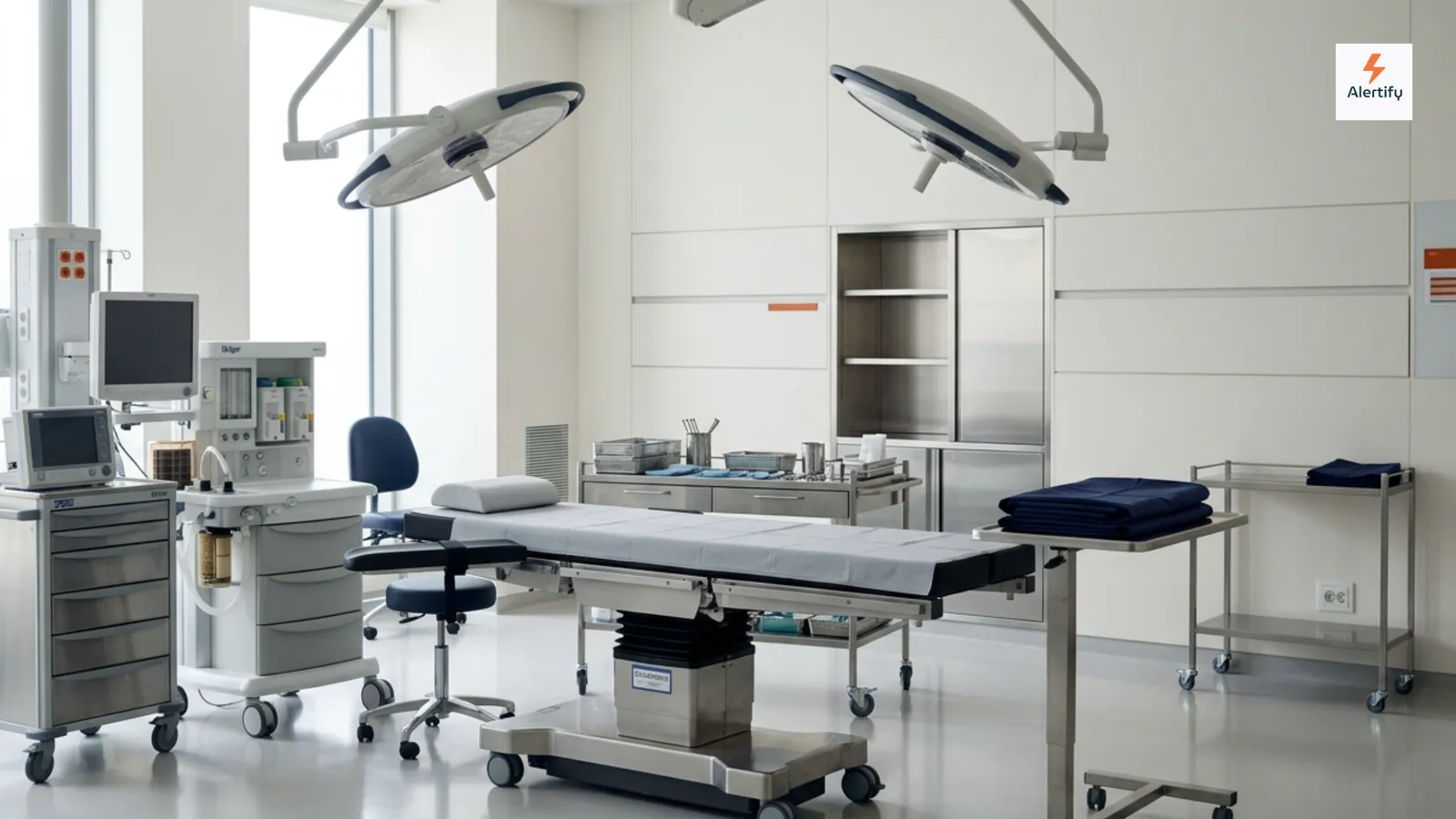
A few degrees or a few percentage points of humidity can feel like small details, but in a hospital they carry real weight. They affect how patients sleep and recover, how surgical teams work, and whether sterile supplies stay usable. Hospital temperature and humidity monitoring gives facilities and clinical teams continuous visibility into these conditions, so drift is caught as it happens rather than discovered on the next manual round. For facilities directors, infection preventionists, and nurse leaders, it is one of the most practical ways to protect both patient comfort and operational standards. This guide explains why these readings matter, what the recommended ranges look like, and how to move from spot checks to real-time awareness.
Why Hospital Temperature and Humidity Monitoring Matters
Patient Comfort, Sleep, and Recovery
Patients spend long hours in their rooms, often while unwell, medicated, or unable to adjust their surroundings. A room that runs warm overnight or air that feels uncomfortably dry can disrupt sleep, which plays an important role in recovery. Patient room humidity levels deserve particular attention: very dry air can irritate airways and skin, while persistently damp air feels clammy and creates conditions for mold. Patients rarely report these issues in the moment, but they remember them, and comfort shapes how they rate their stay.
Equipment, Supplies, and Building Materials
Stable conditions matter beyond comfort. Sterile supplies and medical equipment come with manufacturer instructions for storage environments, and the Association for Health Care Resource & Materials Management notes that required humidity for supplies and equipment is set out in those instructions for use. Excursions outside acceptable ranges can lead to questions about whether items are still usable, and in some cases to discarded inventory. Building materials and finishes also suffer when humidity stays high for long periods.
Understanding the Recommended Ranges
What ASHRAE Standard 170 Covers
ASHRAE Standard 170, the ventilation standard for healthcare facilities, sets design conditions for different types of clinical spaces. For operating rooms, it calls for temperatures of 68°F to 75°F and relative humidity between 20% and 60%. The lower humidity limit was revised from 30% to 20% after extensive review, while the upper limit of 60% has remained an important screening level because excess humidity can lead to mold and mildew. Understanding ASHRAE 170 humidity requirements, along with the edition your facility was designed to and any stricter state or local codes, is the starting point for setting meaningful alert thresholds.
Too Dry Versus Too Humid
Both ends of the range carry risks. Air that is too dry can cause discomfort for patients and staff and may fall below the conditions some supplies require. Air that is too humid encourages microbial growth, condensation, and mold. Seasonal changes push buildings in both directions, with winter heating drying the air and humid summers testing dehumidification. That is why a reading taken once a day is rarely enough to show what a space actually experiences.
Moving from Spot Checks to Continuous Visibility
Why Manual Logs Leave Gaps
Many facilities still rely on staff reading and recording temperature and humidity on a schedule. The Joint Commission has highlighted the risk of this approach, citing an example where a hospital relied on manual readings and had no way to know whether conditions had gone out of range on nights or weekends between readings. The same guidance identifies a lack of alert notifications as a common issue, one of several gaps covered in our guide to healthcare ventilation compliance documentation.
Room-Level Data with Alertify
Alertify closes that gap with a compact plug-in device that monitors each space around the clock. Indoor climate monitoring tracks temperature and humidity continuously, while Alertify’s air quality monitoring adds PM2.5, CO₂, and mold risk from the same device. This makes temperature and humidity part of a broader approach to indoor air quality monitoring for hospitals, rather than a separate system to manage. Devices include a backup battery, so monitoring continues through power interruptions, and readings are stored in a shared dashboard for review.
Setting Thresholds and Routing Alerts by Unit
The value of monitoring depends on alerts that reach the right people. Work with facilities and infection prevention to set tighter thresholds for ORs, procedure rooms, and sterile storage, and wider ranges for general patient areas and offices. Alertify sends alerts by SMS, email, or webhook, routed by ward, OR, or floor, so an out-of-range reading in sterile storage reaches facilities immediately rather than sitting unnoticed until morning. Reviewing alert history monthly also reveals rooms that drift repeatedly, often pointing to HVAC issues worth fixing before they become bigger problems. For placement and rollout, see our guide to deploying air quality monitors in a hospital.
Privacy in Every Space
Because Alertify devices measure air and sound levels only, with no camera and no microphone, they can be placed in patient rooms and other sensitive spaces without capturing anything personal. Alertify’s hospital and medical solution is designed so that patients heal in complete privacy while teams keep full visibility of the environment.
Steady Conditions, Better Care
Temperature and humidity rarely make it onto a patient’s list of concerns, until something goes wrong. Continuous monitoring keeps clinical spaces within the ranges your facility has set, protects supplies and equipment, and gives teams a clear record of how conditions were maintained.
If you would like to see how Alertify tracks temperature and humidity across your wards, ORs, and storage areas, book a 20-minute demo and we will walk your team through it.
Frequently Asked Questions
What temperature and humidity should a hospital operating room be kept at?
ASHRAE Standard 170 calls for operating rooms to be kept between 68°F and 75°F, with relative humidity between 20% and 60%. Check the edition your facility was designed to, and any stricter state or local codes, before setting alert thresholds for each space.
Why isn't a daily manual reading enough?
A single reading shows conditions at one moment. Humidity can spike overnight or temperature drift over a weekend without anyone seeing it, and the Joint Commission has cited a hospital that had no way to know whether conditions went out of range between manual readings.
Where should hospitals monitor temperature and humidity first?
Start where excursions matter most: operating and procedure rooms, sterile supply storage and medication rooms, then patient rooms and recovery units. Set tighter thresholds for critical spaces and wider ranges for general patient areas and offices, and route each alert to the team responsible for that space.