
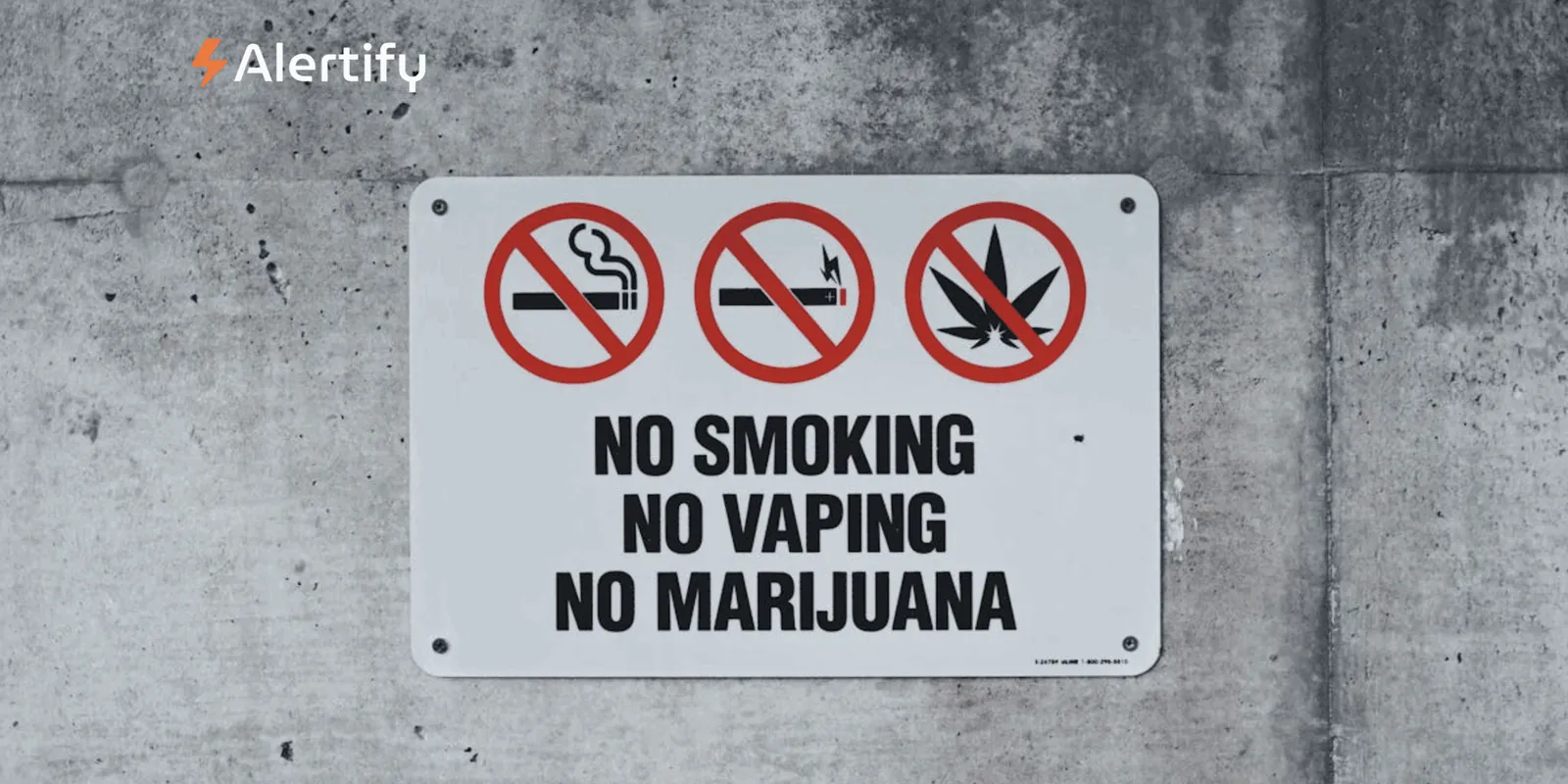
For property managers overseeing multifamily apartment buildings, enforcing a no-smoking policy can feel like walking a tightrope. On one hand, there’s the clear need to reduce health risks, prevent costly damage, and protect non-smoking residents from secondhand exposure. On the other, there’s the challenge of enforcement—particularly when it comes to balancing legal rights, tenant relationships, and privacy concerns.
The good news is that with a well-thought-out approach, smoking policies can be implemented and enforced effectively, without resorting to invasive tactics or risking legal backlash. In this guide, we’ll walk through the key steps to introducing smoke-free rules in multifamily housing, monitoring for violations in a respectful way, and leveraging smart technology to maintain compliance.
Understanding the Legal Landscape of Smoke-Free Housing
It’s a common misconception that tenants have a legal right to smoke in their homes. In truth, no such right exists under federal law. Courts across the U.S. have consistently upheld the authority of landlords and property managers to ban smoking, including within individual units and common areas, provided that these policies are clearly stated in the lease.
From a legal standpoint, the foundation of any enforceable no-smoking rule is the lease agreement. Whether you’re introducing new rules or modifying existing ones, it’s essential to outline the policy in clear, specific language. This includes which areas are covered by the ban (individual units, balconies, shared hallways, etc.), the effective date, and what penalties will apply in the event of a violation. With a transparent, legally sound lease, managers are on firm ground when it comes to enforcing smoking bans in apartments.
Communicating Your Policy and Building Support
Rolling out a no-smoking policy is not just about writing a new clause into a lease—it’s also about helping residents understand the “why.” Health protection is an easy place to start: secondhand smoke has well-documented effects on respiratory health, particularly in children, seniors, and individuals with asthma or COPD. In apartment buildings, where ventilation systems can easily spread smoke between units, the risk is amplified.
Effective communication is key. Provide residents with written notices and educational materials explaining the reasons behind the change. Host informational sessions or Q&A meetings to answer questions and ease concerns. And importantly, give adequate notice before implementing new rules, especially if current tenants will be affected mid-lease. Taking time to educate and listen often results in higher acceptance rates—and less resistance.
Smart Monitoring Without Invasion of Privacy
Once policies are in place, the question becomes: how do you know if tenants are actually following the rules?
Traditional enforcement methods—like visual inspections or relying on neighbor complaints—can be unreliable, reactive, and uncomfortable. Thankfully, new technologies are offering property managers a better solution: smoking detection systems built specifically for apartment buildings.
Unlike video or audio surveillance (which can raise serious legal and ethical concerns), smoking detection technology like Alertify uses environmental sensors to detect airborne particles consistent with tobacco or cannabis smoke. These devices don’t record sound or video, making them a privacy-conscious option for landlords looking to enforce multifamily no-smoking rules.
These tools work best when combined with automated systems that notify property managers in real time, helping them respond quickly and document violations properly.
Responding to Violations Consistently and Legally
When a smoking violation is detected—whether through technology, staff observation, or resident complaints—consistency is essential. Begin with a written warning that reminds the resident of the lease terms and offers a chance to correct the behavior. In most cases, tenants respond positively when the process is handled calmly and professionally.
If the issue persists, escalate the response in line with your lease: this might mean issuing fines, requiring reimbursement for cleaning or damages, or, as a last resort, starting eviction proceedings. The key is to follow your documented process exactly and keep thorough records of each step (Live Smoke Free, 2018). In the event of legal disputes or insurance claims, this documentation will be your best defense.
Offering Support Alongside Enforcement
Not every tenant who violates a smoking policy is doing so out of defiance (NOLO, 2024). Some may be struggling to quit, or may not understand the full impact of their actions. Offering resources—such as contact info for local smoking cessation programs, or even a list of smoke-free alternatives—can go a long way in encouraging compliance.
Many property managers find success by framing smoking bans not as punitive measures, but as part of a broader effort to create healthier, cleaner, and more sustainable communities.
Why Tech-Driven Enforcement Matters
Investing in smoking detection apartment buildings technology isn’t just about catching violations. It’s about creating a system that runs quietly in the background, offering peace of mind for both management and residents.
Smart detection tools help ensure consistent lease compliance in smoke-free apartments. They reduce dependence on uncomfortable neighbor complaints and make it easier to enforce rules fairly and objectively—protecting tenant privacy while keeping properties safe.
Most importantly, this type of proactive approach helps landlords prevent issues before they escalate, avoiding expensive turnover, clean-up costs, and potential legal disputes.
Final Thoughts
Enforcing a no-smoking policy in an apartment complex doesn’t have to be a source of friction. With careful planning, transparent communication, and the right tools, property managers can establish and uphold multifamily no-smoking rules in a way that feels respectful to residents and legally sound.
Using multifamily property monitoring systems designed specifically for residential environments helps bridge the gap between enforcement and empathy. And by offering support, resources, and fair enforcement, communities can move toward a cleaner, healthier, and more compliant future—one smoke-free lease at a time.
Learn more about multifamily property monitoring
Want more Alertify? Follow us on: