
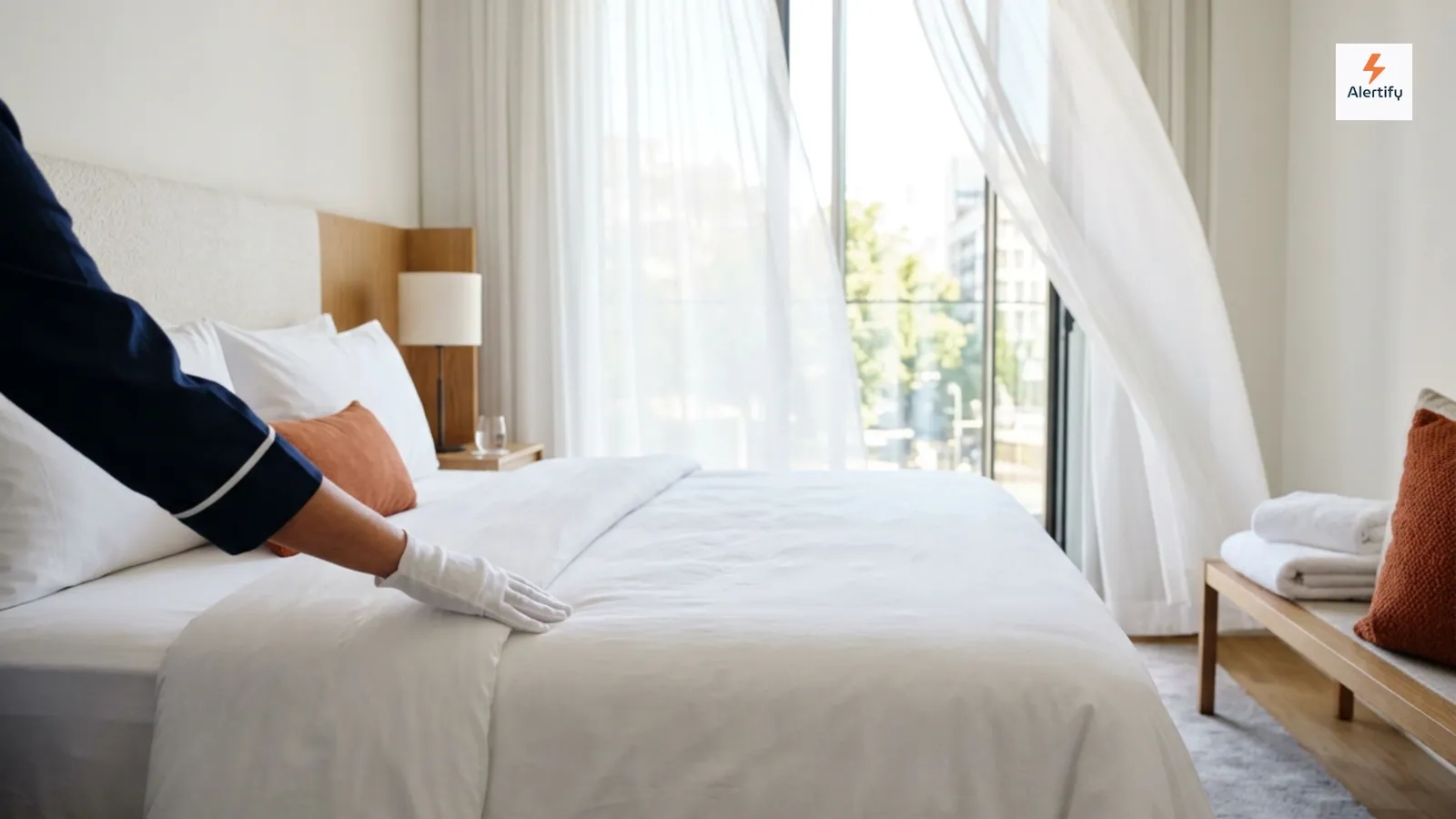
A guest opens the door, catches a stale note in the air, and the stay is compromised before the bags are down. For housekeeping and rooms division leaders, knowing how to get rid of smoke smell in hotel rooms is an essential skill, because a room that still smells of smoke cannot be sold with confidence. The challenge is that smoke odor is rarely just in the air. It lives in fabrics, surfaces, and ventilation, and it comes back if it is not removed properly. This guide explains why the smell lingers, walks through a thorough reset process, and shows how to stop the problem before it starts.
Why Smoke Smell Lingers So Long
The Science of Residue
The smell guests notice is usually not fresh smoke. It is residue that settles into carpets, drapes, upholstery, mattresses, walls, and dust, then keeps releasing odor long after the last cigarette. This is why a room can pass a quick visual inspection and still disappoint the next guest.
Research on thirdhand smoke in hotels shows how far this residue reaches. A study in Tobacco Control measured 40 California hotels and found that, in properties allowing smoking in some rooms, non-smoking rooms carried more than twice the surface nicotine and more than seven times the airborne tobacco smoke marker found in fully smoke-free hotels.
What It Means for Your Reputation
Guests notice, and they write about it. A San Diego State University analysis of more than 332,000 TripAdvisor reviews found that, for every 100 reviews of non-smoking rooms, there were on average ten complaints about tobacco, e-cigarette, or cannabis pollution, and 80% concerned residue left by earlier guests. Hotel smoke complaints in reviews like these stay visible to future bookers for years.
How to Get Rid of Smoke Smell in Hotel Rooms: A Thorough Reset
Step 1: Take the Room Out of Service and Ventilate
Block the room in the PMS so it cannot be assigned, then open windows where possible and run fresh air through the space. Replace or clean HVAC filters and check vents serving the room, since residue in air handling will keep recirculating odor.
Step 2: Remove and Treat Soft Goods
Strip all linens, pillows, duvets, and mattress protectors for laundering or replacement. Drapes, upholstery, and carpets need deep cleaning or hot-water extraction, because fabrics hold the most residue.
Step 3: Clean Every Hard Surface
Wipe down walls, ceilings, headboards, furniture, lamps, remote controls, and bathroom surfaces with a suitable cleaning solution. Residue forms a film that household-style surface cleaning often misses, so be methodical.
Step 4: Use Odor Treatment Correctly
For stubborn cases, ozone or hydroxyl treatment can neutralize remaining odor. Ozone must only be used by trained staff in an unoccupied room, following the equipment manufacturer’s guidance and allowing proper airing before anyone re-enters.
Step 5: Inspect Before Returning to Inventory
Have a supervisor or a second team member check the room with fresh senses. If any odor remains, repeat the relevant steps rather than risk a complaint from the next guest.
Step 6: Record What Was Done
Log the date, the treatments used, the labor hours, and the number of nights the room was out of order. This record supports any recovery charge, helps finance understand the true cost of each incident, and reveals patterns, such as particular rooms, floors, or booking types that see repeat problems.
Stopping the Smell Before It Starts
Why Prevention Beats Remediation
Every reset costs labor, materials, and room nights, and the true cost of smoking in hotel rooms runs well beyond the cleaning bill. The longer smoke sits before anyone knows about it, the deeper it travels and the harder it becomes to remove. The most effective strategy is to catch smoking in the first few minutes, backed by consistent no-smoking policy enforcement.
Prevention also protects your team. Deep cleans pull attendants away from their regular boards and can push shifts into overtime, while repeat inspections slow the flow of rooms back to the front desk. On a busy day, one smoked-in room can ripple through the whole housekeeping schedule. Reducing the number of full resets keeps your team focused on the standards that guests actually notice.
Real-Time Awareness with Alertify
That is the role of smoke monitoring for hotels. Alertify uses a privacy-safe sensor in each room, with no cameras or microphones, and its smoking monitoring identifies cigarette, vape, and marijuana smoke within seconds. Guest Alert then sends the guest a polite automated reminder that the room is smoke-free, and according to Alertify data, 90% of incidents resolve within 10 minutes. Smoke stopped that quickly has far less time to settle, which often turns a full reset into a light refresh.
Keep Every Room Ready for the Next Arrival
Removing smoke odor properly protects the next guest’s first impression, and preventing it protects your team’s time and your inventory. Together, a solid reset process and real-time awareness keep rooms fresh, reviews strong, and housekeeping boards on schedule.
If you would like to see how Alertify helps keep rooms smoke-free across your property, book a demo with our team.
Frequently Asked Questions
How long does it take to get rid of smoke smell in a hotel room?
A light case can clear with a day of ventilation and cleaning, but heavy residue often needs deep cleaning of soft goods, hard-surface wipe-downs and ozone or hydroxyl treatment, which can keep a room out of order for several nights. Catching smoke early shortens the reset considerably.
Does ozone treatment remove cigarette smell?
Ozone or hydroxyl treatment can neutralize odor that remains after cleaning, but it works best once soft goods and surfaces have been cleaned. Ozone must only be used by trained staff in an unoccupied room, following the manufacturer’s guidance, with proper airing before anyone re-enters.
Why does smoke smell come back after cleaning?
Because the residue was not fully removed. Thirdhand smoke settles into carpets, drapes, upholstery, mattresses, walls and HVAC components, and keeps releasing odor for days. Miss one of those sources and the smell returns, which is why a methodical, room-wide reset and a second inspection matter.