
When a room attendant opens a door and is met by stale smoke, the clock starts on an expense most hotels underestimate. The cost of smoking in hotel rooms is usually logged as a single deep clean, yet the real bill includes labor, materials, lost room nights, displaced arrivals, and reputational damage that lingers long after the room is back in service. For general managers, directors of rooms, and finance teams, seeing the full figure is the first step toward controlling it. This guide breaks down where the money goes, why the charge on the folio rarely covers it, and how catching smoke early changes the math.
Breaking Down the Cost of Smoking in Hotel Rooms
Labor and Materials
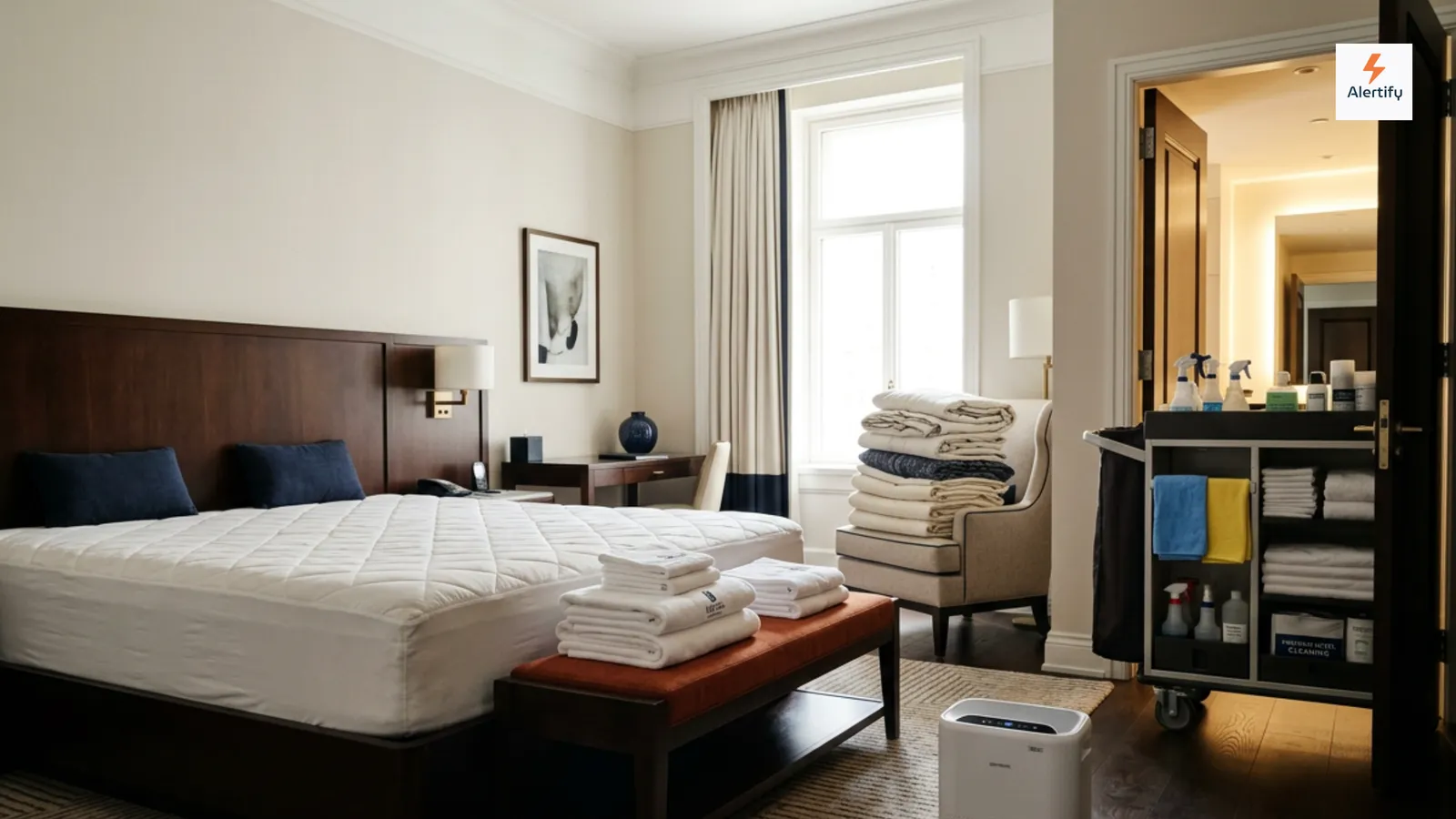
The most visible expense is housekeeping. A smoked-in room needs far more than a standard turn: carpets shampooed, drapes and upholstery treated, bedding and pillows stripped and often replaced, walls and hard surfaces wiped down, and air filters changed. Hotel room smoke remediation usually calls for specialty chemicals and ozone or hydroxyl treatment, which add equipment time and repeat inspections before a supervisor can sign the room off.
Labor is where costs quietly multiply. Deep cleans pull attendants off their regular boards, push shifts into overtime, and may require engineering to inspect or clean the HVAC components serving the room. Residue that reaches shared ventilation can carry odor into neighboring rooms, turning one incident into several cleaning tickets.
The Charge That Rarely Covers It
Most properties post a smoking charge to recover these costs, but it seldom balances the ledger. Consumer advocate Christopher Elliott notes that hotel smoking charges have risen to between $300 and $500 per cleaning, and that figure assumes the guest pays without dispute and the room recovers within a day. Alertify puts the average indoor smoking incident at around $1,100 once cleaning, lost nights, and remediation are counted, more than double the typical charge.
The Revenue You Never See
Out-of-Order Inventory
Every night a room spends under odor treatment is a night it cannot be sold. For a property running at strong occupancy, the out-of-order room cost is often the largest part of an incident, because that lost revenue is close to pure margin. Multiply ADR by the nights a room sits offline and the deep clean starts to look small. Alertify’s analysis for hotels places the full cost of a single incident above $2,000 once ozone treatment, HVAC decontamination, and three nights out of inventory are included.
The disruption reaches the front office too. When a room comes out of inventory unexpectedly, arrivals need to be reassigned, upgrades given away to balance the house, or guests walked to a nearby property on a busy night. Each move carries a cost, from relocation and transport to the goodwill spent apologizing.
Reputation and Rate
Then there is the damage that never appears on an incident report. Research from Cornell’s Center for Hospitality Research found that a one-point increase in review score on a five-point scale lets a hotel raise its price by 11.2% without losing occupancy. If smoke slips past housekeeping and the next guest notices, the damage lands on the review profile and, eventually, on the rate a revenue manager can defend against the comp set.
How Early Awareness Shrinks the Bill
Catching Smoke in Minutes, Not Hours
The size of a cleaning bill depends largely on how long smoke has to settle. A cigarette noticed within minutes leaves far less residue in fabrics and air handling than one discovered the next morning at checkout. This is where smoke monitoring for hotels changes the economics.
Alertify’s smoking monitoring identifies cigarette, vape, and marijuana smoke within seconds, with no cameras or microphones in the room. The moment smoke appears, Guest Alert sends the guest a polite automated reminder that the room is smoke-free, and the team is notified at the same time. According to Alertify data, 90% of incidents resolve within 10 minutes. Stopping smoke that quickly often means a light refresh instead of full remediation, and a room that stays sellable that same night.
Records That Protect Recovery Charges
Every event is also logged with a timestamp through Documentary Evidence. If a charge is warranted, it rests on a clear record of when smoke was identified and how long the air took to clear, rather than on a staff member’s impression. Fewer disputes mean more of each recovery charge actually stays with the hotel, and Alertify customers see 75% fewer chargeback incidents.
Turning a Recurring Loss into a Controlled Expense
Smoking will never vanish entirely from hotel operations, but its cost can become predictable. When incidents are caught early, housekeeping capacity is protected, inventory stays available, and the review scores that support rate stay intact. Owners and asset managers benefit too, because carpets, furnishings, and HVAC equipment last longer when they are not repeatedly saturated with smoke and harsh treatments.
The most effective cost control is the incident that never fully happens. If you would like to see what early awareness could save across your rooms, book a demo with Alertify and we will walk through it with your team.
Frequently Asked Questions
How much does smoking in a hotel room really cost?
Far more than the charge. Deep cleaning alone typically runs $300 to $500, and Alertify puts the full cost of a single incident above $2,000 once ozone treatment, HVAC decontamination and three nights out of inventory are counted. Walked guests and review damage add more on top.
Why doesn't the smoking charge cover the cost?
The charge usually covers part of the deep clean, and only if the guest pays without dispute. It does not recover the room nights lost while the room is out of order, the cost of reassigning arrivals, or the rate pressure that follows a smoke complaint in reviews.
How can hotels reduce the cost of smoking incidents?
Catch smoke early. A cigarette or vape noticed within minutes leaves far less residue than one found at checkout, which often turns full remediation into a light refresh. Timestamped records also help recovery charges stick, so more of each charge stays with the hotel.