If you live in, manage, or own federally assisted housing in the United States, noise is not just a quality-of-life consideration — it is a regulatory one. The Department of Housing and Urban Development has established a framework of noise assessment and abatement standards that apply to all housing programmes receiving federal assistance, and understanding what those standards require is essential for both residents who want to know their protections and managers who need to demonstrate compliance. This guide explains HUD noise standards affordable housing providers and residents need to know in plain, accessible language.
What HUD’s Noise Standards Actually Say
HUD’s noise requirements for federally assisted housing are primarily codified in 24 CFR Part 51, Subpart B, which establishes noise abatement and control criteria for HUD-assisted programmes. The regulation defines acceptable noise exposure levels for residential sites using the Day-Night Average Sound Level (DNL) metric — a measure that accounts for the greater sensitivity to noise during nighttime hours by adding a 10 dB penalty to sounds occurring between 10pm and 7am.
Under HUD’s framework, residential sites are categorised as follows. Sites with a DNL of 65 dB or below are considered acceptable. Sites with a DNL between 65 and 75 dB are considered normally unacceptable, and HUD requires that noise attenuation measures be incorporated into the building’s construction to bring interior noise levels to acceptable standards. Sites with a DNL above 75 dB are considered unacceptable, and HUD will generally not approve federal assistance for new construction or substantial rehabilitation at these locations without extraordinary mitigation.
These standards were designed primarily to address external noise sources — traffic, aircraft, rail, and industrial noise — at the point of site selection and construction. However, HUD’s broader habitability requirements through the Housing Quality Standards create an ongoing obligation for housing providers to maintain residential environments that are safe and habitable — a standard that can extend to internally generated noise nuisance when it reaches levels that demonstrably harm resident health or prevent reasonable enjoyment of the home.
HUD Noise Standards Affordable Housing: What This Means for Residents
For residents of federally assisted housing, HUD’s noise framework provides a layer of protection that goes beyond what many renters in the private market enjoy. If you are living in Section 8, public housing, or any other HUD-assisted programme and experiencing chronic noise at levels that are affecting your health or quality of life, you have a basis for complaint that extends beyond your lease agreement to the federal regulatory framework your housing is built upon.
If your housing was built or substantially rehabilitated without adequate noise assessment or mitigation — placing you in an environment exposed to external noise sources above HUD’s acceptable threshold — you may have grounds to request that your housing authority investigate and address the issue. Similarly, if internal noise nuisance from neighbours is being left unaddressed by your housing provider, the habitability standards embedded in HUD’s Housing Quality Standards framework provide a basis for escalation to your local Public Housing Authority or HUD field office.
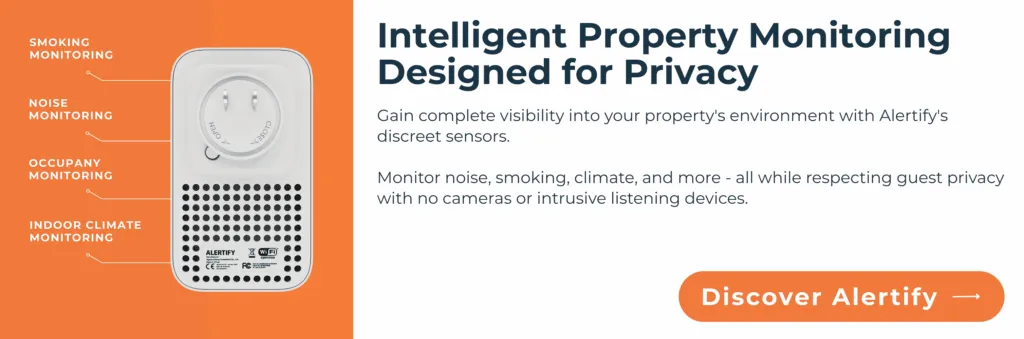
Noise monitoring for affordable housing plays an important role in making these protections meaningful in practice. Without objective noise data, it is difficult for residents to demonstrate that noise levels exceed regulatory thresholds and equally difficult for housing providers to demonstrate that they are actively managing the problem. Modern monitoring technology bridges this gap by generating the continuous, measurable evidence that turns regulatory standards from paper commitments into enforceable protections.
What HUD Compliance Requires of Housing Managers
For affordable housing managers and developers, HUD’s noise requirements create obligations at two distinct stages: at the point of site selection and construction, and on an ongoing basis throughout the life of a housing programme.
At the construction stage, 24 CFR Part 51 requires that a noise assessment be conducted for all proposed sites for new construction or substantial rehabilitation under HUD programmes. This assessment must demonstrate that the site meets acceptable noise exposure standards or that sufficient attenuation measures have been incorporated into the building design to achieve acceptable interior noise levels. Failure to conduct or document an adequate noise assessment is a compliance failure that can jeopardise HUD funding approval.
On an ongoing basis, housing managers must maintain properties in compliance with HUD’s Housing Quality Standards — including the requirement that units be free from conditions hazardous to resident health. Unmanaged internal noise nuisance that is documented by residents as causing health impacts creates compliance exposure that housing managers need to address systematically rather than reactively. Alertify’s documentary evidence feature provides housing managers with a continuously updated, automatically generated record of noise incident detection and response — precisely the kind of documented, systematic approach that demonstrates active compliance management during HUD inspections or investigations.
Using Technology to Bridge the Gap Between Standards and Reality
The gap between what HUD’s noise standards require and what actually happens in many affordable housing developments is significant. Standards exist on paper; acoustic environments in older, densely occupied affordable housing stock frequently fail to meet them. The challenge for housing managers is to demonstrate not just that they are aware of noise issues, but that they are actively and systematically managing them.
Alertify’s noise monitoring system provides the real-time detection, automated response, and documented evidence trail that makes this demonstration possible. Every threshold breach is logged automatically, every automated alert is recorded, and the entire incident history is available as a downloadable report that can be presented to HUD inspectors, housing authority officials, or legal proceedings as evidence of active, technology-supported noise management. The indoor air quality monitoring capability adds further value by tracking environmental conditions relevant to habitability standards beyond noise alone.
Standards Without Enforcement Are Just Intentions
HUD noise standards provide an important framework of protection for affordable housing residents and a meaningful compliance obligation for housing managers. But standards only protect people when they are actively implemented, monitored, and enforced. The technology to do this effectively is available, affordable, and deployable without specialist expertise. The question for housing managers is not whether they can afford to implement systematic noise monitoring — it is whether they can afford the compliance exposure, legal risk, and resident harm that comes from not doing so.
Book a free demo with Alertify to find out how our monitoring and documentary evidence system can support your HUD compliance programme and protect both your residents and your organisation.