
Noise is one of the most common complaints made by tenants in affordable housing — and one of the most commonly mishandled by landlords. If you are a renter dealing with persistent noise from a neighbour, a communal area, or an external source, it is important to know that you have legal rights, your landlord has legal obligations, and there are practical steps you can take to ensure your complaint is taken seriously and resolved effectively. Understanding renters rights noise complaints is the first step toward getting the outcome you deserve.
What Your Landlord Is Legally Obligated to Do
When you sign a tenancy agreement, your landlord implicitly or explicitly guarantees your right to quiet enjoyment of your home. This legal concept — recognised in both US and UK housing law — means that your landlord must not allow conditions to persist that substantially interfere with your ability to use and enjoy your home. Chronic noise nuisance from a neighbouring tenant, a poorly maintained communal area, or inadequate sound insulation can all constitute a breach of this obligation if your landlord is aware of the problem and fails to take reasonable steps to address it.
In the United States, HUD’s Housing Quality Standards require that federally assisted housing be maintained in a condition that does not threaten the health or safety of residents. Severe or chronic noise exposure that demonstrably impairs sleep or mental health can meet this threshold. In the United Kingdom, the Housing Ombudsman Service has repeatedly found housing providers in maladministration for failing to respond adequately to tenant noise complaints — confirming that landlords have a documented obligation to investigate, act, and follow up.
Your landlord’s obligations do not end with acknowledging your complaint. They extend to investigating it, taking proportionate action against the source, keeping you informed of progress, and following through with enforcement if the noise continues. If your landlord fails to do any of these things within a reasonable timeframe, you have grounds to escalate your complaint.
Renters Rights Noise Complaints: The Evidence Problem and How to Solve It
The most significant practical barrier to getting a noise complaint resolved is evidence. Landlords and housing officers cannot take formal enforcement action — issuing a lease violation notice, pursuing a legal remedy, or applying for a noise abatement order — without a standard of proof that subjective tenant testimony alone rarely meets. This is the evidence problem that has frustrated noise complainants in affordable housing for generations.
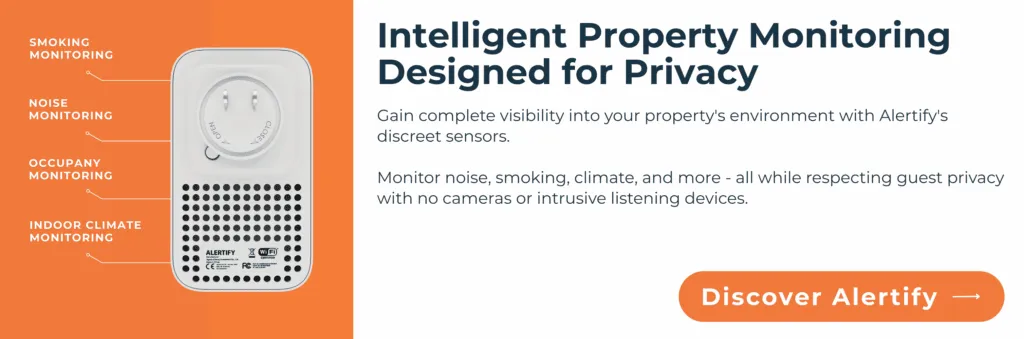
The good news is that this problem is increasingly solvable through technology. Noise monitoring for affordable housing has developed to the point where objective, real-time decibel data can be generated continuously, stored automatically, and presented as verifiable evidence in formal proceedings. When a housing provider has invested in a monitoring system such as Alertify, every noise event that exceeds a pre-configured threshold is timestamped, measured, and stored through the documentary evidence feature — creating a record that is far more persuasive than a resident’s written diary and far more difficult for a noisy neighbour to dispute.
If your housing provider does not currently have noise monitoring in place, you are within your rights to request it as part of their response to your complaint. Frame it as a reasonable step toward gathering the objective evidence needed to take formal action — because that is precisely what it is.
How to Escalate When Your Landlord Does Not Act
If you have reported a noise complaint to your landlord and received an inadequate response — or no response at all — you have several escalation routes available to you. In the United Kingdom, you can refer your complaint to the Housing Ombudsman Service if your landlord is a social housing provider, or to your local authority environmental health department, which has statutory powers to investigate and abate noise nuisance regardless of tenure. In the United States, you can report unresolved habitability complaints to your local Public Housing Authority or HUD field office if you are in a federally assisted housing programme.
Before escalating, ensure that your complaint is documented in writing, that you have kept copies of all correspondence with your landlord, and that you have a record of the dates and times of noise incidents. The stronger your paper trail, the stronger your position in any escalation or formal proceeding.
The Shift Toward Objective Evidence in Housing Management
One of the most encouraging developments in affordable housing management in recent years is the growing recognition among housing providers that noise disputes cannot be managed effectively without objective data. The subjective “he said, she said” model of noise complaint management is being replaced — in the best-managed housing organisations — by technology-supported approaches that generate real-time evidence, enable faster response, and produce fairer outcomes for all parties.
When noise monitoring technology is in place, residents benefit from knowing that their complaints are supported by data rather than dependent on their credibility alone. Housing officers benefit from having the evidence they need to act. Noisy neighbours — in the majority of cases — self-correct quickly when an automated alert makes clear that their behaviour has been objectively detected and recorded. And the housing community as a whole benefits from a noise management system that is consistent, transparent, and enforceable.
Your Rights Are Real — Make Them Count
Noise is not something you should have to tolerate in your home. Your rights as a renter are legally protected, your landlord has documented obligations, and the technology exists to support your complaint with objective evidence. The combination of informed advocacy and modern monitoring tools is a powerful one — and it is changing the experience of noise complainants in affordable housing for the better.
Book a free demo with Alertify — if you manage affordable housing and want to give your residents and your team the tools to handle noise complaints fairly and effectively, find out how our monitoring system can help.