Noise is the single most common reason a short-term rental listing ends up in a dispute, and it’s usually the first sign a host had no idea a problem was building until a neighbor, an HOA, or a one-star review told them. Finding the best noise monitoring device for Airbnb properties comes down to a short list of things that actually matter: real-time alerts, no audio recording, and a documented history a host can point to if a complaint ever escalates. This post walks through what that looks like in practice, and how noise monitoring fits into a broader approach to vacation rental protection.
Why Noise Complaints Cost Hosts Bookings
A single loud weekend rarely ends with just an awkward conversation. Once a neighbor files a complaint with a city, an HOA, or the platform itself, that complaint tends to sit on record, and a second incident is treated as a pattern rather than a one-off. Airbnb’s official policy on interior monitoring devices allows hosts to use noise decibel monitors inside a listing, provided the device is disclosed and isn’t placed in a bedroom, bathroom, or other sleeping area. That rule exists because Airbnb recognizes noise monitoring as a legitimate, privacy-respecting way for hosts to manage disturbances, not a workaround for surveillance.
The cost of getting this wrong isn’t limited to a warning. Depending on the city, unresolved noise complaints can lead to fines against the property, a formal notice from an HOA, or a strike against the listing that affects future bookings. What most hosts don’t realize until it happens to them is that the guest who caused the disturbance is rarely the one who pays for it. The host is, since fines and penalties are almost always tied to the property or permit rather than to whoever happened to be staying there that weekend.
How Real-Time Noise Detection Works
A modern noise monitoring device doesn’t record conversations or identify who is speaking. It measures decibel levels in a shared space, such as a living room or hallway, and compares that reading against a threshold the host sets in advance. When sound crosses that threshold for a sustained period, the device sends an alert immediately, while the noise is still happening rather than hours or days later.
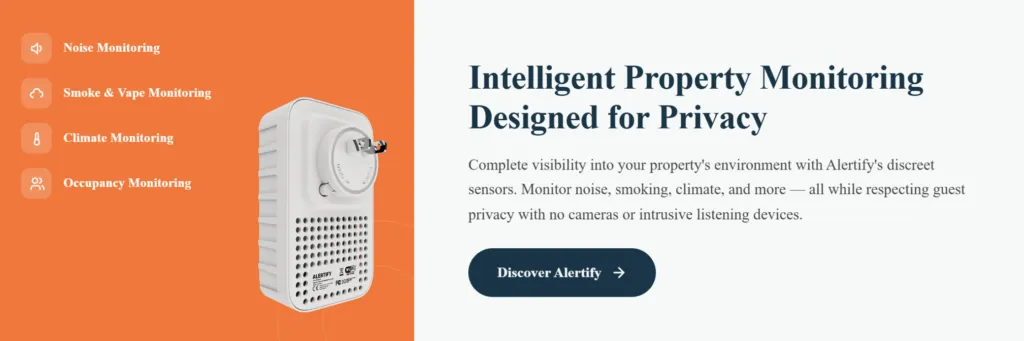
Alertify’s noise monitoring works this way, tracking decibel levels continuously without capturing a single word of audio, and it allows different thresholds for different times of day so a lively afternoon doesn’t trigger the same response as the same volume at midnight. This is the detail that separates an effective noise monitoring device from a blunt instrument: it should flag the pattern that actually predicts a complaint, not every noise a group of guests reasonably makes on vacation.
Turning Noise Data Into Guest Communication
Detecting a noise spike is only half the job. What a host does in the next few minutes determines whether the situation resolves quietly or turns into a formal complaint. Automated guest messaging closes that gap: the moment a threshold is crossed, a pre-written reminder about quiet hours goes out to the guest without the host needing to be awake, available, or willing to make an uncomfortable phone call.
Paired with Guest Alert, this becomes a system that runs on its own. Most noise events resolve within minutes of that automated message, and every incident is logged with a timestamp, which matters if a host ever needs to show a city inspector, an HOA board, or a platform’s trust and safety team that a disturbance was caught and addressed promptly. That kind of record is one piece of a much larger picture. It’s part of what a documented approach to vacation rental protection actually looks like in day-to-day operation, not just during a dispute.
Thresholds don’t have to be static, either. Most hosts set a custom decibel threshold during the day and a stricter one once quiet hours begin, so a lively afternoon gathering by the pool doesn’t trigger the same response as the same volume at 1 a.m. That flexibility matters because a device that treats every hour identically tends to either annoy well-behaved guests with constant reminders or miss the disturbances that actually generate complaints in the first place.
Choosing the Right Noise Monitor for Your Property
The best noise monitoring device for an Airbnb isn’t the one with the most features. It’s the one that alerts fast, respects guest privacy by design, and gives a host something concrete to show if a complaint ever needs a response beyond an apology. Combined with automated guest communication and a documented incident history, noise monitoring stops being a reactive tool and becomes a quiet, background layer of protection for the property, one that works whether the host is asleep, traveling, or managing several other listings at the same time.
If you’re ready to see how real-time noise alerts would work on your specific listing, book a free demo and we’ll walk through setup, threshold recommendations, and how disclosure works on your platform of choice.