As we move toward the winter season, many property owners are dealing with the lingering effects of dampness. The most critical step in mold prevention is understanding how to reduce humidity in a vacation rental. Mold has a fatal weakness: it simply cannot grow in a dry environment. By actively controlling the moisture level in your property’s air, you can create a space where mold struggles to survive. This guide provides seven actionable strategies to lower indoor humidity, protecting your property from damage and ensuring a healthier environment for your guests.
1. Supercharge Your Ventilation Systems
Stagnant, moist air is an open invitation for mold. Your primary goal should be to exhaust this damp air and replace it with fresh, dry air. The most important place for this is the bathroom. Standard, low-power fans are often inadequate. A key part of improving bathroom ventilation is to install a high-capacity exhaust fan with a high CFM (Cubic Feet per Minute) rating. For ultimate effectiveness, choose a model with a built-in humidistat. This sensor automatically turns the fan on when humidity spikes (like during a shower) and runs it until the air is dry again, removing the reliance on guests to remember to use it.
2. Deploy Dehumidifiers in Problem Areas
For chronically damp areas, a dehumidifier is a non-negotiable appliance. Basements, laundry rooms, and poorly ventilated storage closets are prime candidates. For a vacation rental, the best dehumidifier for basements and other out-of-the-way areas is a “set it and forget it” model. Look for one that allows you to set a target humidity level (ideally between 40-50%) and has a continuous drain option. This allows you to run a hose directly to a floor drain, so you never have to worry about your guests or cleaning crew emptying a full water tank.
3. Promote Better Air Circulation
Even in a room with normal humidity, stagnant air in corners or closets can create microclimates where moisture settles. Encourage air movement with a few simple tricks:
- Use ceiling fans on a low setting.
- Avoid pushing furniture flush against walls; leave a small gap for air to circulate.
- Use slatted shelves in closets and pantries instead of solid ones.
4. Use Your HVAC System Intelligently
Your air conditioning system is one of your most powerful dehumidifying tools. When it runs, it naturally pulls moisture out of the air. To leverage this, use a smart thermostat to maintain a consistent temperature and to circulate the air, even when the property is unoccupied. This prevents the air from becoming stagnant and humid between bookings.
5. Seal Up Air Leaks
Humid outdoor air can easily infiltrate your property through gaps around windows and doors. This is especially true in coastal or subtropical climates. Conduct a simple inspection and use weatherstripping and caulk to seal any obvious leaks. This not only helps control humidity but also improves energy efficiency.
6. Check Your Exterior and Landscaping
Moisture control starts from the outside. Ensure your gutters are clean and that downspouts direct water at least two metres away from your foundation. The soil around your property should slope away from the building to prevent water from pooling against the walls and seeping into the foundation or crawl space.
How to Reduce Humidity in a Vacation Rental: Educate Your Guests
You can empower your guests to help. Include a small, friendly note in your welcome book: “To help us keep the air fresh and comfortable, please use the exhaust fan in the bathroom during and after your shower. Thank you!” Most guests are happy to oblige when they understand the reason. Successful mold detection in vacation rentals often starts with prevention.
Creating a Mold-Resistant Environment
Lowering humidity isn’t a single action but a combination of strategies. By upgrading ventilation, using dehumidifiers, improving air circulation, and sealing leaks, you create a robust defense against mold.
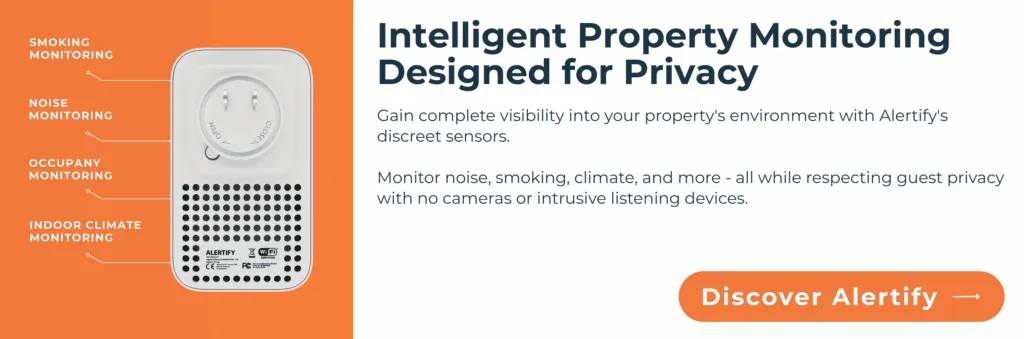
Manually managing humidity is a constant effort. For true peace of mind, Alertify’s smart sensors can monitor your property’s humidity levels 24/7 and alert you the moment they enter the danger zone.