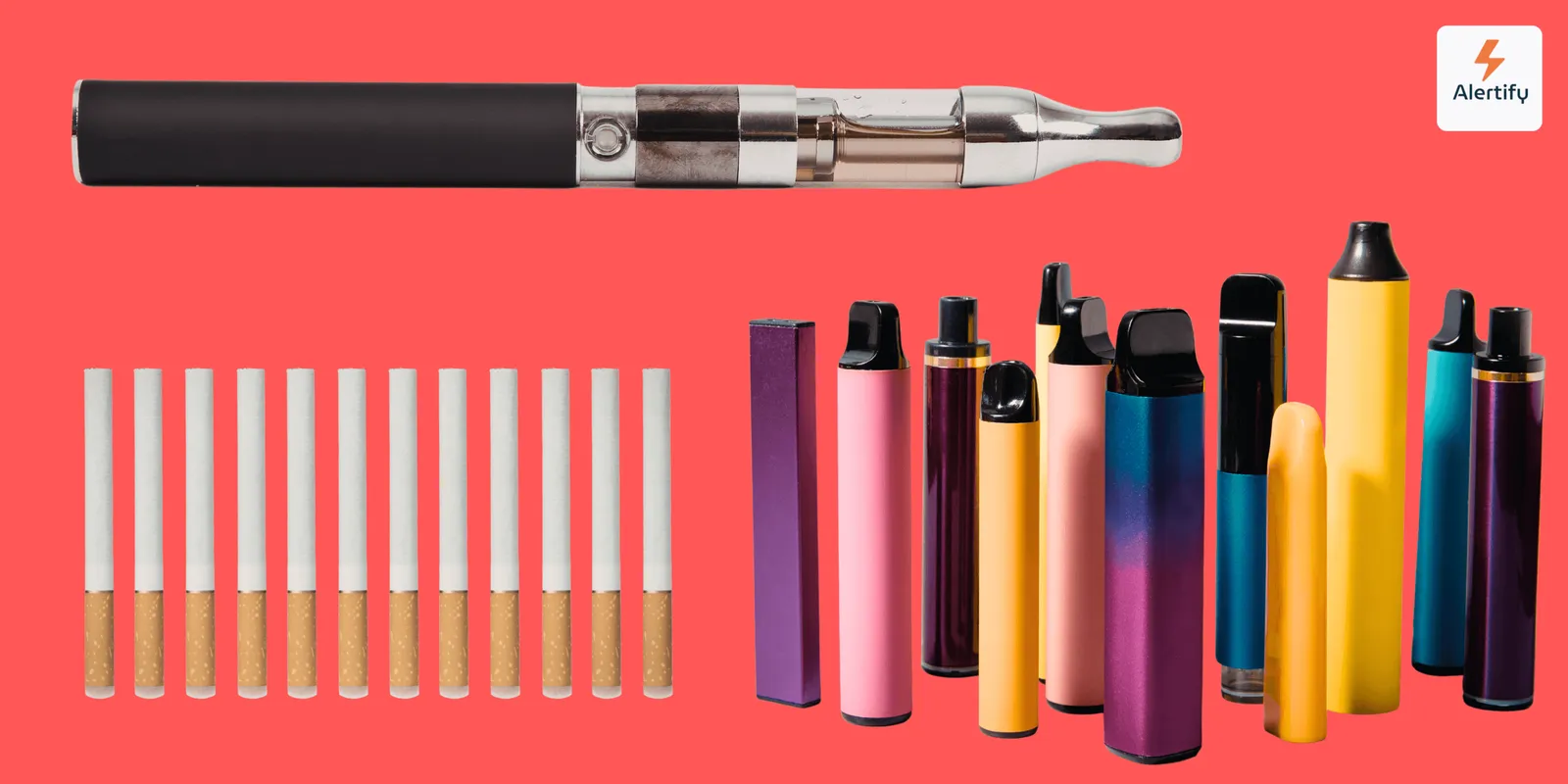
When a short-term rental host says they want to monitor for smoking in their property, they usually mean all of it, cigarettes, cannabis, vaping, everything. What many hosts discover when they start evaluating monitoring technology is that not all devices are built to catch all three, and the gaps matter more than they might expect.
The three most common types of smoking in vacation rentals produce different chemical signatures, behave differently in indoor environments, and present different challenges for both monitoring and enforcement. Understanding those differences helps you choose the right technology and communicate more effectively with guests and platforms when a violation occurs. Here is what you need to know about smoking detection for your vacation rental.
How Each Type of Smoking Behaves Indoors
Cigarette smoke is the most chemically complex and surface-damaging type of indoor smoking. Combustion produces thousands of chemical compounds including carbon monoxide, formaldehyde, and volatile organic compounds (VOCs), along with fine particulate matter that adheres aggressively to soft furnishings, walls, and HVAC surfaces. Cigarette smoke is also the most persistent, the odor and chemical residue can remain detectable for weeks or months after a single significant smoking event. This persistence makes cigarette smoking both the easiest type to discover after the fact and the most costly to remediate.
Cannabis smoke shares the combustion mechanism with cigarettes and produces many of the same chemical byproducts, but its odor profile is chemically distinct, dominated by terpene compounds that produce the characteristic smell associated with cannabis. This also matters for enforcement, particularly in states where recreational cannabis is legal. Guests in those jurisdictions sometimes interpret a general “no smoking” policy as applying only to tobacco, making explicit cannabis inclusion in your policy important.
Vaping is the type most frequently missed by both hosts and monitoring devices. Unlike combustion smoking, vaping produces an aerosol rather than smoke, a fine mist of propylene glycol, vegetable glycerin, flavoring compounds, and in nicotine vapes, nicotine. This aerosol dissipates more quickly than combustion smoke and does not produce the same strong residual odor, which is why vaping violations are so frequently undetected by cleaners and undisclosed in guest reviews. However, vape aerosol still deposits particulates on surfaces, affects indoor air quality, and in some formulations contains compounds that are measurably harmful. Many guests who vape genuinely believe they are not violating a no-smoking policy, which makes explicit policy language and a reliable vape detection device for your vacation rental both important tools for hosts who want to enforce a truly smoke-free property.
What to Look for in a Smoking Detection Device for Vacation Rentals
Given the different chemical profiles of cigarette smoke, cannabis smoke, and vaping aerosol, effective monitoring requires a sensor suite capable of detecting the air quality changes each type produces, rather than relying on a single combustion indicator.
Standard fire safety devices are not designed for this purpose. They detect combustion products at concentrations that indicate a fire risk, which is orders of magnitude higher than the concentrations produced by a guest smoking indoors. A standard fire safety device will not alert to a guest smoking a single cigarette in a bathroom with the fan running. It is a life safety device, not a policy enforcement tool.
Purpose-built smoking monitoring devices for STR and hospitality use operate on a different principle, typically combining multiple sensor types, including VOC sensors, particulate sensors, and in more sophisticated devices, machine-learning-based chemical pattern recognition, to detect the air quality signatures of tobacco combustion, cannabis combustion, and vaping aerosol at the concentrations produced by normal indoor smoking behavior.
Alertify’s indoor smoking monitor detects smoking events through this multi-sensor approach and generates a detailed smoking report when an event occurs. Hosts can then select the relevant smoking type from a dropdown within the report and add guest information, making it a more substantial and credible record for enforcement conversations and platform damage claims. This matters when notifying a guest or submitting a claim, as a timestamped report with the relevant smoking type and guest details is a far more precise and harder-to-dispute document than a general “smoking was detected” notification. Investing in smoking monitoring for your vacation rental means choosing a device that generates actionable, documented evidence, not just an alarm.
Choosing the Right STR Smoking Detection Technology for Your Property
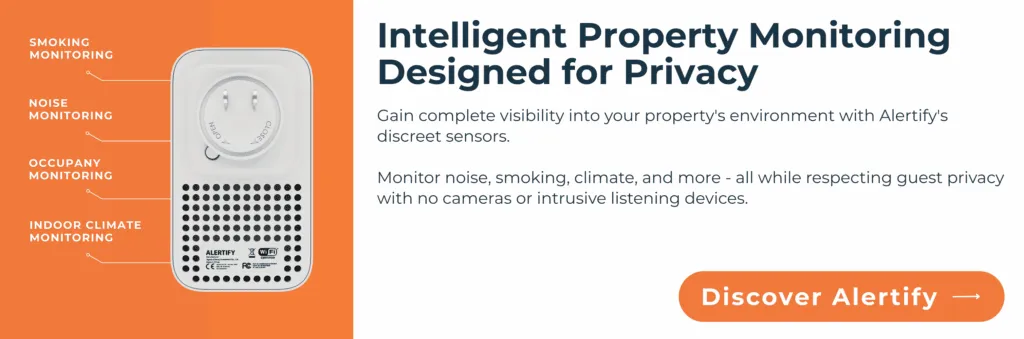
When evaluating smoking monitoring devices for your vacation rental, the features that matter most are real-time alerting, privacy compliance, incident logging, and the quality of the reporting tools available to you after a detection event. Real-time alerting, the ability to notify hosts and guests within minutes of a detection event, is what makes early intervention possible and damage prevention realistic rather than aspirational. Privacy compliance, specifically the absence of any audio or video recording, is what makes the device appropriate for residential use and disclosable to guests without legitimate concern. And incident logging with timestamps and stored data is what makes the device’s output useful for damage claims and platform disputes rather than just for in-the-moment awareness.
Alertify’s Guest Alert system delivers real-time automated guest notification the moment a smoking event is detected, removing the need for a direct confrontation and resolving 90% of violations within ten minutes. Combined with zero audio or video recording and 180-day incident data storage with downloadable reports, it is the combination of these features, not just the detection capability alone, that makes the system genuinely useful for hosts who want comprehensive protection against all forms of smoking in their property.
Book a demo with Alertify to see how the reporting tools work in practice for properties like yours.