
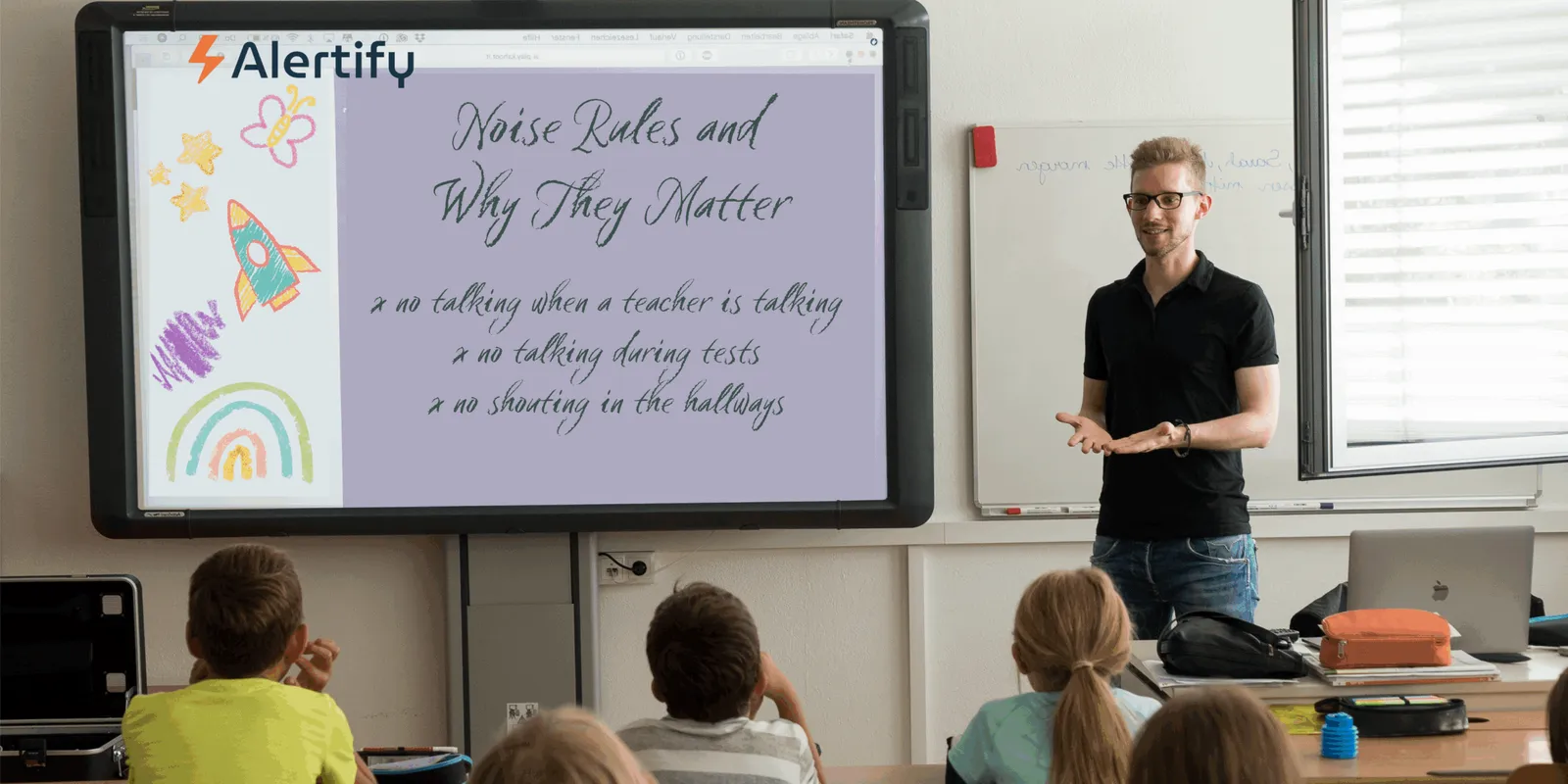
Why Student Noise Conversations Are So Important
Noise in schools is often dismissed as just part of a lively learning environment. And yes, active classrooms are a good thing. But when sound levels spiral beyond productive energy—whether from hallway chatter, slamming lockers, or after-class socializing—it starts to erode focus, fuel frustration, and impact the learning of every student in the building.
Setting boundaries around noise isn’t about silencing students—it’s about giving everyone the best chance to learn. The challenge for teachers, administrators, and residential advisors (RAs) is not just making rules clear but making them understood and respected.
That’s where intentional student behavior noise education comes in.
Why Students Break Noise Rules (Even When They Know Better)
Students—especially adolescents—aren’t usually trying to be disruptive. But their perception of what’s “too loud” can be wildly different from that of teachers or peers. Add in environmental factors like echo-prone corridors, thin classroom walls, or late-night dorm life, and small sounds can quickly become major distractions.
Here’s what often drives excessive noise in school settings:
Lack of awareness about how noise impacts others
Inconsistent enforcement of existing noise policies
Social pressure to participate in group conversations
Misunderstandings about where “quiet zones” begin or end
Absence of clear, student-centered explanations
So the issue isn’t just rule-breaking—it’s often a lack of education, clarity, or buy-in.
Step 1: Reframe the Noise Policy Conversation
If your noise rules are buried in a student handbook no one reads, don’t be surprised when they’re ignored. Instead, use direct conversations, visual reminders, and peer-to-peer messaging to bring policies to life.
Example introduction:
“Noise isn’t just about discipline—it’s about fairness. When it gets too loud, not everyone can focus. We’re not asking for silence, but we are asking for awareness.”
This kind of framing taps into students’ sense of fairness and community, rather than simply commanding obedience.
Step 2: Connect Noise to Real-World Consequences
Students are more likely to respect rules when they understand the “why.” Tie noise limits to things they care about—test scores, sleep, social harmony.
Use examples like:
“A 10% drop in concentration can mean the difference between passing and failing.”
“When dorm halls stay loud after quiet hours, sleep loss becomes a real health issue.”
“Repeated noise violations can affect your housing privileges or student record.”
By linking noise policy schools already have in place to tangible outcomes, students start seeing the rules as tools for their success—not obstacles to fun.
Step 3: Practice Collaborative Rule-Setting
One of the most effective ways to promote student accountability noise is to get students involved in shaping expectations.
Hold mini focus groups or classroom discussions. Ask:
What noise levels feel acceptable during group work?
When do you need quiet to focus best?
What do you think fair consequences should be for repeated disruptions?
When students help set standards, they’re more likely to enforce them among peers. You’ll also gain insights into what triggers noise spikes and how to design policies that actually work.
Step 4: Equip Staff to Reinforce Rules Consistently
It’s one thing to have a great message. It’s another to deliver it consistently. Teachers, RAs, and support staff need training in how to calmly and consistently remind students about noise expectations without escalating tension.
Tips for consistent enforcement:
Use neutral language like: “Let’s bring the volume down so we can all stay focused.”
Avoid public shaming; redirect behavior, not individuals.
Pair corrections with reminders of why the rule exists: “Remember, this helps everyone learn better.”
Log repeat violations through a centralized system to track patterns and improve support.
When enforcement feels fair and predictable, students are more likely to self-regulate.
Step 5: Use Data-Backed Technology to Support Conversations
Sometimes, subjective interpretations get in the way. One student’s “quiet” might be another’s “chaos.” That’s where noise monitoring tech comes in.
Smart noise sensors—like those offered by Alertify—help educators:
Detect sound thresholds without recording audio (protecting privacy)
Pinpoint repeated disturbances to specific areas or times
Use data to back up conversations and resolve disputes neutrally
This isn’t about punishment—it’s about clarity. When students know that their space is being monitored for noise objectively (and privately), conversations shift from opinion to fact.
Conversation Template: Talking to Students About Noise
Hey everyone, just a quick reminder about our noise expectations.
We all need different levels of quiet to focus and feel comfortable. That’s why we have guidelines in place—not to limit you, but to protect everyone’s right to learn.
If you’re not sure whether you’re being too loud, take a moment to check in with the space. Is someone trying to study? Sleep? Focus?
And remember—this isn’t about being silent. It’s about being aware. Let’s work together to make this a space where everyone can thrive.
Final Takeaways: Building a Culture of Respectful Sound
Addressing noise isn’t just a matter of rules—it’s about communication, collaboration, and culture. Schools that take time to teach the “why” behind noise limits see better student engagement, fewer disruptions, and improved performance overall.
By making student behavior noise education part of your wellness and discipline strategy, you send a message that respect—like silence—is something we build together.
Key Reminders:
Reframe noise rules as community care, not control
Use real-world consequences to boost buy-in
Collaborate with students on defining “acceptable”
Train staff to reinforce rules consistently
Use objective data to resolve disputes
Always lead with respect and clarity
Quiet doesn’t mean lifeless. It means learning, resting, thinking—and it starts with a conversation. Read more about noise monitoring in schools in our full blog post on the topic.
Enforce noise rules with noise tech
Want more Alertify? Follow us on: