
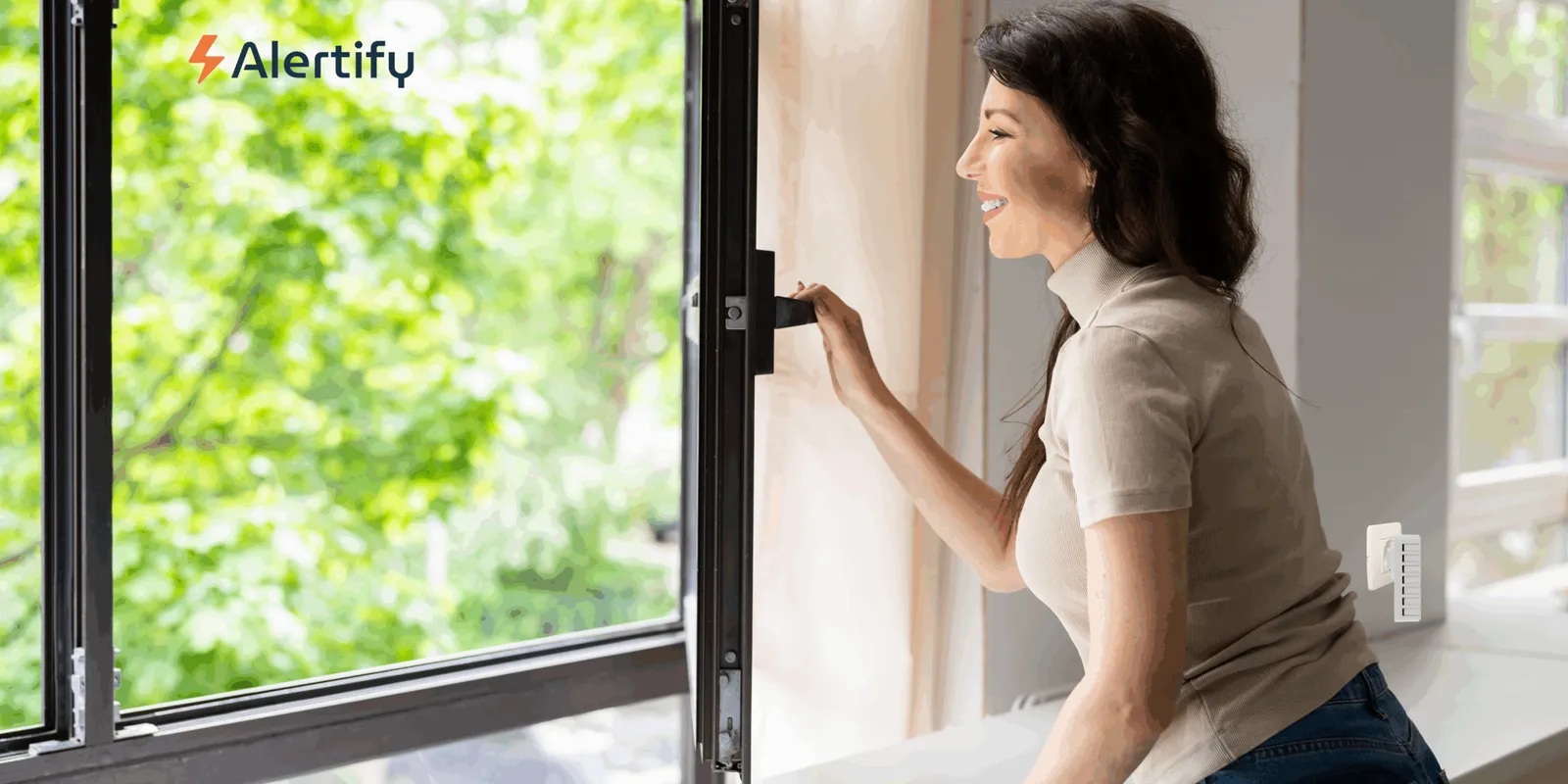
In the realm of short-term rentals, optimizing comfort and safety isn’t just about decor and clean sheets—it’s often about unseen details like air quality. You won’t find guests mentioning fresh air in glossy photos, but the impact is profound. Indoor air safety STRs is rapidly becoming a must-have amenity, especially as travelers become increasingly health-conscious.
The good news? You don’t need to babysit your guests’ environment. With modern tools and a bit of automation, you can maintain ideal indoor air quality automatically, without having to log into an app every hour. Let’s walk through how CO₂ sensors and HVAC systems can work together to create a self-regulating, guest-friendly rental—even when you’re miles away.
The Invisible Problem: Why CO₂ Matters
Every person in a room contributes to rising CO₂ levels. In well-ventilated spaces, this isn’t a concern. But in airtight condos, basement units, or properties in dense urban environments, CO₂ can accumulate quickly. Above 1,000 ppm, people start feeling sleepy or stuffy. Push it further, and longer stays can lead to health complaints or bad reviews.
This is where air quality automation Airbnb really shines. CO₂ sensors monitor the atmosphere continuously. When levels inch past a set threshold (say, 1,200 ppm), they trigger automations—like telling your HVAC system to kick in or notifying you and the guest with a gentle nudge.
Step 1: Choose the Right CO₂ Sensor
Look for sensors that measure CO₂ accurately, ideally combined with humidity and temperature. You want reliable data, not guesswork. And choose a device that integrates with your property tech—Alertify’s CO₂ sensors, for example, connect with property management systems like Hostex or another PMS via Alertify’s integration section.
What you’re aiming for is seamless HVAC optimization in short-term rentals—automations that run in the background, giving guests fresh air without them lifting a finger.
Step 2: Define Thresholds—and Automation Rules
Begin by mapping out your “goldilocks” air quality levels. A suggested setup:
Normal range (400–800 ppm): No action needed, your ventilation is working.
Mid-alert range (800–1,200 ppm): Send a polite guest notification—“Hey, air quality could use a boost. Feel free to open a window or adjust the thermostat.”
Critical range (1,200–1,600 ppm): Trigger the HVAC or smart fan to run for 15 minutes.
Dangerous range (>1,600 ppm): Send both guest and host alerts and keep HVAC running until resolved.
These air quality metrics in STRs help prevent issues before they escalate—plus, they show guests you’re committed to their comfort.
Step 3: Connect to HVAC for Smart Control
If your thermostat is smart-enabled, code alerts can directly kick off air circulation. For more basic systems, integrate a smart plug or switch into the fan or unit. You can even set daily routines: e.g., the sensor turns on the HVAC for 10 minutes every hour if CO₂ is above 900 ppm.
This air quality automation Airbnb strategy minimizes stale air and gives your rental a polished, health-aware reputation.
Step 4: Leverage Notifications—Without Micromanaging
Guests rarely consider ventilation during their stay—but it plays a critical role in comfort and air quality. By clearly communicating the ideal temperature range for your unit and using the Alertify dashboard to monitor actual room conditions, you can gauge whether guests are using the air conditioner effectively and how it’s impacting ventilation. At the same time, host alerts provide early warnings if temperature patterns suggest potential issues like over-occupancy, parties, or malfunctioning equipment. Automating these insights ensures you’re staying ahead of problems—proactively, and without ever intruding on the guest experience.
Step 5: Monitor, Review, Adjust
After a few stays, you’ll gather patterns:
Are CO₂ levels creeping into the mid-range only in summer nights?
Which units regularly nudge the alerts?
Do guests respect air conditioning temperature guidelines?
Use this insight to dial in your thresholds or automate better fan schedules. Maybe relocating sensors or sealing drafts will offer permanent improvements. The system helps you identify structural issues you couldn’t see before.
The Bigger Picture: Healthy Homes Lead to Better Business
Clean air isn’t just a convenience—it’s a health feature. Many guests today ask about ventilation, allergies, and safety. Adding automated HVAC responses tied to CO₂ monitoring in your short term rentals, sets your listing apart and aligns with brand-new wellness expectations.
Platforms like Airbnb and Booking.com don’t explicitly rank indoor air quality—but guests perceive it. Hosts who account for it often enjoy higher satisfaction, loyalty, and fewer after-stay issues. Plus, with lower HVAC usage spikes, you save energy and reduce wear.
Getting Started (Without the Tech Headache)
Pick a reliable CO₂ sensor that uses the latest CO₂ tracking technology.
Install your CO₂ monitor and note the standard CO₂ levels before guests move in.
Monitor logs weekly and during guest stays, identifying patterns and opportunities to improve CO₂ levels.
Promote your healthy air profile in listing descriptions: “Equipped with smart air tech for better sleep!”
Final Takeaway
Automating indoor air quality isn’t about micromanagement—it’s about delivering consistent comfort and safety, while handling the unseen aspects smoothly. With HVAC optimization in short-term rentals linked to CO₂ monitoring, you’ll give guests fresh air—even when you’re not there. That’s reliability guests notice, and comfort they return to.
In the evolving world of hospitality, clean air is more than a feature. It’s a competitive edge—and you don’t have to be onsite to manage it.
Want to implement CO₂ monitoring in your short-term rental?
Want more Alertify? Follow us on: