
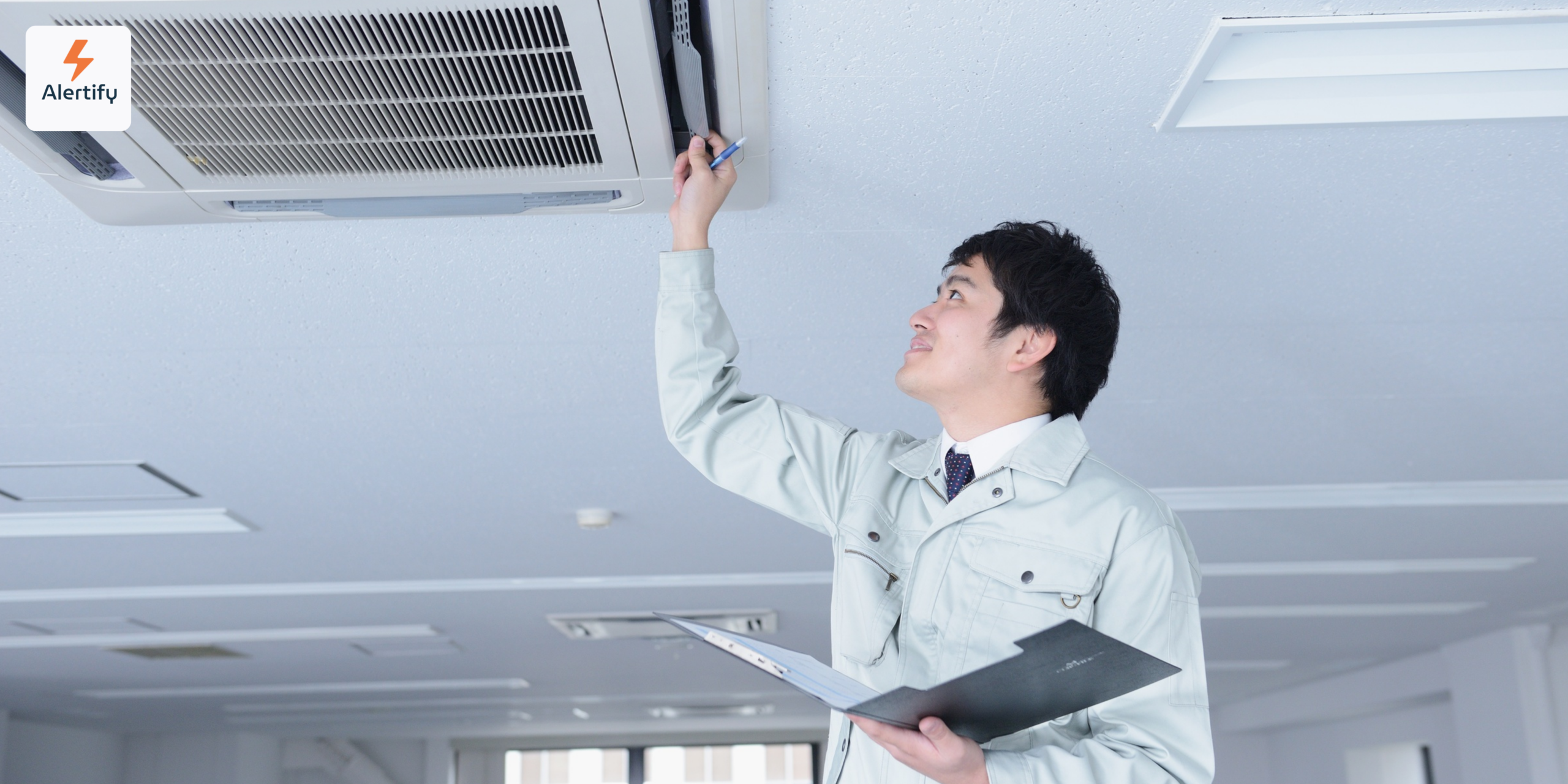
There is a version of hospital air quality management that looks thorough on paper: quarterly HVAC servicing, annual air quality audits, documented filter replacement schedules, and periodic walkthroughs by facilities staff. For most of the twentieth century, this approach represented the standard of care for environmental management in healthcare facilities. It no longer does. The evidence base for real-time air quality monitoring hospitals can rely on has matured significantly in the past decade, and the gap between what scheduled inspection captures and what continuous monitoring reveals has proven to be both clinically significant and financially costly. In an operating environment where HCAHPS scores directly influence reimbursement and where HAI-related costs represent billions of dollars annually across the US healthcare system, the case for moving beyond periodic inspection is not a marginal improvement argument. It is a fundamental operational upgrade.
What Scheduled HVAC Inspection Actually Misses
Scheduled HVAC inspection is a point-in-time assessment of a dynamic system operating in a continuously changing environment. The service engineer who visits in January and certifies that filters are within specification, dampers are functioning, and air change rates are meeting design requirements is capturing a snapshot of conditions on that day, under the occupancy levels, cleaning product usage, and weather conditions prevailing at that specific moment. The clinical environment on the following Monday, with different occupancy, a new batch of cleaning products, a blocked duct that developed over the weekend, and an outdoor temperature inversion trapping pollutants indoors, is a different environment entirely. Nothing about the January inspection tells the facilities team anything about those Monday conditions.
Hospital HVAC monitoring through scheduled servicing also cannot detect the gradual drift that represents the most common mode of air quality failure in clinical settings. Filter degradation is not a binary event. A filter that is performing at 85% of specification is not triggering any alarm, but it is allowing 15% more particulate material through than the system was designed to permit. A damper that is opening to 90% of its designed aperture rather than 100% is delivering slightly less fresh air than specified. Individually, these drifts may be within tolerance. Cumulatively, across multiple components in a large facility, they represent a sustained air quality shortfall that only continuous measurement of actual air conditions can detect.
The Joint Commission’s Sentinel Event Alert data consistently identifies environmental management failures as contributing factors in adverse patient events, and the timeline of these failures frequently shows that the conditions enabling the event were present for weeks or months before the event itself, well within a standard inspection interval.
The Clinical and Financial Cost of Reactive Air Quality Management
The cost of managing air quality reactively, responding to problems after they have developed rather than preventing them through continuous monitoring, is measurable across multiple financial categories simultaneously.
Continuous environmental monitoring healthcare facilities invest in delivers savings across every one of these categories. HAI treatment costs the US healthcare system an estimated $28–45 billion annually, with individual case costs ranging from $28,400 upward. When ventilation failures contribute to HAI transmission, the cost is not just the treatment. It is the extended length of stay, the additional resource utilisation, the potential litigation, and the regulatory scrutiny that follows a documented HAI cluster.
Emergency HVAC repairs, triggered by failures that proactive monitoring could have flagged weeks earlier as developing problems, consistently cost significantly more than scheduled preventive maintenance. The reactive maintenance premium, the additional cost of emergency callouts, expedited parts sourcing, and overtime labour, represents a direct and avoidable operational expense.
Staff absenteeism from occupational respiratory conditions attributable to sustained poor air quality adds further cost through agency staffing, overtime, and the productivity gap that comes with an experienced staff member being replaced by a less familiar substitute. And the HCAHPS dimension of reactive management carries its own financial consequence. When periodic inspection misses the environmental conditions that patients experience and report, including stuffiness from inadequate ventilation, discomfort from temperature or humidity drift, and odour from undetected smoking incidents, the resulting decline in HCAHPS patient experience environment scores translates directly into reduced reimbursement under the CMS Hospital Value-Based Purchasing program. Hospitals that underperform on HCAHPS can lose up to 2% of their base Medicare DRG payments, a compounding annual cost that dwarfs the investment in continuous monitoring.
The Case for Real-Time Air Quality Monitoring in Hospitals
Real-time air quality monitoring hospitals deploy as a complement to HVAC infrastructure, rather than a replacement for it, provides the continuous visibility that makes environmental management genuinely proactive. The value of real-time data is not just that it catches problems faster than scheduled inspection. It is that it changes the entire operational posture from reactive to preventive.
When a CO2 spike in a patient bay at 9am signals that ventilation is not keeping pace with morning occupancy, a facilities manager can adjust airflow before the first patient complains. When humidity drift in a post-surgical ward begins trending toward mold-risk territory in the third week of an unusually wet winter, an early warning alert enables a targeted dehumidification response before conditions become visible or reportable. When a smoking incident occurs in a third-floor stairwell at 11pm, an immediate alert enables a response within minutes rather than a complaint being logged the following morning.
Alertify’s monitoring device delivers this real-time visibility across noise, smoke, CO2, temperature, humidity, and occupancy through a single plug-and-play unit with a 15-minute setup, backup battery operation, and 180+ days of stored data. The continuous environmental record it generates satisfies the documentation requirements of Joint Commission surveys, OSHA inspections, CMS audits, and HCAHPS performance management simultaneously.
Hospital indoor air quality monitoring is a clinical, compliance, and financial discipline that touches every dimension of how a facility operates. The variables covered in this article do not operate in isolation, and neither should the systems used to manage them. Alertify’s continuous monitoring platform brings all of them together in a single, documented, and defensible operational picture.
Ready to protect your facility? Book a free demo with Alertify today and see how continuous environmental monitoring can reduce risk, improve compliance, and create safer spaces for patients and staff.