
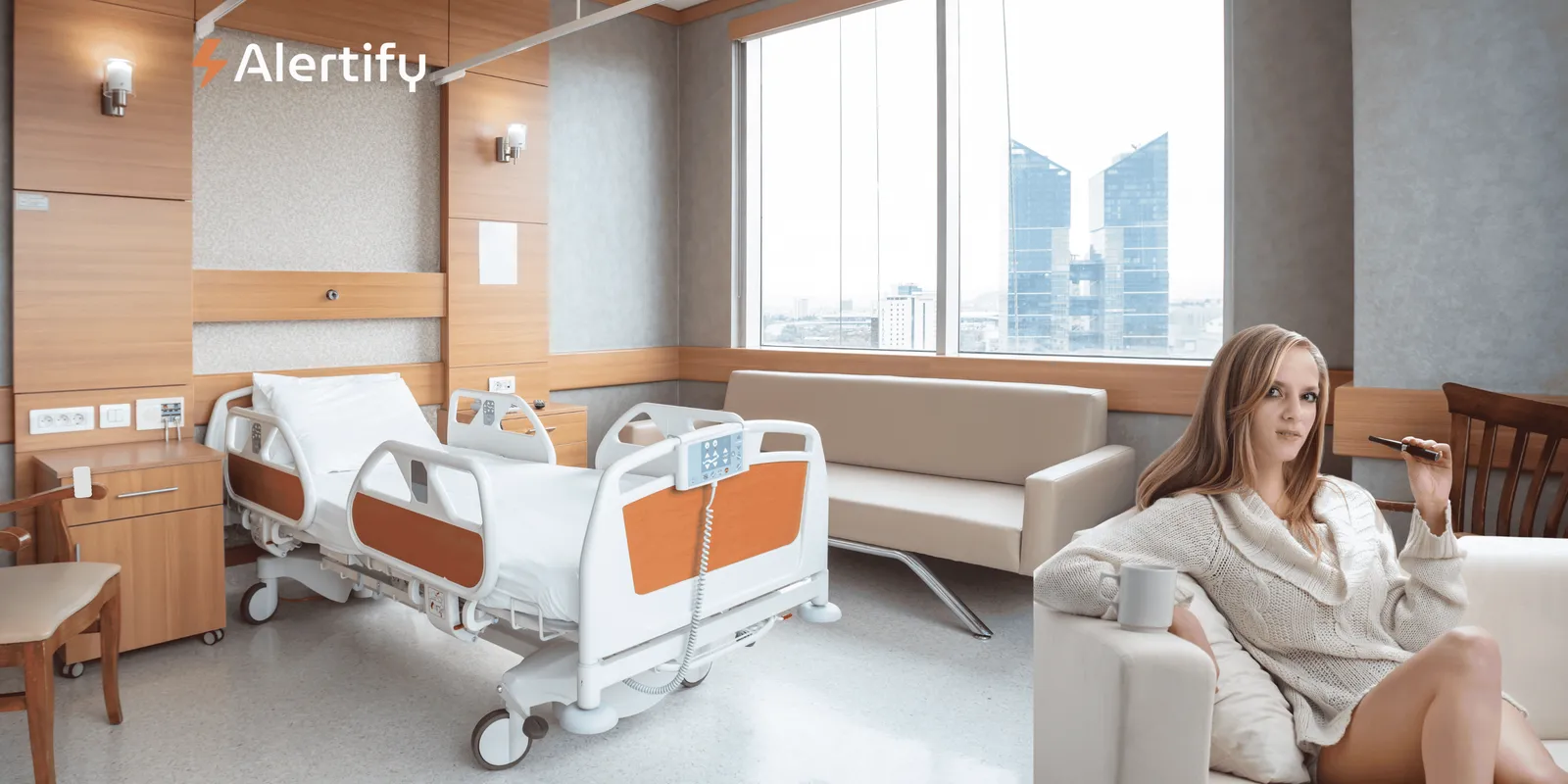
Introduction: A Growing Air Quality Concern in Healthcare Facilities
Hospitals are traditionally seen as safe, sterile environments where air quality is carefully managed to support healing. However, the increasing use of e-cigarettes and vaping devices by visitors, staff, and even patients is introducing new challenges for indoor air quality management. While vaping may not produce the same lingering smoke as traditional cigarettes, its impact on hospital environments—and ultimately on patient health—should not be underestimated.
This article explores how vaping in hospitals affects air quality, what healthcare administrators need to know about modern vaping behavior, and how smart monitoring technologies like Alertify can help enforce hospital e-cigarette policy and prevent harmful exposure.
Vaping in Hospitals: A Silent, Growing Problem
Unlike combustible cigarettes, vaping devices often emit minimal odor and produce vapor that dissipates quickly—making detection more difficult. But this subtlety is precisely what makes them harder to monitor and control within hospital settings. In some cases, patients and visitors mistakenly assume that e-cigarettes are allowed because they are “smoke-free.” This misconception can lead to unauthorized use in patient rooms, bathrooms, and even shared waiting areas.
A 2023 study by the CDC showed that e-cigarette use is on the rise across all age groups. This trend poses a unique risk in hospitals where vulnerable populations—such as those with respiratory or cardiac conditions—may be more sensitive to the aerosol particles produced by these devices.
Understanding the Health Risks of Vaping Aerosols
Hospital administrators must understand that e-cigarette vapor is not harmless. While it lacks some of the harmful byproducts of combustion, it still contains nicotine, volatile organic compounds (VOCs), ultrafine particles, and heavy metals like lead and nickel.
According to a 2016 report from the U.S. Surgeon General, exposure to e-cigarette aerosols can cause airway inflammation, oxidative stress, and impaired lung function—particularly dangerous for patients recovering from surgery or battling chronic respiratory illness.
Policy Gaps: Why Traditional Smoking Bans Aren’t Enough
Many hospitals already have no-smoking policies in place, but these rules often don’t clearly address vaping or e-cigarettes. Without explicit language in hospital policies, enforcement becomes ambiguous—and users may not realize they’re violating rules.
Recommendations for Strengthening Hospital E-Cigarette Policy:
Update smoking policies to specifically include vaping and e-cigarette use in all indoor and patient-facing areas.
Educate staff and patients about the risks of secondhand aerosol exposure.
Display clear signage throughout the facility to signal the policy and deter vaping behavior.
Detecting the Undetectable: Why Smart Monitoring Is Key
Traditional smoke detectors are ineffective against vaping emissions. However, smart air quality sensors—like those from Alertify—can detect the particulate matter and chemical signatures associated with vaping.
Smart Monitoring for Preventing Vaping from Hospital Patients:
Real-time detection of changes in air quality caused by e-cigarette use.
Automated alerts to staff when vaping is suspected.
Detailed incident reports with timestamps, supporting investigations or behavioral interventions.
This technology not only helps prevent vaping incidents but also supports compliance with hospital-wide environmental health and safety goals.
Real-World Application: Smart Monitoring in Action
A mid-sized hospital in the Midwest recently deployed Alertify’s air quality sensors in select patient rooms after reports of suspected vaping. Within weeks, staff received real-time alerts about elevated VOC levels, allowing them to respond before the situation escalated. Not only did this improve compliance with the no-smoking policy, but it also helped maintain a healthier environment for vulnerable patients in cardiopulmonary units.
These results echo broader research, including a 2021 article in Indoor Air, which confirmed that airborne contaminants from vaping can remain in poorly ventilated environments and accumulate over time.
The Legal & Reputational Risks of Inaction
Allowing vaping in hospitals—whether knowingly or due to a lack of enforcement—exposes facilities to legal and reputational risks. Patients and families have successfully sued healthcare facilities for failing to maintain clean indoor air, especially in pediatric and oncology wards where exposure to airborne contaminants can have long-term consequences.
In the age of online reviews and HCAHPS surveys, even a few complaints about perceived neglect in hospital air quality can lead to lower scores and impact reimbursement from CMS (Centers for Medicare & Medicaid Services).
Moving Forward: How Hospitals Can Respond
To address the rising threat of vaping in hospitals, healthcare administrators should consider the following steps:
Revise your tobacco-free policy to explicitly include vaping and e-cigarette use.
Implement smart monitoring systems like Alertify to detect and deter violations.
Train staff and post visible signage so everyone knows the rules and consequences.
Document violations using data logs to support corrective actions or patient behavior contracts.
Conclusion: Protecting the Most Vulnerable with Smart Air Quality Monitoring
Hospital patients often include those most at risk from poor air quality—infants, seniors, surgical patients, and those with chronic illness. As vaping becomes more prevalent, hospitals must adapt their policies and technologies to protect these individuals.
By investing in smart air quality monitoring, hospitals can not only detect and deter vaping violations but also maintain compliance, reduce complaints, and support their mission of providing safe and healing environments.
To learn more about hospital smoking detection and implementing smart vaping detection in your facility, read our complete guide to air quality and smoking detection in hospitals.
Learn how vaping and e-cigarette smoking can be prevented in hospitals
Want more Alertify? Follow us on: