Table of contents
- What Is Gunshot Detection Technology?
- Why Do We Need Gunshot Detection in Hospitals?
- Gunshot Detection vs. Security Cameras in Hospitals
- The Cost of Delayed Gunshot Response in Healthcare Facilities
- How Hospitals Can Adopt Gunshot Detection
- The Future of Hospital Safety
- Making Safety a Priority
Hospitals are places of refuge. They are the sanctuary communities turn to in moments of crisis, trusting that they and their loved ones will be cared for and, above all, kept safe. This trust is the bedrock of the healthcare system. Yet, behind the hum of life-saving medical machinery and the determined rhythm of healthcare workers, a concerning reality has been growing -violence in hospitals is on the rise, and the very foundation of that trust is being challenged.
The statistics paint a stark picture. According to the U.S. Bureau of Labor Statistics (BLS), healthcare workers are a staggering five times more likely to experience workplace violence than workers in other industries. This isn’t a minor discrepancy but rather it’s a systemic crisis that places the healers themselves in harm’s way. While not all of these incidents involve firearms, the unique horror of a gunshot within a hospital’s walls can unleash a level of chaos and fear that is unparalleled. The sound is unmistakable, the panic is instant, and the time it takes to respond can irrevocably determine the outcome.
It is this urgent reality that is compelling hospital administrators, security directors, and facility managers to rethink their approach to safety. Traditional methods are no longer sufficient. A new layer of proactive protection is needed. This is why facilities across the country and around the world are increasingly looking at gunshot detection in hospitals as an essential component of their broader hospital safety solutions. This technology represents a critical shift from a reactive to a proactive security posture.
In this complete guide, we will provide a comprehensive exploration of this vital hospital security technology. We’ll break down what gunshot detection is, explain in detail why modern hospitals need it, and compare its capabilities to traditional hospital security systems. We will also analyze the profound costs, both human and financial, of a delayed response and outline a practical path for adoption. This is more than a technical overview; it’s a blueprint for building a safer future for healthcare.
What Is Gunshot Detection Technology?
At its core, gunshot detection technology is an automated system designed to do one thing with incredible speed and precision: identify the sound of a firearm being discharged and immediately alert the people who can stop the threat. It acts as the facility’s ever-vigilant ears, listening continuously for the one sound that no one ever wants to hear. Once the system detects a gunshot, sophisticated internal processes verify the event in a second, and it issues an immediate, unambiguous alert to security personnel and, in many cases, directly to local law enforcement. It is a technological first responder that operates at the speed of sound.
How Gunshot Sensors Work
Gunshot sensors are highly specialized devices engineered to perform their critical job flawlessly. Their primary function is to recognize the unique sound signature of a gunshot and confirm that it is, in fact, a firearm discharge. This is a far more complex task than simply identifying a loud noise. A gunshot produces a distinct and complex sound wave, composed of two main elements: the supersonic shockwave of the bullet itself and the subsequent muzzle blast. The system’s advanced algorithms are tuned to recognize this specific, dual-part signature, allowing it to differentiate a gunshot from the myriad of other loud, sudden noises common in a hospital environment, such as a dropped oxygen tank, a crashing gurney, or a slamming steel door.
This technological certainty removes the element of human error and hesitation from the crucial first moments of an incident. Staff, patients, or bystanders might freeze, panic, or mistake the sound for something else, wasting precious seconds debating what they heard. A gunshot sensor, however, has no doubt. It responds instantly and with an exceptionally high degree of accuracy, initiating the emergency response protocol before most people have even had time to process what has happened. The hardware is typically discreet, designed to blend into the ceiling or walls, and operates on low power, ensuring it is always active and ready to perform its function.
From Detection to Notification
The true power of gunshot detection in hospitals lies in what happens in the milliseconds after a shot is confirmed. The system bridges the gap between the event and the response, automating a chain of communication that would otherwise take minutes of chaotic human effort.
First, the system can pinpoint the exact location within the facility where the shot was fired. This is perhaps its most critical function. An alert that says “gunshot in the hospital” creates widespread panic but provides little actionable intelligence. An alert that says “Gunshot detected: 3rd Floor, West Wing, Cardiology, near Room 312” is a game-changer. It allows security and law enforcement to proceed directly to the threat, informs staff on unaffected floors to shelter in place, and enables a targeted, intelligent lockdown of the specific area, preventing the threat from spreading.
Second, the system sends real-time, instantaneous alerts to hospital security teams. These alerts are not passive emails but rather they are immediate notifications pushed to mobile devices via SMS or push notifications. This means the on-site team is aware of the threat and its location simultaneously with the event itself, allowing them to enact their emergency plan without delay. They are no longer waiting for a phone call, they are receiving direct, live intelligence.
Finally, many advanced systems can trigger automated notifications directly to 911 dispatch centers and local law enforcement. This shaves critical, life-saving minutes off the official hospital security response. It bypasses the entire traditional reporting chain: a witness finding a safe place to call, relaying secondhand information to a 911 operator, who then dispatches police. The automated alert provides first responders with verified, precise information before a single human call is even made. In a setting where every single second matters, this automated speed is invaluable.
Why Do We Need Gunshot Detection in Hospitals?
The need for dedicated gunshot detection in hospitals isn’t a hypothetical future concern; it’s a response to a clear and present danger that has been escalating for years. Several converging factors make this technology not just a “nice-to-have,” but a fundamental necessity for modern healthcare facilities.
Rising Workplace Violence in Healthcare
Workplace violence in hospitals is not a fringe issue but a full-blown crisis. The high-stress, emotionally charged nature of healthcare settings has always made them susceptible to conflict, but recent trends are alarming. A 2021 study found that during the COVID-19 pandemic, nearly 44% of nurses reported experiencing physical violence and a staggering 68% reported verbal abuse. This constant barrage of aggression creates an environment of fear and burnout, driving talented professionals away from the bedside.
While firearms are not the most common weapon used in these assaults, the sheer severity and potential for mass casualties in incidents involving guns is unmatched. A single disgruntled individual with a firearm can turn a place of healing into a scene of unimaginable tragedy in seconds. The rising tide of societal stress and mental health challenges often spills over into emergency departments and patient rooms, and hospitals must be prepared for the most extreme manifestations of this violence. Relying on hope is not a strategy but rather proactive preparation is the only responsible course of action.
Hospitals as Soft Targets
By their very nature, hospitals are what security experts refer to as “soft targets.” They are designed to be open, accessible, and welcoming. Patients, families, and visitors must be able to move in and out freely, often 24 hours a day, seven days a week. Unlike an airport, a bank, or a government building, hospitals cannot rely on heavy fortifications, metal detectors at every entrance, or restrictive security checkpoints without fundamentally compromising their mission to provide care.
This necessary accessibility, however, also makes them uniquely vulnerable. Sprawling campuses with multiple buildings, labyrinthine corridors, numerous public entry points, and vast parking structures create a complex security challenge. It is impossible for even the most robust team of security guards to monitor every corner of a facility at all times. This inherent openness makes hospitals an attractive target for individuals intent on causing harm, as they can enter and move about with relative anonymity. Gunshot detection in hospitals helps harden these soft targets from the inside out, providing comprehensive hospital safety monitoring that doesn’t rely on physical barriers.
Duty of Care to Staff and Patients
Every hospital operates under a profound ethical and legal obligation known as the “duty of care.” This principle mandates that the institution take reasonable steps to keep both its staff and its patients safe from foreseeable harm. In today’s climate, the risk of gun violence within a healthcare facility is tragically foreseeable. Therefore, fulfilling this duty of care requires a modern approach that incorporates advanced hospital security technology.
Security cameras, locked doors, access control systems, and trained security personnel all play a vital role in a layered security plan. However, none of these measures provide the instantaneous, certain alert that a gunshot sensor does. A camera records, but it doesn’t know what it’s seeing. A guard can’t be everywhere at once. Gunshot detection is about fulfilling this duty of care at the highest level, ensuring the fastest, most reliable, and most intelligent response to one of the most dangerous threats imaginable. It sends a powerful message to employees and the community: your safety is our priority, and we have invested in the best available technology to protect you.
Gunshot Detection vs. Security Cameras in Hospitals
When discussing modernizing hospital security systems, the conversation often turns to security cameras. Video surveillance is undeniably essential, providing invaluable evidence for investigations and real-time monitoring capabilities. However, relying on cameras alone for active threat detection is a deeply flawed strategy. Gunshot detection technology is not a replacement for cameras but rather it is a vital complementary system that addresses their inherent limitations.
The Limits of Security Cameras
Cameras are a cornerstone of modern security, but it is crucial for hospital leaders to understand their specific limitations in the context of an active shooter event:
- They are reactive, not proactive. A camera shows you what happened, not necessarily what is happening in the critical first seconds. Its primary function is to record. An alert is only generated if a security officer happens to be watching the right screen at the exact right moment and correctly interprets the events unfolding. This is a significant point of potential failure.
- Cameras cannot always provide clear audio. In a noisy hospital environment like an emergency department or a busy lobby, a camera’s microphone is unlikely to pick up and isolate the sound of a gunshot clearly. Even if it did, the sound wouldn’t trigger an automated alert.
- Blind spots are inevitable. In large, complex facilities with countless rooms, corridors, and stairwells, achieving 100% visual coverage is practically and financially impossible. There will always be gaps in surveillance, and these are often the very places where an incident may begin.
- They suffer from “monitor fatigue.” A security officer watching dozens of live feeds for an entire shift cannot maintain perfect focus. The human brain is not wired for that kind of sustained, passive vigilance. It is unrealistic to expect a person to catch a split-second event on one of sixty-four screens.
Why Gunshot Detection Fills the Gap
Gunshot sensors are designed specifically to overcome these limitations. They address the gaps left by traditional video surveillance by focusing on a different sense: hearing.
A gunshot detection system doesn’t rely on a human watching a monitor. The system is always on, always listening, and reacts instantly the moment its specific trigger, the sound signature of a gunshot, is detected. It removes the most fallible and time-consuming element from the initial detection phase: the human. Instead of waiting for someone to see something, interpret it correctly, and then report it, the system takes definitive action in real time. It provides certainty in moments of chaos. The alert is not “there’s a commotion in the ER” but it is “a firearm has been discharged in the ER, Triage Area B.” This level of specificity and speed is something cameras alone can never provide.
Working Together for Safer Hospitals
The most effective hospital security systems are those that layer technologies to create a comprehensive, resilient safety net. Gunshot detection and security cameras are not competing technologies; they are powerful partners that make each other more effective.
Think of it this way: the gunshot detection system provides the what, where, and when. It is the instantaneous trigger. The security camera system provides the who and how. The gunshot detection alert tells the security officer exactly where to look. They can then immediately pull up the camera feed for that specific location, turning a passive recording device into an active intelligence tool. They can see the suspect, determine the number of individuals involved, and track their movement, feeding live intelligence to responding law enforcement.
This synergy creates a powerful security ecosystem. One system provides the evidence and visual confirmation, while the other provides the immediate, life-saving alert. Together, they give hospital security teams and first responders both real-time protection and invaluable post-incident review capabilities, creating a much safer environment than either technology could achieve on its own.
The Cost of Delayed Gunshot Response in Healthcare Facilities
When an active shooter incident occurs, the response timeline is measured not in minutes, but in seconds. Every moment of delay, hesitation, or confusion has a direct and often tragic human cost. Understanding the profound consequences of a delayed hospital security response is essential to making the case for investing in immediate detection technology. The costs are not just measured in lives lost, but also in deep financial, legal, and reputational wounds that can cripple a healthcare institution for years.
Seconds Make the Difference
In an active shooter situation, the clock is the enemy. According to a comprehensive study on active shooter incidents by the FBI, 69% of these horrific events ended in five minutes or less, with a shocking 36% ending in under two minutes. This data reveals a terrifying truth: by the time the first 911 call is made and law enforcement is dispatched, the worst may already be over. A hospital relying solely on manual reporting and human intervention is starting the race from a significant disadvantage.
Let’s visualize the difference. Without gunshot detection systems: A shot is fired. Chaos erupts. It takes 30-60 seconds for a staff member to process the event, find cover, and call 911. They relay panicked, possibly inaccurate information. It takes another 1-2 minutes for dispatch to send officers. Police arrive on scene 3-5 minutes after the first shot, but with only a vague idea of the threat’s location. By then, the incident may have escalated or moved.
With gunshot detection systems: A shot is fired. In less than a second, the system detects, verifies, and sends an automated alert with a precise location to on-site security and the local 911 dispatch. Law enforcement is en route within seconds of the first shot, armed with the exact location of the threat. They don’t have to search, they can go directly to the source. This is how gunshot detection in hospitals turns a 5-minute problem into a 30-second response. Those saved minutes directly translate into saved lives.
Financial and Legal Ramifications
The costs of a delayed response and an inadequate security posture extend far beyond the immediate tragedy. The financial and legal fallout can be catastrophic for a healthcare facility:
- Devastating Lawsuits: In the aftermath of a violent incident, hospitals can face significant lawsuits from victims and their families, often centering on claims of negligence and failure to provide a safe environment. Proving that the facility took every reasonable, modern precaution, such as implementing advanced hospital safety solutions, is a critical part of the legal defense.
- Skyrocketing Insurance Premiums: Insurance carriers view proactive risk management favorably. A facility with a documented history of violent incidents and no modern detection systems will be seen as a high-risk client, leading to drastic increases in liability and property insurance premiums.
- Severe Reputational Damage: A hospital’s reputation is arguably its most valuable asset. It is built over decades of trust. A single, highly publicized violent event can shatter that trust overnight. Patients will avoid facilities they perceive as unsafe, and talented physicians will be hesitant to practice there, leading to a long-term decline in revenue and community standing.
- Crippling Staff Retention Issues: Healthcare is already facing a massive burnout and turnover crisis. Forcing nurses, doctors, and support staff to work in an environment where they feel unsafe is a recipe for a mass exodus. The cost of recruiting and training new staff is enormous, and the loss of experienced personnel can impact the quality of patient care.
Restoring Trust in Healthcare Spaces
Ultimately, hospitals thrive on trust. Patients must feel safe enough to seek care in their most vulnerable moments. Staff must feel protected enough to perform their demanding jobs effectively. A violent incident erodes this trust from the inside out. Gunshot detection is a tangible, powerful way to restore and reinforce it. It provides profound reassurance to everyone who walks through the hospital’s doors that if the worst should happen, the facility is prepared to respond with maximum speed and intelligence. It is an investment in psychological safety that is essential for a true healing environment.
How Hospitals Can Adopt Gunshot Detection
Adopting a new layer of security technology may seem like a daunting task for an already complex organization. However, implementing gunshot detection in hospitals can be a scalable and methodical process. It is not an all-or-nothing proposition. The key is to approach it strategically, integrating the technology with robust training and preparedness plans to create a truly effective safety ecosystem.
Scalable Implementation
A common misconception is that deploying a gunshot detection system requires a massive, facility-wide overhaul overnight. This isn’t the case. A far more practical and common approach is a phased implementation that prioritizes the most vulnerable areas first. Most facilities begin by conducting a thorough risk assessment with security experts to identify these key locations, which often include:
- Emergency Departments: These are the most common flashpoints for violence, open 24/7 with high-stress situations and a volatile mix of patients and visitors.
- Main Entrances and Lobbies: As the primary points of public access, these areas are high-traffic and difficult to control.
- Behavioral Health and Psychiatric Units: These units care for vulnerable patients and can sometimes be environments of intense emotion and unpredictable behavior.
- Parking Garages and Structures: These areas are often poorly lit and less monitored, making them potential sites for violent encounters.
By starting with these high-risk zones, a hospital can make a significant and immediate impact on its overall security posture. From there, coverage can be expanded over time in subsequent phases, eventually covering patient floors, administrative wings, and connecting corridors. This scalable approach makes the investment manageable and allows the security team to adapt and learn as the system is rolled out.
Training and Preparedness
Technology, no matter how advanced, is only one piece of the safety puzzle. A gunshot detection system is a powerful tool, but its effectiveness is maximized only when it is supported by a well-trained team and a clear, practiced response plan. Hospitals that successfully adopt this technology also commit to:
- Comprehensive Staff Training: All staff, from clinical to administrative, must be trained on what the alert means and what the “shelter-in-place” or lockdown protocol is. When an alert goes off, there should be no confusion about what to do next.
- Regular Drills and Simulations: Just as hospitals run fire drills, they must also run active threat drills that incorporate the gunshot detection system. These exercises test the technology, the response plan, and the coordination between hospital security and local law enforcement.
- Close Coordination with Law Enforcement: It is crucial to work with local police departments before an incident occurs. Law enforcement should be familiar with the alert system, have access to floor plans, and participate in joint training exercises. This pre-established relationship ensures that when a real alert is triggered, the response is seamless, swift, and effective.
Layering with Other Safety Technology
A truly comprehensive safety strategy recognizes and prepares for a wide range of threats. Modern hospitals are already equipped with sophisticated hospital security systems designed to detect environmental hazards. Fire alarms, smoke detectors, and carbon monoxide monitors are standard, mandated technology because the risks they mitigate are well-understood.
Gunshot detection in hospitals should be viewed as the next logical layer in this safety infrastructure. It addresses the human threat with the same logic and urgency as the environmental threat. Just as a smoke detector provides an early warning to prevent a fire from spreading, a gunshot sensor provides an early warning to prevent a violent incident from escalating. By integrating this capability, a hospital demonstrates a holistic commitment to safety, recognizing that protecting its people requires preparedness for both environmental and human-initiated threats.
The Future of Hospital Safety
The landscape of healthcare security is constantly evolving, driven by new challenges and innovative technological solutions. As hospitals look to the future, the conversation around safety is shifting from a reactive, compliance-focused mindset to a proactive, people-centric strategy. In this new paradigm, advanced hospital safety monitoring like gunshot detection will play an increasingly central role.
From Optional to Standard
What feels like an optional, advanced security measure today will likely become the standard of care tomorrow. History shows us a clear pattern with safety technology. Fire alarms, sprinkler systems, and carbon monoxide detectors were once novelties. Today, they are mandated by building codes because they are proven to save lives.
Given the undeniable and rising statistics of violence in healthcare settings, it is highly probable that gunshot detection in hospitals will follow a similar path. Regulatory bodies and insurance providers will increasingly see this technology not as an enhancement, but as a baseline component of a facility’s safety infrastructure. Hospitals that adopt it now are not just protecting their people; they are positioning themselves as leaders and getting ahead of the curve of what will soon be an industry-wide expectation.
Staff Retention and Workplace Well-Being
Investing in advanced safety is about far more than just compliance or mitigating risk. It is a powerful statement about an organization’s culture and values. It is a direct investment in the well-being of its most valuable asset: its people. In an industry grappling with historic levels of burnout, stress, and staff turnover, creating a workplace where healthcare workers feel genuinely valued and protected is a significant competitive advantage.
When a hospital invests in technology like gunshot detection, it sends an unambiguous message to its staff: “Your safety is a top priority. We see the risks you face, and we are taking concrete, meaningful steps to protect you.” This can be a deciding factor for a nurse or doctor choosing where to work. In the long run, the cost of implementing these systems can be offset by reduced staff turnover, lower recruitment costs, and the higher morale and productivity that come from a workforce that feels safe and supported.
A Safer Environment for All
Ultimately, the goal of all hospital security systems is simple: to create and maintain an environment where healing can happen without interruption or fear. The future of hospital safety lies in building layered, intelligent, and proactive defenses that allow staff to focus entirely on their mission of patient care. It is about creating a space that is not only physically secure but also psychologically reassuring for every patient, family member, and employee who walks through its doors. Gunshot detection is a cornerstone of this future, a technology that helps preserve the hospital’s true purpose as a sanctuary for health and hope.
Making Safety a Priority
Gunshot detection in hospitals isn’t about succumbing to paranoia but rather it’s about embracing preparedness. In a world where violence in healthcare settings is a documented and increasing threat, hospitals can no longer afford to rely on outdated systems, manual reporting, or delayed response times. The stakes are simply too high. By adopting advanced, automated gunshot detection, a healthcare facility makes a clear and decisive statement. It demonstrates an unwavering commitment to protecting its most vulnerable patients and its most valuable asset which is its dedicated staff. This technology closes a critical security gap, saves precious seconds when they matter most, and ultimately helps preserve the hospital as a safe place for healing.
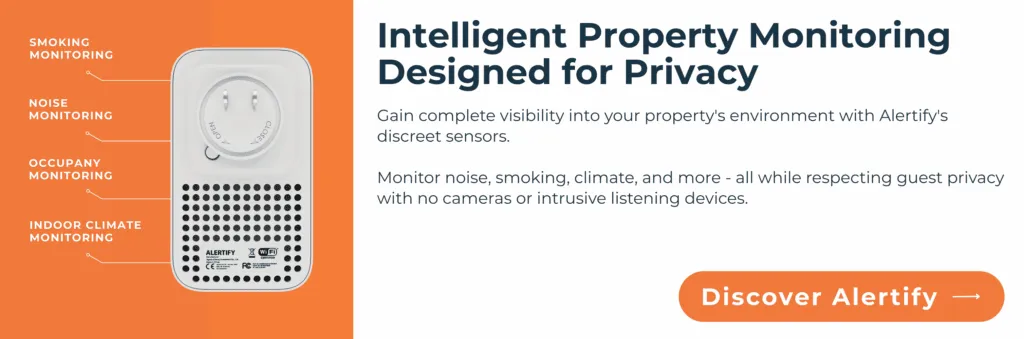
At Alertify, we understand that hospitals don’t just need more technology – they need smarter, more efficient solutions. That’s why we developed an all-in-one monitoring system that covers a wide range of environmental threats, including smoke, CO₂, vape, and temperature changes, while also providing advanced, reliable gunshot detection capabilities. With Alertify, hospitals can address multiple critical risks using a single, streamlined device, simplifying safety and security without ever sacrificing protection.
Want to learn more? Book a demo with a solutions expert today.