
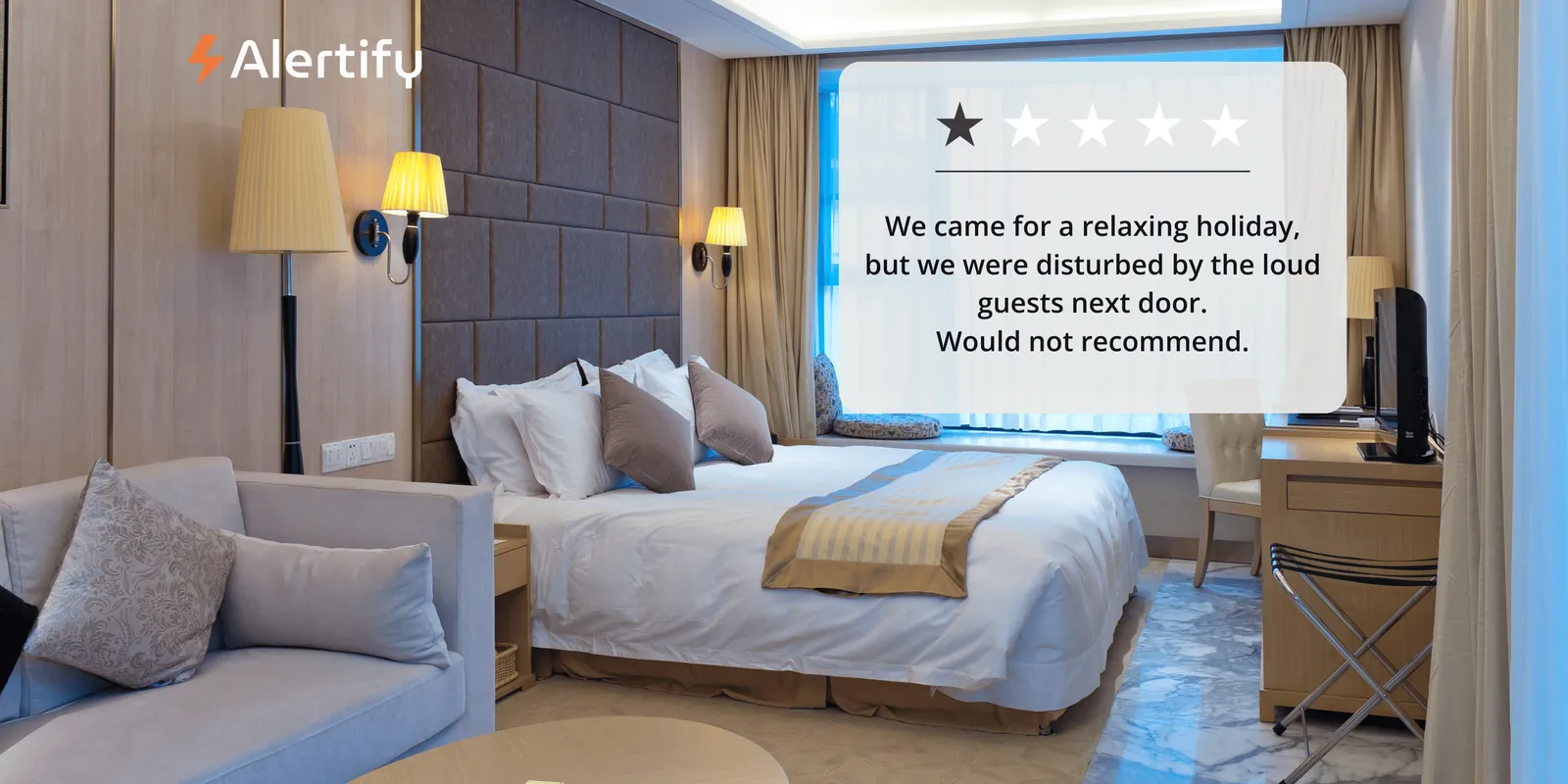
Excessive noise is one of the most common complaints in the hotel industry, and its effects go far beyond a momentary annoyance. Unchecked hotel noise issues can lead to direct financial losses, unhappy guests, and lasting damage to a hotel’s reputation. In response, many U.S. hotels are adopting noise monitoring solutions and other strategies to curb complaints and boost hotel guest satisfaction. Below, we explore the financial impact of hotel noise complaints and real-world examples of successful noise control that hotels use to ensure a quieter, more enjoyable stay for guests.
Financial Impact of Hotel Noise Complaints
Noise problems can hit a hotel’s finances in multiple ways. First, hotels often incur compensation costs when guests lose sleep due to noise. It’s not uncommon for front desk staff to issue refunds, offer free nights, or give loyalty points to appease an upset guest. Each such incident eats into revenue and profit margins.
Beyond immediate compensation, there’s the opportunity cost of future bookings lost from disgruntled guests. A guest kept awake by a party next door might not return – and worse, they may warn others away. In fact, industry surveys show that 86% of travelers are less likely to recommend a hotel after a bad noise experience (Quiet Hotel Room, 2023). Negative word-of-mouth and online reviews can dramatically reduce new bookings; one analysis noted that the bad reviews stemming from unaddressed hotel noise issues have the potential to cause a staggering loss of up to 70% in future bookings (Sports Destination Management, 2024). This makes sense when you consider that 82% of people say they would avoid a hotel if they see multiple bad reviews online. In other words, a few noisy nights can snowball into a major hit on a property’s reputation and revenue.
There are other financial risks as well. Repeated noise infractions could jeopardize lucrative contracts (for example, a company might not rebook a hotel for conferences if attendees complain about poor sleep). Hotels have even faced legal action or fines in extreme cases – for instance, if persistent noise violates local ordinances or if a guest seeks legal remedy for a ruined stay. While such cases are rare, they underscore that noise isn’t just a trivial annoyance; it’s a business liability. The cost of preventing noise problems is almost always far less than the cost of compensating guests afterwards or losing business because the hotel developed a noisy reputation.
Finally, it’s important to recognize the link between hotel noise complaints and loyalty. A guest who leaves unhappy is unlikely to become a repeat customer. By contrast, ensuring a quiet, restful stay can pay dividends in guest lifetime value – satisfied guests come back and recommend the hotel to friends. Hotels that don’t control noise effectively are “flirting with disaster,” as one expert put it, because the damage from even a few bad nights can sink future revenue.
Impact on Guest Satisfaction, Reviews, and Return Rates
The #1 Complaint
It’s no surprise that a bad night’s sleep makes for an unhappy guest. What might be surprising is just how strongly noise affects hotel guest satisfaction scores and reviews. Multiple studies identify noise as the top hotel complaint. In an analysis of over 5,600 hotels across 20 major cities, noise was the #1 most frequently mentioned complaint in online reviews in all but one city (Travel Weekly, 2013).
Noise from Other Guests
Similarly, a Statista survey of U.S. hotel guests found “noise from other guests” was the most common gripe – cited by 65% of travelers (Los Angeles Times, 2013), far outpacing complaints like odors or maintenance issues. And while travelers value many aspects of a hotel, a quiet room is near-essential: 74% of travelers say a quiet room is key to a good night’s sleep (Rockwool, 2019).
Impact on Ratings
Importantly, noise problems can tank a hotel’s satisfaction ratings even if staff eventually resolve the issue. A landmark J.D. Power survey of 53,000 hotel guests found that overall hotel guest satisfaction scores were 144 points lower (on a 1,000-point scale) for guests who experienced a significant problem during their stay, compared to those with no problems (Slide Share, 2014). Noise was the number-one problem in that study. Even when an issue was addressed, guests still rated their stay lower than those who had no issues to begin with. In other words, preventing the problem is far better than trying to recover after the fact – a guest who never has to complain will be happier than one who had their night disrupted and then got it fixed. If a noise complaint goes unresolved, the hit to satisfaction is even worse. (For context, guests with unresolved problems scored the hotel around 580 out of 1,000, versus about 780/1,000 for those with no problems.) These lower satisfaction scores translate directly into weaker reviews and fewer return visits.
One complicating factor is that most guests don’t report noise issues to the hotel at all. Studies indicate that only about 25% of noise disturbances get reported to staff, while 75% go unreported. But unreported doesn’t mean unnoticed – many of those guests will simply choose to suffer through the night and later vent their frustration in an online review or survey. In effect, a hotel might only hear a quarter of the complaints while the rest are the “silent dissatisfied” who quietly leave a low rating or negative comment later. Only about 1 in 4 hotel noise issues are reported to staff – the rest (“the iceberg under the surface”) often emerge as bad reviews later. Hotels run a great risk to their ratings and reputation by not addressing hotel noise complaints proactively.
Because of this dynamic, hotels may not realize they have a noise problem until the damage is done online. One survey found 60%+ of guests are more likely to leave a negative review about a noise issue rather than complain to staff in person (Xenia, 2024). That means by the time management learns of the issue, it’s via a public 1-star review on TripAdvisor or Google that other potential guests will see. Those negative reviews have a powerful deterrent effect – as noted, Eighty-plus percent of travelers will steer clear of a hotel with multiple bad reviews.
Satisfaction and Loyalty
All of this underscores how hotel noise complaints can directly erode hotel guest satisfaction and loyalty. A guest who endures a noisy stay is not only unhappy in the moment; they’re also unlikely to return. In fact, 86% of people say they would not recommend a hotel where they had a noise-related bad experience. That guest might even become a vocal detractor. On the flip side, a quiet, peaceful stay often translates into positive reviews (“I slept great!”) and repeat bookings. Ensuring silence at night is so important that some brands market around it – for example, Premier Inn in the UK rolled out a “Good Night Guarantee” promising a refund if you don’t sleep well. They recognized that sleep quality can make or break the guest experience. In short, managing noise isn’t just about avoiding complaints in the moment; it’s critical to maintaining high hotel guest satisfaction, good reviews, and strong loyalty over the long term.
Case Studies: Reducing Noise Complaints with Monitoring Technology
Facing the high stakes of hotel noise issues, many hotels and lodging operators have turned to technology for help – specifically, noise monitoring devices. These devices don’t record sound like a camera or microphone; instead, they measure noise levels (decibels) and can alert staff when sustained loud noise is detected. The idea is to catch problems early – before a guest picks up the phone to complain (or suffers in silence). Several U.S.-based hotels and programs have reported success after implementing noise monitors, seeing complaints drop and guest reviews improve as a result.
Radisson Hotel
One early adopter was the Radisson Hotel in Madison, Wisconsin (along with a local boutique property, HotelRED). In 2015, they piloted a noise sensor system called Quietyme. According to a USA Today report, these Madison hotels were the first to install the technology and did so “with great success.” (QuietyMe, 2015). The sensors plugged into outlets in each room and hallway, streaming noise data to the front desk. This let staff pinpoint and address noise disturbances in real time. Independent studies by Quietyme found the system could reduce noise disturbances by more than 65% by enabling timely intervention (Travelpulse, 2015). In essence, by monitoring and managing noise, the hotels dramatically cut down how often guests were bothered enough to complain.
La Quinta
Another example comes from the vacation rental sector, which mirrors hotel challenges in terms of guest noise. The City of La Quinta, California – a resort city – ran a pilot program in 2021 requiring noise monitors in 25 rental properties to curb loud parties. The results were impressive: over a 3-month trial, noise complaints to the city dropped to near zero. The noise devices would alert hosts at the first sign of a loud gathering. As a result, 83% of noise events were resolved within 20 minutes (often by a simple text or call to the renters), and only 4 official complaints were logged in those three months. Notably, 3 of those 4 complaints turned out to be false alarms – the sensors allowed authorities to verify if a noise allegation was real or exaggerated. This case showed how effective monitors can be in preventing noise problems from escalating. While this was in rental homes, hotels using similar tech can achieve the same proactive quiet-control and avoid disturbing other guests.
Bob W
Hotel operators themselves report that noise monitoring tech protects their guest ratings. Bob W, a tech-forward aparthotel brand (with properties in the U.S. and Europe), installed noise sensors across its units to detect partying. The team there customized the system to automatically message guests if they crossed a noise threshold. The outcome: 83% of loud noise alerts were solved after just one friendly text message to the guest, usually prompting them to turn the volume down. By diffusing hotel noise issues early, Bob W prevented negative reviews and preserved its reputation as a peaceful place to stay. Essentially, they hardly ever get a noise complaint in public reviews now, because the problems are handled before anyone else’s stay is ruined. This kind of success has led more hospitality brands to adopt noise monitors as a standard amenity – akin to smoke detectors, but for loud disturbances.
Industry analysts note that such noise monitoring systems often pay for themselves. By averting one or two refunded nights and a couple of bad reviews, the devices (which are relatively low cost) deliver ROI. As Hotel Management magazine put it, “noise complaints rank as the most common grievance…and 75% of them end up in online reviews.” Tackling this via monitoring has a direct payoff: quieter hotels get better reviews, more repeat business, and increased revenue.
In Sum
In sum, real-world case studies show that technology can significantly reduce hotel noise complaints. Hotels that have embraced hotel noise monitoring devices and responsive protocols have seen measurable improvements – not only in fewer midnight calls to the front desk, but in higher hotel guest satisfaction scores and online ratings.
Learn more ways how Alertify can help hotels
Want more Alertify? Follow us on: