A Turning Point for UK Housing Standards
In 2025, the landscape of UK social housing will change forever. The implementation of “Awaab’s Law,” part of the Social Housing (Regulation) Act, marks a monumental step forward in protecting tenants’ rights and well-being. Named in memory of Awaab Ishak, a two-year-old boy who tragically died from a respiratory condition caused by severe mold in his home, the law introduces strict, non-negotiable responsibilities for social landlords. This legislation is more than just a new set of rules but rather it’s a fundamental shift from a reactive to a proactive approach to housing safety. For landlords, understanding and preparing for these changes is not just a matter of legal obligation but rather it’s a moral one.
Understanding the Core Requirements of Awaab’s Law
The law was created to ensure that no other family endures what Awaab’s did. It replaces ambiguity with clear directives, forcing landlords to address hazardous conditions like damp and mold with urgency and diligence.
Strict Timelines for Action
The most significant change is the introduction of mandatory deadlines. Once a tenant reports a potential hazard, the clock starts ticking:
- 14 Calendar Days: Landlords must conduct a thorough investigation of the hazard.
- 7 Calendar Days: Following the investigation, landlords must provide the tenant with a written report detailing the findings, the proposed remedy, and a timeline for the work. They must then begin the repair work within this period.
- 24 Hours: For any issues posing an immediate risk to a tenant’s health and safety, emergency repairs must be completed within 24 hours.
The Mandate for Clear Record-Keeping
Awaab’s Law places a heavy emphasis on documentation. Landlords are now required to maintain clear, detailed records of every stage of the process, from the initial tenant notification to the completion of repairs. This evidence is crucial to demonstrate compliance and is a key focus of the Housing Ombudsman.
A Focus on Tenant Health and Safety
At its heart, the legislation is about prioritising tenant health and safety. It compels landlords to look beyond the visible signs of disrepair and consider the overall living environment. The official government guidance stresses the need to identify and support vulnerable residents who may be more susceptible to the health effects of poor housing conditions.
The Challenge for Landlords: Moving from Reactive to Proactive
For years, the standard approach to property maintenance was reactive; wait for a tenant to report a problem, then fix it. Awaab’s Law makes this model obsolete and dangerous. The new challenge is to anticipate and prevent issues like damp and mold before they can take hold.
The Dangers of a “Wait-and-See” Approach
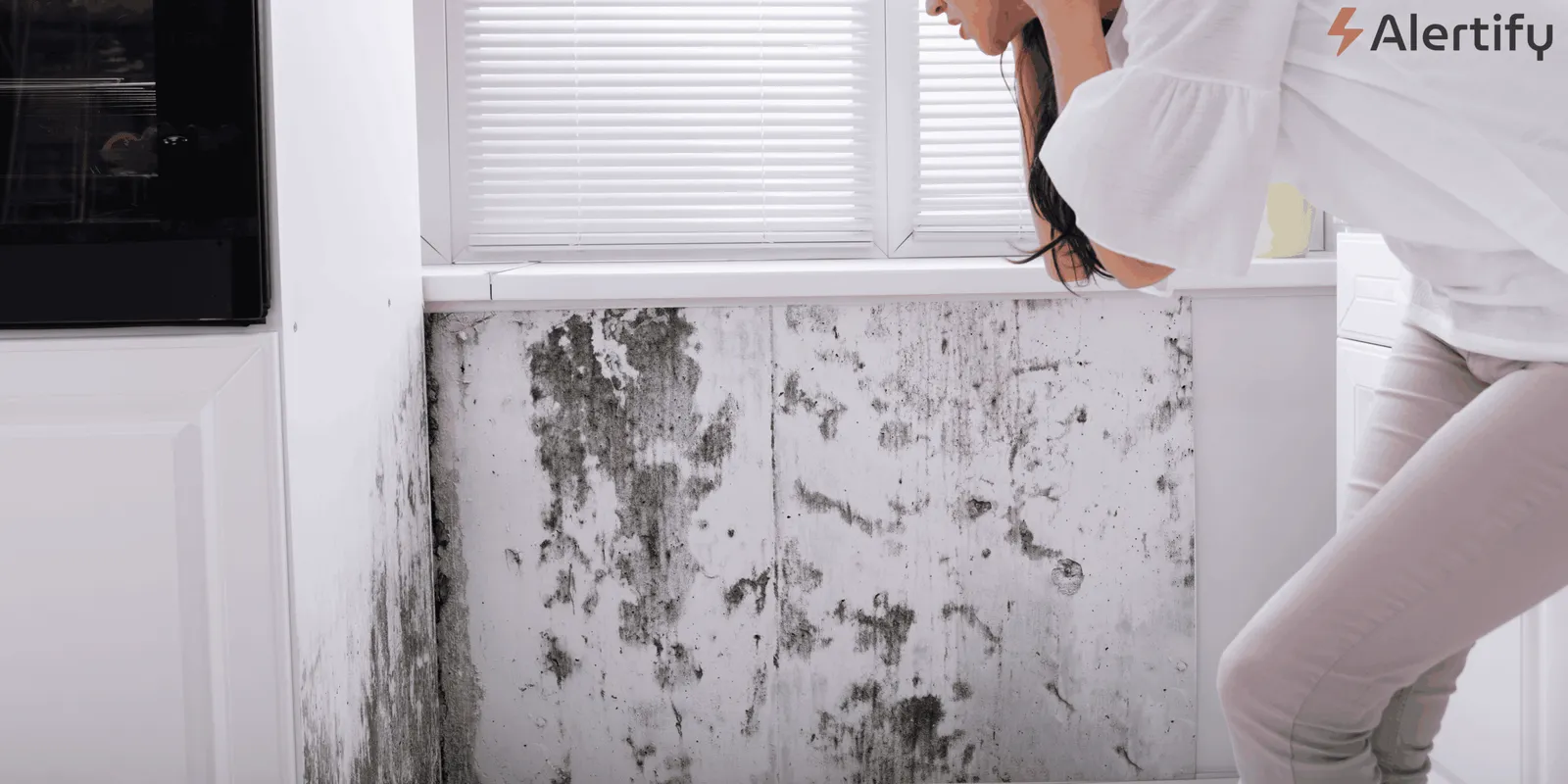
Waiting for a tenant to report mold means you’re already behind. By the time mold is visible on a wall, the underlying conditions, high humidity and poor ventilation, have likely persisted for weeks or months, potentially already impacting the tenant’s health and the building’s structural integrity.
Identifying “Invisible” Risks
The precursors to damp and mold are often invisible. A property’s relative humidity, temperature fluctuations, and CO₂ levels (an indicator of poor ventilation) are the root causes. Without a way to monitor these environmental factors, landlords are effectively blind to the risks until it’s too late.
The Burden of Proof and Landlord Compliance
Under the new law, the burden of proof rests firmly on the landlord. You must be able to prove you have met your legal obligations. This focus on landlord compliance requires a robust system for tracking not just complaints and repairs, but the environmental health of the properties themselves.
Alertify: The Smart Solution for Awaab’s Law Compliance
Meeting the stringent requirements of Awaab’s Law demands a modern solution. Relying on manual checks and tenant reports alone is no longer sufficient. Alertify provides the technology to empower landlords, protect tenants, and ensure seamless compliance.
Intelligent Damp and Mold Prevention with Indoor Climate Monitoring
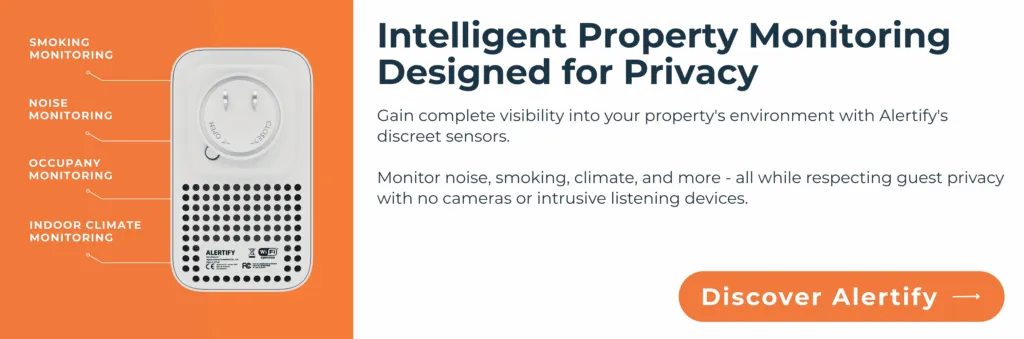
The most effective way to fight mold is to stop it from ever forming. Alertify’s solution for Indoor Climate Monitoring is the ultimate tool for damp and mold prevention. The discreet sensor continuously monitors the two key factors in mold growth: relative humidity and temperature. By tracking these precursors, the device essentially acts as a proactive mold monitor. Landlords can set intelligent thresholds and receive an automatic alert when conditions in a property become high-risk, allowing you to take preventative action long before mold becomes a visible and hazardous problem.
Safeguarding Tenant Health and Safety with Air Quality Monitoring
A safe home is a healthy home. A dedicated indoor air quality monitor from Alertify can detect harmful Volatile Organic Compounds (VOCs) and track CO₂ levels. High CO₂ is a direct indicator of inadequate ventilation and is a primary cause of condensation and mold. By monitoring air quality, you gain critical insights into a property’s living conditions, allowing you to proactively address ventilation issues and uphold your duty of care, ensuring tenant health and safety.
The Ultimate Property Monitoring System for Documentation
Awaab’s Law is built on accountability, and accountability requires evidence. Alertify is the ultimate property monitoring system for this purpose. The platform automatically generates time-stamped logs and historical data reports for all monitored metrics. This objective documentary evidence is invaluable. It can be used to demonstrate to regulators that you are proactively managing property conditions, to pinpoint the cause of a humidity issue, and to provide a clear, unbiased record in the event of any dispute.
Future-Proof Your Properties and Protect Your Tenants
Awaab’s Law represents a necessary and profound change for social housing in the UK. It sets a new standard of care that demands landlords be more vigilant, responsive, and proactive than ever before. Embracing technology like Alertify is no longer a luxury but rather it is an essential investment in compliance, property preservation, and, most importantly, the health and safety of your tenants.