
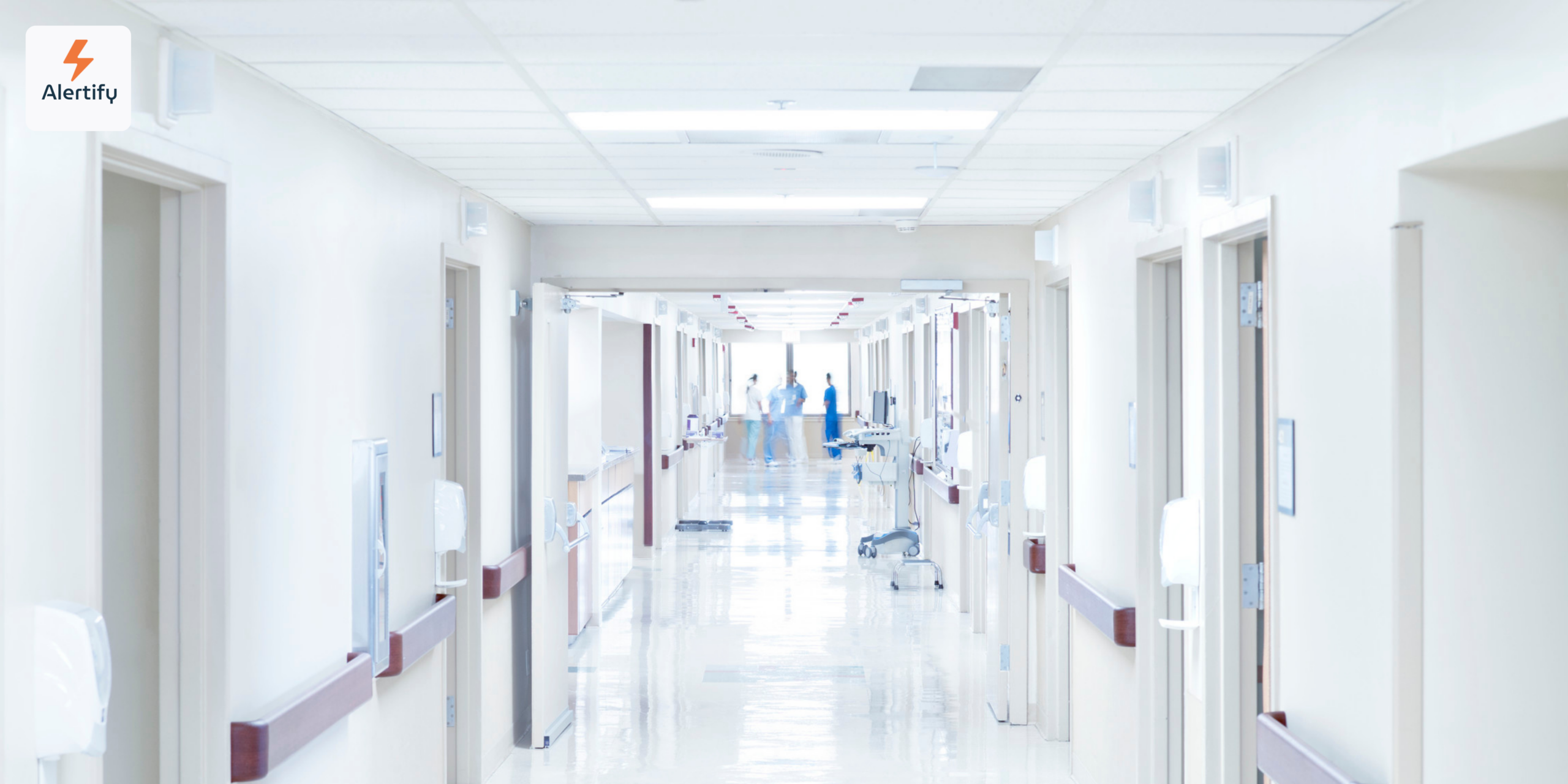
Poor air quality is one of the most underestimated risks in healthcare environments. Most conversations about patient safety center on clinical procedures, medication management, and infection control protocols. But the air that patients, visitors, and staff breathe every day inside a hospital is itself a source of measurable harm, and the consequences extend far beyond clinical outcomes. The health risks associated with poor indoor air quality in hospitals touch everything from patient recovery times to staff absenteeism to the HCAHPS environment domain scores that directly influence CMS reimbursement. Understanding what those risks are, who bears them, and how they manifest is the first step toward managing them effectively. Comprehensive hospital indoor air quality monitoring is not an optional upgrade. It is a clinical and operational baseline that every modern healthcare facility needs to meet.
What Pollutants Are Actually Present in Hospital Air?
Most people assume that hospitals, as highly regulated and rigorously cleaned environments, have better air quality than the average building. The reality is more complicated. The very activities that keep hospitals functioning, including heavy-duty cleaning, pharmaceutical dispensing, equipment sterilisation, and high patient and visitor traffic, generate a distinct and concentrated mix of indoor air pollutants that are rarely found together at comparable levels anywhere else.
Volatile organic compounds are among the most pervasive. Cleaning agents, surface disinfectants, floor coatings, adhesives used in medical equipment, and off-gassing from new furniture and fittings all contribute to elevated VOC concentrations in clinical spaces. Research has consistently identified formaldehyde, benzene, toluene, and xylene as commonly detected VOCs in hospital environments, each carrying documented health implications for both short-term and long-term exposure. Formaldehyde, for example, is classified as a known human carcinogen by the International Agency for Research on Cancer and is routinely used in hospital sterilisation and preservation processes.
Particulate matter is a second major concern. High foot traffic through shared corridors, linen and laundry handling, construction and renovation activities in adjacent areas, and the operation of medical equipment all generate fine and ultrafine particles that remain airborne for extended periods. The World Health Organization’s guidelines for indoor air quality identify PM2.5 as one of the pollutants with the strongest evidence base for health harm, with no safe lower threshold for long-term exposure established.
Carbon dioxide accumulates in any space where people are present and ventilation is insufficient. In high-occupancy areas such as waiting rooms, shared bays, and procedural suites, CO2 levels can rise rapidly and remain elevated for hours. Beyond its role as a ventilation indicator, elevated CO2 at concentrations above 1,000 ppm has been linked to measurable reductions in cognitive performance, with implications for clinical decision-making and staff error rates.
Hospital VOC exposure is not an incidental background issue. It is a structural feature of clinical environments that requires active, continuous management rather than periodic remediation.
The Clinical Impact: From Patient Outcomes to Staff Health
The health consequences of poor indoor air quality in hospitals are not evenly distributed. They fall hardest on the people who spend the most time in the environment and who are least able to tolerate additional physiological stress.
For patients, the risks are acute and in some cases life-threatening. Immunocompromised individuals, including oncology patients, transplant recipients, and those with autoimmune conditions, are uniquely vulnerable to airborne pathogens that circulate more freely in poorly ventilated spaces. Post-surgical patients face elevated infection risk from airborne contamination during the recovery period, when wound sites are open and immune response is suppressed. Respiratory patients, including those with COPD, asthma, or pulmonary fibrosis, experience direct physiological harm from VOC and particulate exposure that can trigger exacerbations requiring additional intervention and extending length of stay.
The CDC estimates that healthcare-associated infections affect approximately 1 in 31 hospitalised patients at any given time, with airborne transmission playing a role in a significant subset of those cases. The financial cost of a single HAI ranges from thousands to tens of thousands of dollars in additional treatment, with healthcare-associated infection air quality conditions identified as a modifiable contributing factor in transmission rates.
For staff, the picture is one of chronic, cumulative harm. Nurses, physicians, cleaners, and porters who spend the majority of their working hours in poorly ventilated clinical environments are exposed to sustained low-level concentrations of VOCs and particulates that accumulate over years and decades of employment. Studies have found elevated rates of occupational asthma, chemical sensitisation, and respiratory symptoms among healthcare workers in hospitals with inadequate ventilation. The resulting absenteeism, reduced productivity, and workers’ compensation claims represent a measurable and largely preventable operational cost. Beyond the physical health impact, cognitive fatigue driven by elevated CO2 in poorly ventilated areas has direct implications for clinical safety, contributing to the conditions under which errors are more likely to occur.
The HCAHPS dimension of this picture is equally important. Patients who are experiencing discomfort from poor air quality, whether from stuffiness, odours, or temperature instability, are less likely to report a positive experience on their HCAHPS survey. The environment domain of HCAHPS captures exactly these conditions, and poor scores in this domain carry direct reimbursement consequences under the CMS Hospital Value-Based Purchasing program.
Why Standard HVAC Systems Are Not Enough
The most common assumption in hospital facilities management is that a functioning, regularly serviced HVAC system is sufficient to maintain acceptable indoor air quality. This assumption is not supported by the evidence, and the gap between designed ventilation performance and real-world air quality conditions is where the greatest risk accumulates.
HVAC systems are designed to deliver specified air exchange rates and pressure relationships under standard conditions. But hospital environments are not standard. Occupancy fluctuates significantly across the day and across different areas of a building. Cleaning schedules, renovation activities, and changes in product usage all alter the pollutant load in ways that a fixed ventilation rate cannot dynamically compensate for. Filters degrade between service intervals and perform below specification during the degradation period. Dampers fail. Pressure relationships drift. None of these failures are detectable without continuous, real-time monitoring of the air itself rather than the mechanical system delivering it.
ASHRAE’s guidance on ventilation for healthcare facilities acknowledges that designed air change rates do not guarantee acceptable indoor air quality under all conditions, and that supplementary monitoring is a necessary component of a comprehensive air quality management programme. Alertify’s indoor air quality sensor for hospitals deployed at the room or zone level provides the real-time visibility that makes HVAC management genuinely responsive rather than theoretically adequate.
For administrators seeking to address the full spectrum of poor indoor air quality in hospitals, from the clinical risks documented in peer-reviewed literature to the HCAHPS and reimbursement implications of patient-reported environmental dissatisfaction, continuous sensor-based monitoring is not a supplementary option. It is the foundation of an effective strategy. To understand the full scope of what that strategy needs to achieve, including compliance, smoking detection, CO2 management, and ROI, the complete framework is laid out in our pillar guide: hospital indoor air quality monitoring.
Ready to protect your facility? Book a free demo with Alertify today and see how continuous environmental monitoring can reduce risk, improve compliance, and create safer spaces for patients and staff.